Download FCSS-FortiSASE 24 Administrator.FCSS_SASE_AD-24.Actual4Test.2026-05-20.95q.vcex
| Vendor: | Fortinet |
| Exam Code: | FCSS_SASE_AD-24 |
| Exam Name: | FCSS-FortiSASE 24 Administrator |
| Date: | May 20, 2026 |
| File Size: | 5 MB |
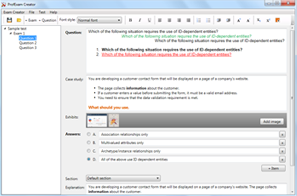
How to open VCEX files?
Files with VCEX extension can be opened by ProfExam Simulator.
Purchase
Coupon: TAURUSSIM_20OFF
Discount: 20%
Demo Questions
Question 1
When viewing the daily summary report generated by FortiSASE. the administrator notices that the report contains very little data. What is a possible explanation for this almost empty report?
- Digital experience monitoring is not configured.
- Log allowed traffic is set to Security Events for all policies.
- The web filter security profile is not set to Monitor
- There are no security profile group applied to all policies.
Correct answer: B
Explanation:
If the daily summary report generated by FortiSASE contains very little data, one possible explanation is that the "Log allowed traffic" setting is configured to log only "Security Events" for all policies. This configuration limits the amount of data logged, as it only includes security events and excludes normal allowed traffic.* Log Allowed Traffic Setting:* The "Log allowed traffic" setting determines which types of traffic are logged.* When set to "Security Events," only traffic that triggers a security event (such as a threat detection or policy violation) is logged.* Impact on Report Data:* If the log setting excludes regular allowed traffic, the amount of data captured and reported is significantly reduced.* This results in reports with minimal data, as only security-related events are included.References:FortiOS 7.2 Administration Guide: Provides details on configuring logging settings for traffic policies.FortiSASE 23.2 Documentation: Explains the impact of logging configurations on report generation and data visibility. If the daily summary report generated by FortiSASE contains very little data, one possible explanation is that the "Log allowed traffic" setting is configured to log only "Security Events" for all policies. This configuration limits the amount of data logged, as it only includes security events and excludes normal allowed traffic.
* Log Allowed Traffic Setting:
* The "Log allowed traffic" setting determines which types of traffic are logged.
* When set to "Security Events," only traffic that triggers a security event (such as a threat detection or policy violation) is logged.
* Impact on Report Data:
* If the log setting excludes regular allowed traffic, the amount of data captured and reported is significantly reduced.
* This results in reports with minimal data, as only security-related events are included.
References:
FortiOS 7.2 Administration Guide: Provides details on configuring logging settings for traffic policies.
FortiSASE 23.2 Documentation: Explains the impact of logging configurations on report generation and data visibility.
Question 2
Zero Trust Network Access (ZTNA) within FortiSASE restricts access to applications based on user identity and device posture.
Response:
- False
- True
Correct answer: B
Question 3
Which FortiSASE Secure Private Access (SPA) deployment involves installing FortiClient on remote endpoints?
- MicroBranch
- zero trust network access (ZTNA)
- secure web gateway (SWG)
- SD-WAN
Correct answer: B
Question 4
When you configure FortiSASE Secure Private Access (SPA) with SD-WAN integration, you must establish a routing adjacency between FortiSASE and the FortiGate SD-WAN hub. Which routing protocol must you use?
- BGP
- IS-IS
- OSPF
- EIGRP
Correct answer: A
Explanation:
When configuring FortiSASE Secure Private Access (SPA) with SD-WAN integration, establishing a routing adjacency between FortiSASE and the FortiGate SD-WAN hub requires the use of the Border Gateway Protocol (BGP).* BGP (Border Gateway Protocol):* BGP is widely used for establishing routing adjacencies between different networks, particularly in SD-WAN environments.* It provides scalability and flexibility in managing dynamic routing between FortiSASE and the FortiGate SD-WAN hub.* Routing Adjacency:* BGP enables the exchange of routing information between FortiSASE and the FortiGate SD- WAN hub.* This ensures optimal routing paths and efficient traffic management across the hybrid network.References:FortiOS 7.2 Administration Guide: Provides information on configuring BGP for SD-WAN integration.FortiSASE 23.2 Documentation: Details on setting up routing adjacencies using BGP for Secure Private Access with SD-WAN. When configuring FortiSASE Secure Private Access (SPA) with SD-WAN integration, establishing a routing adjacency between FortiSASE and the FortiGate SD-WAN hub requires the use of the Border Gateway Protocol (BGP).
* BGP (Border Gateway Protocol):
* BGP is widely used for establishing routing adjacencies between different networks, particularly in SD-WAN environments.
* It provides scalability and flexibility in managing dynamic routing between FortiSASE and the FortiGate SD-WAN hub.
* Routing Adjacency:
* BGP enables the exchange of routing information between FortiSASE and the FortiGate SD- WAN hub.
* This ensures optimal routing paths and efficient traffic management across the hybrid network.
References:
FortiOS 7.2 Administration Guide: Provides information on configuring BGP for SD-WAN integration.
FortiSASE 23.2 Documentation: Details on setting up routing adjacencies using BGP for Secure Private Access with SD-WAN.
Question 5
Which FortiOS command is used to verify the health of Zero Trust Network Access (ZTNA) policies in FortiSASE?
Response:
- diagnose ztna status
- get system ztna status
- diagnose debug application ztna
- get ztna policy-status
Correct answer: C
Question 6
When using Secure Private Access (SPA) and SD-WAN, which protocol is used for spoke-to-spoke connectivity?
Response:
- GRE
- SSL
- IPSEC
- eBGP
Correct answer: C
Question 7
An organization needs to resolve internal hostnames using its internal rather than public DNS servers for remotely connected endpoints. Which two components must be configured on FortiSASE to achieve this? (Choose two.)
- SSL deep inspection
- Split DNS rules
- Split tunnelling destinations
- DNS filter
Correct answer: A, B
Explanation:
To resolve internal hostnames using internal DNS servers for remotely connected endpoints, the following two components must be configured on FortiSASE:Split DNS Rules:Split DNS allows the configuration of specific DNS queries to be directed to internal DNS servers instead of public DNS servers.This ensures that internal hostnames are resolved using the organization's internal DNS infrastructure, maintaining privacy and accuracy for internal network resources.Split Tunneling Destinations:Split tunneling allows specific traffic (such as DNS queries for internal domains) to be routed through the VPN tunnel while other traffic is sent directly to the internet.By configuring split tunneling destinations, you can ensure that DNS queries for internal hostnames are directed through the VPN to the internal DNS servers.Reference:FortiOS 7.2 Administration Guide: Provides details on configuring split DNS and split tunneling for VPN clients.FortiSASE 23.2 Documentation: Explains the implementation and configuration of split DNS and split tunneling for securely resolving internal hostnames. To resolve internal hostnames using internal DNS servers for remotely connected endpoints, the following two components must be configured on FortiSASE:
Split DNS Rules:
Split DNS allows the configuration of specific DNS queries to be directed to internal DNS servers instead of public DNS servers.
This ensures that internal hostnames are resolved using the organization's internal DNS infrastructure, maintaining privacy and accuracy for internal network resources.
Split Tunneling Destinations:
Split tunneling allows specific traffic (such as DNS queries for internal domains) to be routed through the VPN tunnel while other traffic is sent directly to the internet.
By configuring split tunneling destinations, you can ensure that DNS queries for internal hostnames are directed through the VPN to the internal DNS servers.
Reference:
FortiOS 7.2 Administration Guide: Provides details on configuring split DNS and split tunneling for VPN clients.
FortiSASE 23.2 Documentation: Explains the implementation and configuration of split DNS and split tunneling for securely resolving internal hostnames.
Question 8
Which secure internet access (SIA) use case minimizes individual endpoint configuration?
- Site-based remote user internet access
- SIA for SSL VPN remote users
- SIA using ZTNA
- Agentless remote user internet access
Correct answer: D
Question 9
Which secure internet access (SIA) use case minimizes individual endpoint configuration?
- Site-based remote user internet access
- Agentless remote user internet access
- SIA for SSL VPN remote users
- SIA using ZTNA
Correct answer: B
Explanation:
The agentless remote user internet access use case is designed to minimize individual endpoint configuration. In this scenario, FortiSASE provides secure internet access without requiring the installation of an agent on the endpoint device. This approach is particularly useful for environments with unmanaged devices or temporary users, as it eliminates the need for complex configurations on each endpoint. Instead, security policies are enforced at the network level, ensuring consistent protection without relying on endpoint-specific software. The agentless remote user internet access use case is designed to minimize individual endpoint configuration. In this scenario, FortiSASE provides secure internet access without requiring the installation of an agent on the endpoint device. This approach is particularly useful for environments with unmanaged devices or temporary users, as it eliminates the need for complex configurations on each endpoint. Instead, security policies are enforced at the network level, ensuring consistent protection without relying on endpoint-specific software.
Question 10
What are the key features of ZTNA that differentiate it from traditional VPN solutions?
Response:
- Network level encryption
- Application-level access controls
- Device posture checks
- Persistent session connectivity
Correct answer: B, C
Question 11
Which two components are part of onboarding a secure web gateway (SWG) endpoint? (Choose two)
- FortiSASE CA certificate
- proxy auto-configuration (PAC) file
- FortiSASE invitation code
- FortiClient installer
Correct answer: A, B
Explanation:
Onboarding a Secure Web Gateway (SWG) endpoint involves several components to ensure secure and effective integration with FortiSASE. Two key components are the FortiSASE CA certificate and the proxy auto-configuration (PAC) file.* FortiSASE CA Certificate:* The FortiSASE CA certificate is essential for establishing trust between the endpoint and the FortiSASE infrastructure.* It ensures that the endpoint can securely communicate with FortiSASE services and inspect SSL/TLS traffic.* Proxy Auto-Configuration (PAC) File:* The PAC file is used to configure the endpoint to direct web traffic through the FortiSASE proxy.* It provides instructions on how to route traffic, ensuring that all web requests are properly inspected and filtered by FortiSASE.References:FortiOS 7.2 Administration Guide: Details on onboarding endpoints and configuring SWG.FortiSASE 23.2 Documentation: Explains the components required for integrating endpoints with FortiSASE and the process for deploying the CA certificate and PAC file. Onboarding a Secure Web Gateway (SWG) endpoint involves several components to ensure secure and effective integration with FortiSASE. Two key components are the FortiSASE CA certificate and the proxy auto-configuration (PAC) file.
* FortiSASE CA Certificate:
* The FortiSASE CA certificate is essential for establishing trust between the endpoint and the FortiSASE infrastructure.
* It ensures that the endpoint can securely communicate with FortiSASE services and inspect SSL
/TLS traffic.
* Proxy Auto-Configuration (PAC) File:
* The PAC file is used to configure the endpoint to direct web traffic through the FortiSASE proxy.
* It provides instructions on how to route traffic, ensuring that all web requests are properly inspected and filtered by FortiSASE.
References:
FortiOS 7.2 Administration Guide: Details on onboarding endpoints and configuring SWG.
FortiSASE 23.2 Documentation: Explains the components required for integrating endpoints with FortiSASE and the process for deploying the CA certificate and PAC file.
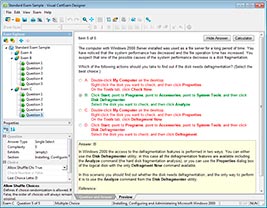
HOW TO OPEN VCE FILES
Use VCE Exam Simulator to open VCE files
HOW TO OPEN VCEX FILES
Use ProfExam Simulator to open VCEX files
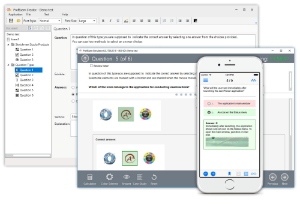
ProfExam at a 20% markdown
You have the opportunity to purchase ProfExam at a 20% reduced price
Get Now!