Download Fortinet NSE 5 - Secure Wireless LAN 7.6 Administrator.NSE5_FWF_AD-7.6.DumpsBase.2026-07-01.40q.vcex
| Vendor: | Fortinet |
| Exam Code: | NSE5_FWF_AD-7.6 |
| Exam Name: | Fortinet NSE 5 - Secure Wireless LAN 7.6 Administrator |
| Date: | Jul 01, 2026 |
| File Size: | 319 KB |
How to open VCEX files?
Files with VCEX extension can be opened by ProfExam Simulator.
Purchase
Coupon: TAURUSSIM_20OFF
Discount: 20%
Demo Questions
Question 1
Scenario: A branch administrator connects a replacement FortiAP after the previous unit fails. The new device receives an IP address, discovers the FortiGate, and appears in the Managed FortiAPs table with a discovered status. The expected corporate and guest SSIDs are not broadcast, although the device remains reachable and repeatedly exchanges control traffic with the controller. The organization does not allow automatic authorization of unknown FortiAP serial numbers.
- Authorize the discovered FortiAP and assign the model-compatible FortiAP profile that contains the required radio and SSID configuration..
- Create firewall policies from the corporate and guest SSID interfaces before authorization, because FortiGate suppresses beacon transmission until forwarding policies exist..
- Configure DHCP option 138 again with the FortiGate address, because an AP shown as discovered has located the controller but has not completed Layer 3 controller discovery..
- Enable local bridge mode on each SSID so the replacement FortiAP can broadcast wireless networks before the controller approves the device.
Correct answer: A
Question 2
Scenario: A global company manages FortiAP devices at small branch offices from a central FortiGate across an SD-WAN service. Most wireless traffic at each branch is destined for a local file server, local printer, or the branch Internet gateway. The company wants centralized SSID and radio management, but it must avoid sending ordinary client traffic through the headquarters controller because the WAN has limited bandwidth and variable latency. Existing branch switches and DHCP servers already support the required local client VLAN.
- Configure the SSID as Local bridge with FortiAP interface, apply it through the branch FortiAP profile, and ensure the local switching path carries the required client VLA.
- Configure the SSID in tunnel mode and enable CAPWAP fragmentation so local application traffic can be reconstructed at the branch after inspection by the central FortiGate..
- Enable AP handoff and split the branch FortiAP devices into groups so client traffic is dynamically forwarded through whichever AP has the shortest WAN path..
- Configure the SSID as tunnel mode with DTLS data-channel encryption, because encrypting CAPWAP causes FortiAP devices to perform local Layer 3 breakout automatically.
Correct answer: A
Explanation:
A is correct because local bridge mode retains centralized FortiAP and SSID management while bridging client frames onto the local wired network. Clients can use the branch DHCP server, local services, and local Internet gateway without consuming controller-bound WAN capacity for every packet. The branch switching configuration must carry the client VLAN appropriately.Option B still transports client data to the central controller and fragmentation does not create local breakout.Option C affects AP organization and association behavior, not the forwarding path.Option D protects tunneled data in transit but does not convert tunnel mode into local bridging. A is correct because local bridge mode retains centralized FortiAP and SSID management while bridging client frames onto the local wired network. Clients can use the branch DHCP server, local services, and local Internet gateway without consuming controller-bound WAN capacity for every packet. The branch switching configuration must carry the client VLAN appropriately.
Option B still transports client data to the central controller and fragmentation does not create local breakout.
Option C affects AP organization and association behavior, not the forwarding path.
Option D protects tunneled data in transit but does not convert tunnel mode into local bridging.
Question 3
Scenario: A global enterprise deploys two FortiAP models across its offices: a dual-radio model in small branches and a tri-radio model at high-density headquarters sites. An administrator creates a custom profile based on the headquarters platform, configures the third radio for dedicated monitoring, and attempts to assign the same profile to every managed FortiAP. The headquarters APs accept the configuration, but the branch APs either cannot be assigned the profile or retain their previous radio settings. The SSID and security objects referenced by the profile are valid in the same VDOM.
- Convert the profile into an SSID group because SSID groups automatically translate radio settings between FortiAP platforms that contain different numbers of physical radios..
- Enable per-device configuration overrides on every branch AP so the FortiGate can emulate the missing third radio while preserving the original headquarters profile..
- Create separate FortiAP profiles for each supported platform, reproduce the common SSID requirements in both profiles, and configure model-specific radio capabilities only where the hardware supports them..
- Change the headquarters profile to use automatic platform detection because a single custom FortiAP profile can dynamically add or remove physical radios after it is assigned.
Correct answer: C
Explanation:
C is correct because a FortiAP profile is associated with a particular FortiAP platform and defines the radio configuration supported by that hardware model. The common SSIDs can be referenced by multiple profiles, but settings such as a third dedicated scanning radio must remain specific to models that contain and support that radio.Option A confuses SSID organization with hardware abstraction; an SSID group can be referenced by a profile but does not translate radio capabilities between platforms.Option B cannot create a physical radio that does not exist and would introduce unnecessary per-device configuration drift.Option D assumes that a custom profile dynamically changes its platform structure, but platform-specific radio definitions remain part of the profile design. C is correct because a FortiAP profile is associated with a particular FortiAP platform and defines the radio configuration supported by that hardware model. The common SSIDs can be referenced by multiple profiles, but settings such as a third dedicated scanning radio must remain specific to models that contain and support that radio.
Option A confuses SSID organization with hardware abstraction; an SSID group can be referenced by a profile but does not translate radio capabilities between platforms.
Option B cannot create a physical radio that does not exist and would introduce unnecessary per-device configuration drift.
Option D assumes that a custom profile dynamically changes its platform structure, but platform-specific radio definitions remain part of the profile design.
Question 4
Scenario: An administrator clones a production FortiAP profile to create a troubleshooting profile for one remote site. To investigate suspected rogue devices, the administrator changes the 5 GHz radio mode from access point to monitor and assigns a WIDS profile. After the new profile is applied, the FortiAP remains online and continues reporting detected neighboring radios, but the site's 5 GHz employee SSID disappears. The 2.4 GHz employee SSID remains available.
- Return the 5 GHz radio to access-point mode if it must serve clients, or dedicate a separate supported radio to monitor mode while leaving the production radio in access-point mode..
- Add the employee SSID to the WIDS profile because monitor-mode radios advertise only VAPs that are explicitly listed inside the assigned WIDS object..
- Enable local bridge mode on the employee SSID because monitor mode suppresses only tunnel-mode VAPs and continues advertising bridged wireless networks..
- Assign the employee SSID directly to the managed FortiAP entry because per-device VAP overrides take precedence over the radio's monitor operating mode.
Correct answer: A
Explanation:
A is correct because a radio in monitor mode is used for wireless scanning and is no longer operating as a normal client-serving access radio. If 5 GHz client access is required, that radio must return to access-point mode or the deployment must use a model with another radio that can be dedicated to monitoring.Option B confuses a WIDS profile with a VAP container; WIDS settings define monitoring behavior and do not cause a monitor radio to advertise client SSIDs.Option C changes the client forwarding method but does not override the physical radio mode.Option D assumes that an SSID assignment can supersede the radio's operating role, which it cannot. A is correct because a radio in monitor mode is used for wireless scanning and is no longer operating as a normal client-serving access radio. If 5 GHz client access is required, that radio must return to access-point mode or the deployment must use a model with another radio that can be dedicated to monitoring.
Option B confuses a WIDS profile with a VAP container; WIDS settings define monitoring behavior and do not cause a monitor radio to advertise client SSIDs.
Option C changes the client forwarding method but does not override the physical radio mode.
Option D assumes that an SSID assignment can supersede the radio's operating role, which it cannot.
Question 5
Scenario: A university is migrating a certificate-authenticated employee WLAN from WPA2-Enterprise to WPA3-Enterprise. Newly managed laptops support WPA3 and PMF, but a limited population of specialized laboratory systems supports only WPA2-Enterprise and cannot be replaced until the next budget cycle. Both populations use EAP-TLS against the same RADIUS infrastructure, and the university wants to maintain one SSID during the controlled migration. The final design will move to WPA3-only after the laboratory systems are retired.
- Configure WPA3-only Enterprise and disable PMF for the laboratory systems because WPA2 clients can associate with a WPA3-only SSID whenever management-frame protection is disabled..
- Replace EAP-TLS with an MPSK profile because one MPSK key can transparently negotiate WPA2-Enterprise for older clients and WPA3-Enterprise for newer clients..
- Use the supported WPA2/WPA3 Enterprise transition configuration during the migration, preserve EAP-TLS, and verify PMF compatibility before later enforcing WPA3-only operation..
- Configure OWE Transition mode because it allows WPA2-Enterprise clients to use the open transition BSSID while WPA3-Enterprise clients continue authenticating with certificates.
Correct answer: C
Explanation:
C is correct because an enterprise transition configuration permits a controlled mixture of WPA2-Enterprise and WPA3-Enterprise clients while retaining the existing EAP-TLS identity infrastructure. The university should validate PMF and client compatibility, then remove the transition mode once the legacy systems are retired.Option A does not make WPA3-only backward compatible; disabling PMF would also weaken the intended security posture without allowing WPA2-only clients to negotiate WPA3.Option B replaces individual certificate authentication with personal-security keys and cannot negotiate enterprise authentication on behalf of incompatible clients.Option D is designed for open-to-OWE migration and does not provide a transition path between WPA2-Enterprise and WPA3-Enterprise. C is correct because an enterprise transition configuration permits a controlled mixture of WPA2-Enterprise and WPA3-Enterprise clients while retaining the existing EAP-TLS identity infrastructure. The university should validate PMF and client compatibility, then remove the transition mode once the legacy systems are retired.
Option A does not make WPA3-only backward compatible; disabling PMF would also weaken the intended security posture without allowing WPA2-only clients to negotiate WPA3.
Option B replaces individual certificate authentication with personal-security keys and cannot negotiate enterprise authentication on behalf of incompatible clients.
Option D is designed for open-to-OWE migration and does not provide a transition path between WPA2-Enterprise and WPA3-Enterprise.
Question 6
Scenario: A security-sensitive campus uses tri-radio FortiAP devices. Radios 1 and 2 provide production access on 2.4 GHz and 5 GHz, while radio 3 currently serves additional 5 GHz clients during peak hours. The security team requires continuous scanning of selected 2.4 GHz and 5 GHz channels for unauthorized APs without repeatedly interrupting production radios to perform off-channel scans. Capacity analysis shows that radios 1 and 2 can support the existing client load after minor channel-width optimization.
- Leave all three radios in access-point mode and shorten the background-scan interval so each production radio leaves its operating channel more frequently to inspect the selected channels..
- Configure radio 3 as an additional 5 GHz access radio and attach a WIDS profile directly to its production SSIDs so scanning occurs between client transmissions..
- Disable the third radio and increase the WIDS sensitivity of radios 1 and 2 because a disabled radio can still passively report foreign-channel frames to the controller..
- Enable dedicated scanning in a compatible FortiAP profile, place radio 3 in monitor mode, apply a WIDS profile with the required scan-channel list, and retain radios 1 and 2 for client service.
Correct answer: D
Explanation:
D is correct because a compatible tri-radio FortiAP can dedicate one radio to monitoring while the remaining radios continue serving clients. Applying the WIDS profile and a targeted scan-channel list to the monitor radio provides sustained security visibility without repeatedly taking the production radios away from their serving channels.Option A can collect useful information but increases off-channel activity on client-serving radios and conflicts with the requirement to minimize production interruption.Option B retains radio 3 as a client-serving radio and therefore does not provide the same dedicated monitoring behavior.Option C removes the hardware resource required for scanning; a disabled radio cannot continue acting as an active monitor. D is correct because a compatible tri-radio FortiAP can dedicate one radio to monitoring while the remaining radios continue serving clients. Applying the WIDS profile and a targeted scan-channel list to the monitor radio provides sustained security visibility without repeatedly taking the production radios away from their serving channels.
Option A can collect useful information but increases off-channel activity on client-serving radios and conflicts with the requirement to minimize production interruption.
Option B retains radio 3 as a client-serving radio and therefore does not provide the same dedicated monitoring behavior.
Option C removes the hardware resource required for scanning; a disabled radio cannot continue acting as an active monitor.
Question 7
Scenario: An enterprise replaces the server certificate on its RADIUS platform during a PKI migration. The new certificate is valid, contains the expected authentication-server name, and is signed by a newly introduced intermediate and root CA. Immediately after the change, managed laptops stop joining the WPA2/WPA3-Enterprise SSID even though the FortiGate can reach the RADIUS server and the RADIUS service receives the initial EAP requests. Client logs show that the supplicants terminate authentication while validating the server certificate.
- Disable server-certificate validation in the client WLAN profile so EAP-TLS and PEAP can continue without requiring any trusted authentication-server identity..
- Distribute the new CA trust chain and correct server-name validation settings to managed clients before or during the certificate cutover, while retaining certificate validation..
- Import the new RADIUS server certificate into the FortiGate local certificate store because FortiGate trust automatically propagates to every wireless client during association..
- Replace enterprise authentication with WPA3-SAE until the PKI migration is complete because SAE uses the client certificate without checking the RADIUS server chain.
Correct answer: B
Explanation:
B is correct because enterprise wireless clients must validate the authentication server certificate against a trusted CA chain and, when configured, the expected server identity. The new server certificate can be cryptographically valid while still being rejected by clients that do not trust the new issuing authorities.Option A restores connectivity by eliminating a critical defense against fraudulent authentication servers and credential-capture attacks.Option C changes the FortiGate certificate store but does not install trust anchors into endpoint supplicants.Option D replaces enterprise authentication with a shared-password method, and SAE does not use the existing client certificates or RADIUS trust relationship. B is correct because enterprise wireless clients must validate the authentication server certificate against a trusted CA chain and, when configured, the expected server identity. The new server certificate can be cryptographically valid while still being rejected by clients that do not trust the new issuing authorities.
Option A restores connectivity by eliminating a critical defense against fraudulent authentication servers and credential-capture attacks.
Option C changes the FortiGate certificate store but does not install trust anchors into endpoint supplicants.
Option D replaces enterprise authentication with a shared-password method, and SAE does not use the existing client certificates or RADIUS trust relationship.
Question 8
Scenario: A government agency uses a dedicated WPA2-Enterprise SSID for managed voice handsets. A wireless assessment demonstrates that an attacker can transmit forged deauthentication and disassociation frames, causing active calls to disconnect even though the attacker cannot decrypt user traffic. Every approved handset model supports IEEE 802.11w Protected Management Frames, and the agency no longer needs to support legacy clients on this SSID. The administrator must prevent non-PMF clients from joining rather than merely preferring protection when available.
- Configure PMF as required on the VAP so only clients capable of negotiating protected management frames can associate with the secure voice SSI
- Configure PMF as optional so compatible handsets protect management frames while unsupported clients are accepted and isolated through FortiGate firewall policies..
- Enable Opportunistic Key Caching so each handset reuses its PMK during roaming and therefore rejects all unauthenticated deauthentication frames..
- Enable Beacon Protection in the FortiAP profile because protected beacon frames automatically encrypt every deauthentication and disassociation frame exchanged by the clients.
Correct answer: A
Explanation:
A is correct because required PMF protects robust management frames and prevents clients that cannot negotiate the protection from associating with the SSID. This matches the agency's requirement because every approved handset supports the feature and legacy compatibility is unnecessary.Option B leaves a downgrade path by allowing non-PMF associations, so it does not enforce the stated security baseline.Option C can reduce repeated EAP exchanges during roaming, but cached key material does not by itself require management-frame protection.Option D confuses beacon protection with PMF; protecting beacon integrity does not replace the 802.11w controls required for deauthentication and disassociation protection. A is correct because required PMF protects robust management frames and prevents clients that cannot negotiate the protection from associating with the SSID. This matches the agency's requirement because every approved handset supports the feature and legacy compatibility is unnecessary.
Option B leaves a downgrade path by allowing non-PMF associations, so it does not enforce the stated security baseline.
Option C can reduce repeated EAP exchanges during roaming, but cached key material does not by itself require management-frame protection.
Option D confuses beacon protection with PMF; protecting beacon integrity does not replace the 802.11w controls required for deauthentication and disassociation protection.
Question 9
Scenario: A security team changes the data-channel policy in a remote-site FortiAP profile from clear text to DTLS-only. The FortiAP devices at the site had previously been configured locally to permit only clear-text data-channel operation. After the profile change, the APs can still reach the FortiGate IP address, but they repeatedly fail to complete the managed wireless connection and no tunnel-mode SSIDs become operational. The CAPWAP control channel is not blocked by the WAN firewall.
- Revert the FortiGate interface to clear-text administrative access because the CAPWAP control channel must use the same encryption setting as the wireless data channel..
- Align the FortiAP and FortiGate data-channel security settings so both ends support DTLS, then verify performance because software-based encryption can reduce throughput..
- Enable WPA3-Enterprise on every SSID so the encrypted 802.11 payload automatically negotiates a compatible CAPWAP data-channel policy with the controller..
- Configure the FortiAP profile for both clear text and DTLS simultaneously, because FortiGate always selects DTLS when both methods are enabled at each endpoint.
Correct answer: B
Explanation:
B is correct because data-channel security must be compatible at both the FortiGate profile and the FortiAP. A DTLS-only controller policy cannot establish the required data channel with an AP that permits only clear text. The control channel is separately protected by DTLS, while the client data channel can use clear text, DTLS, or an applicable IPsec mode.Option A incorrectly treats interface administrative access and CAPWAP control encryption as the same setting.Option C secures the over-the-air client session but does not negotiate encryption between the FortiAP and controller.Option D is unreliable because when both clear text and DTLS are permitted at both ends, clear text can be selected rather than guaranteeing DTLS. B is correct because data-channel security must be compatible at both the FortiGate profile and the FortiAP. A DTLS-only controller policy cannot establish the required data channel with an AP that permits only clear text. The control channel is separately protected by DTLS, while the client data channel can use clear text, DTLS, or an applicable IPsec mode.
Option A incorrectly treats interface administrative access and CAPWAP control encryption as the same setting.
Option C secures the over-the-air client session but does not negotiate encryption between the FortiAP and controller.
Option D is unreliable because when both clear text and DTLS are permitted at both ends, clear text can be selected rather than guaranteeing DTLS.
Question 10
Scenario: An enterprise is migrating branch FortiAP devices from an old FortiGate controller to a new high-availability FortiGate cluster. The branch DHCP server currently supplies multiple controller addresses in option 138, with the old controller listed first. Even after the new cluster is configured to manage the APs, rebooted FortiAP devices continue to discover and join the old controller whenever it is reachable. The migration team must move the APs in a controlled manner without relying on manual configuration at every branch.
- Enable automatic authorization on both controllers so each FortiAP can maintain simultaneous CAPWAP control sessions and select the controller with the lowest latency..
- Assign the new FortiGate cluster's FortiAP profile to the AP entries on the old controller, causing the profile download to replace the controller address stored in DHCP option 138..
- Configure a FortiAP group on the new controller with a higher priority than the old group, because FortiAP group precedence overrides the discovery address order supplied by DHC.
- Update option 138 so the new cluster address has the intended priority or is the only active controller address, verify successful discovery and authorization, and then deauthorize or retire the old-controller entries.
Correct answer: D
Explanation:
D is correct because DHCP option 138 directly influences which controller addresses the FortiAP attempts during discovery, and the first address has the highest priority. Updating the DHCP information provides a scalable migration mechanism without touching each AP locally. The team should confirm that the new cluster can discover and authorize the devices before deauthorizing or retiring the old controller entries.Option A does not create a supported active-active controller relationship in which one AP selects between simultaneous management sessions by latency.Option B confuses a FortiAP profile with controller-discovery configuration; profile assignment does not rewrite the third-party DHCP option.Option C uses FortiAP groups as though they influenced discovery order, but groups organize managed APs only after the devices have reached the controller. D is correct because DHCP option 138 directly influences which controller addresses the FortiAP attempts during discovery, and the first address has the highest priority. Updating the DHCP information provides a scalable migration mechanism without touching each AP locally. The team should confirm that the new cluster can discover and authorize the devices before deauthorizing or retiring the old controller entries.
Option A does not create a supported active-active controller relationship in which one AP selects between simultaneous management sessions by latency.
Option B confuses a FortiAP profile with controller-discovery configuration; profile assignment does not rewrite the third-party DHCP option.
Option C uses FortiAP groups as though they influenced discovery order, but groups organize managed APs only after the devices have reached the controller.
Question 11
Scenario: A public library wants to replace its completely open visitor WLAN. The library does not want to issue accounts, distribute a shared password, or identify individual visitors, but it requires encryption between each supported client and the FortiAP to prevent passive over-the-air capture. All client devices included in the supported-use policy are OWE capable, and Internet access will still be restricted by FortiGate firewall and web-filtering policies. The solution must not imply that visitors have been authenticated.
- Configure the visitor SSID with Opportunistic Wireless Encryption and continue enforcing acceptable-use controls through the FortiGate traffic policy..
- Configure WPA3-SAE with a password displayed on public signs because SAE provides anonymous encryption without requiring clients to possess a shared credential..
- Retain an open SSID and add a captive portal disclaimer because accepting the disclaimer automatically negotiates per-client Layer 2 encryption keys..
- Configure WPA3-Enterprise with anonymous outer identities and no RADIUS server because the FortiAP can complete EAP authentication locally for unidentified visitors.
Correct answer: A
Explanation:
A is correct because OWE provides individualized encryption for an otherwise unauthenticated wireless service. It protects the over-the-air link from passive observation without requiring accounts or a shared password, while FortiGate policies can continue controlling Internet usage.Option B still requires every client to know a common password, which directly violates the stated requirement and creates a shared secret.Option C may require legal acknowledgement or web authentication, but a captive portal on an open WLAN does not automatically encrypt the 802.11 link.Option D is not a valid WPA3-Enterprise deployment because enterprise security requires an authentication framework such as RADIUS and does not provide anonymous access merely by omitting the server. A is correct because OWE provides individualized encryption for an otherwise unauthenticated wireless service. It protects the over-the-air link from passive observation without requiring accounts or a shared password, while FortiGate policies can continue controlling Internet usage.
Option B still requires every client to know a common password, which directly violates the stated requirement and creates a shared secret.
Option C may require legal acknowledgement or web authentication, but a captive portal on an open WLAN does not automatically encrypt the 802.11 link.
Option D is not a valid WPA3-Enterprise deployment because enterprise security requires an authentication framework such as RADIUS and does not provide anonymous access merely by omitting the server.
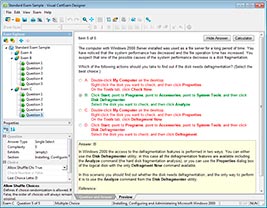
HOW TO OPEN VCE FILES
Use VCE Exam Simulator to open VCE files
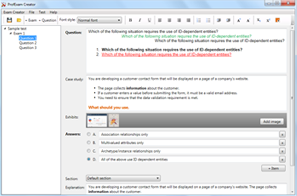
HOW TO OPEN VCEX FILES
Use ProfExam Simulator to open VCEX files
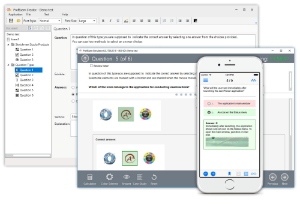
ProfExam at a 20% markdown
You have the opportunity to purchase ProfExam at a 20% reduced price
Get Now!