Download IBM WebSphere Application Server Network Deployment V8.5.5 and Liberty Profile, System Administration.C9510-401.Pass4Success.2026-04-01.67q.tqb
| Vendor: | IBM |
| Exam Code: | C9510-401 |
| Exam Name: | IBM WebSphere Application Server Network Deployment V8.5.5 and Liberty Profile, System Administration |
| Date: | Apr 01, 2026 |
| File Size: | 405 KB |
How to open TQB files?
Files with TQB (Taurus Question Bank) extension can be opened by Taurus Exam Studio.
Purchase
Coupon: TAURUSSIM_20OFF
Discount: 20%
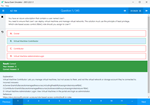
Demo Questions
Question 1
There are many applications deployed in a large WebSphere Application Server cluster. A system administrator is required to give Configurator role access to a developer for a single application deployed in that cluster.
How should the administrator meet this requirement and restrict Configurator role access for a single application?
- Create a J2C authentication alias for that developer.
- Create an Administrative user role and provide Configurator access to the developer.
- Create an Administrative group role and provide Configurator access to the developer.
- Create an administrative authorization group, scope it only for that application and create an Administrative user or group role to give Configurator access to the developer.
Correct answer: D
Explanation:
Fine-grained administrative securityIn releases prior to WebSphere Application Server version 6.1, users granted administrative roles could administer all of the resources under the cell. WebSphere Application Server is now more fine-grained, meaning that access can be granted to each user per resource.For example, users can be granted configurator access to a specific instance of a resource only (an application, an application server or a node).To achieve this instance-based security or fine-grained security, resources that require the same privileges are placed in a group called the administrative authorization group or authorization group. Users can be granted access to the authorization group by assigning to them the required administrative role.References: http://www-01.ibm.com/support/knowledgecenter/SSEQTP_8.5.5/com.ibm.websphere.base.doc/ae/csec_fineg_admsec.html?cp=SSEQTP_8.5.5%2F1-8-1-30-3-3 Fine-grained administrative security
In releases prior to WebSphere Application Server version 6.1, users granted administrative roles could administer all of the resources under the cell. WebSphere Application Server is now more fine-grained, meaning that access can be granted to each user per resource.
For example, users can be granted configurator access to a specific instance of a resource only (an application, an application server or a node).
To achieve this instance-based security or fine-grained security, resources that require the same privileges are placed in a group called the administrative authorization group or authorization group. Users can be granted access to the authorization group by assigning to them the required administrative role.
References: http://www-01.ibm.com/support/knowledgecenter/SSEQTP_8.5.5/com.ibm.websphere.base.doc/ae/csec_fineg_admsec.html?cp=SSEQTP_8.5.5%2F1-8-1-30-3-3
Question 2
How can a system administrator secure a WebSphere Application Server environment to ensure that an application code will not be allowed to access any files in the server's file system?
- Configure the CSIv2 outbound communications under RMI/IIOP security.
- Configure the file-based repository and create the fileRegistry.xml file.
- Enable Java 2 security and configure the app.policy and was.policy files.
- Use the AdminTask deleteAuthorizationGroup to remove application access.
Correct answer: C
Explanation:
When Java 2 security is enabled for a WebSphere Application Server, all the applications that run on WebSphere Application Server undergo a security check before accessing system resources. An application might need a was.policy file if it accesses resources that require more permissions than those granted in the default app.policy fileReferences: http://www.aiotestking.com/ibm/how-can-a-system-administrator-secure-a-websphere-application-server-environment-to-ensure-that-an-application-code-will-not-be-allowed-to-access-any-files-in-the-servers-file-system/ When Java 2 security is enabled for a WebSphere Application Server, all the applications that run on WebSphere Application Server undergo a security check before accessing system resources. An application might need a was.policy file if it accesses resources that require more permissions than those granted in the default app.policy file
References: http://www.aiotestking.com/ibm/how-can-a-system-administrator-secure-a-websphere-application-server-environment-to-ensure-that-an-application-code-will-not-be-allowed-to-access-any-files-in-the-servers-file-system/
Question 3
A system administrator needs to trigger a javacore only when a java,net.SocketTimeoutException is encountered in real time.
What does the administrator have to configure to trigger the javacore dump?
- Configure the JAVA_DUMP_OPTS environment variable to capture javacore for ANYSIGNAL and all exceptions.
- Configure an --Xdump:java Generic JVM argument on WebSphere Application Server with the filter for java.net.SocketTimeoutException.
- Code wsadmin script to capture javacore and then execute it after the java.net.SocketTimeoutException has been encountered.
- Use the log filter in HPEL to monitor for java.net.SocketTimeoutException and then gather a javacore dump from the Integrated Solutions Console (ISC).
Correct answer: B
Explanation:
Dump agents are set up during JVM initialization. They enable you to use events occurring within the JVM, such as Garbage Collection, thread start, or JVM termination, to initiate one of four types of dump or to launch an external tool. Default dump agents are set up at JVM initialization They are sufficient for most cases, but the use of the -Xdump option on the command line allows more detailed configuration of dump agents. The total set of options and sub-options available under -Xdump is very flexible and there are many examples presented in this chapter to show this flexibility.Example: To generate system cores:-Xdump:system:events=userReferences: http://www-01.ibm.com/support/docview.wss?uid=swg21242497 Dump agents are set up during JVM initialization. They enable you to use events occurring within the JVM, such as Garbage Collection, thread start, or JVM termination, to initiate one of four types of dump or to launch an external tool. Default dump agents are set up at JVM initialization They are sufficient for most cases, but the use of the -Xdump option on the command line allows more detailed configuration of dump agents. The total set of options and sub-options available under -Xdump is very flexible and there are many examples presented in this chapter to show this flexibility.
Example: To generate system cores:
-Xdump:system:events=user
References: http://www-01.ibm.com/support/docview.wss?uid=swg21242497
Question 4
A system administrator has deployed an application. The development team has updated a new version of this application. The administrator needs to immediately deploy this updated application and guarantee that only this new edition is used by clients and that any service requests for the application are queued during the deployment of the new application.
How can the administrator achieve this task without any downtime to the application?
- Perform a soft rollout.
- Perform a hard rollout.
- Perform an atomic rollout.
- Perform a concurrent activation rollout.
Correct answer: C
Explanation:
Performing an atomic rollout activates the new edition on half of the cluster first, and then activates the edition on the remaining half of the cluster. While the first half of the cluster is taken offline and updated, application requests are routed to the second half of the cluster. Verify that half the cluster can handle the entire load during the rollout period.References: http://www.aiotestking.com/ibm/how-can-the-administrator-achieve-this-task-without-any-downtime-to-the-application/ Performing an atomic rollout activates the new edition on half of the cluster first, and then activates the edition on the remaining half of the cluster. While the first half of the cluster is taken offline and updated, application requests are routed to the second half of the cluster. Verify that half the cluster can handle the entire load during the rollout period.
References: http://www.aiotestking.com/ibm/how-can-the-administrator-achieve-this-task-without-any-downtime-to-the-application/
Question 5
A WebSphere system administrator needs to install the Installation Manager (IM) on an unmanaged node on a host named . The deployment manager is running on a host named .
What step must the administrator take before submitting a job from the Integrated Solutions Console (ISC) to install the IM on ?
- Install a node agent on .
- Install the job manager on .
- Start the job manager on .
- Register as a target for job manager.
Correct answer: D
Explanation:
Submitting jobs to install Installation Manager on remote hostsIn a flexible management environment, you can submit the Install IBM Installation Manager job to install the Installation Manager on registered hosts of the job manager.References: https://www.ibm.com/support/knowledgecenter/en/SSAW57_8.5.5/com.ibm.websphere.installation.zseries.doc/ae/tagt_jobmgr_install_im.html Submitting jobs to install Installation Manager on remote hosts
In a flexible management environment, you can submit the Install IBM Installation Manager job to install the Installation Manager on registered hosts of the job manager.
References: https://www.ibm.com/support/knowledgecenter/en/SSAW57_8.5.5/com.ibm.websphere.installation.zseries.doc/ae/tagt_jobmgr_install_im.html
Question 6
A system administrator needs to configure a JDBC provider and a data source for an application in a clustered environment. The administrator also needs to copy the JDBC drivers from the database server to the application server machines.
How can the administrator meet these requirements?
- Create a JDBC provider and the data source in the cluster scope.Copy the driver to all nodes.Set the environment variable at the node level to the driver's path.
- Create a JDBC provider in the server scope and the data source in the node scope.Copy the driver to all application servers.Set the environment variable at the node level to the driver's path.
- Create a JDBC provider in the node scope and the data source in the cell scope.Copy the driver to the deployment manager.Set the environment variable at the server level to point to the deployment manager path.
- Create a JDBC provider in the application scope and the data source in the server scope.Copy the driver to all application server directories.Set the environment variable in each JVM to the driver's path.
Correct answer: A
Question 7
A web application has a configured session timeout of eight hours and a default LTPA token timeout of two hours. After every two hours, the users have to log in again from their HTTP browser. The system administrator is required to make configuration changed so users only have to log in once, while keeping the above mentioned timeouts the same. The authentication mechanism available is Kerberos.
How should the administrator do this?
- Configure the SIP digest authentication.
- Configure the SPNEGO Web or SPNEGO TAI.
- Enable Session Management Security Integration.
- Ensure Web Inbound security attribute propagation is enabled.
Correct answer: B
Explanation:
In WebSphere Application Server Version 6.1, a trust association interceptor (TAI) that uses the Simple and Protected GSS-API Negotiation Mechanism (SPNEGO) to securely negotiate and authenticate HTTP requests for secured resources was introduced. This function was deprecated In WebSphere Application Server 7.0. SPNEGO web authentication has taken its place to provide dynamic reload of the SPNEGO filters and to enable fallback to the application login method.References: https://www.ibm.com/support/knowledgecenter/en/SSAW57_8.5.5/com.ibm.websphere.nd.doc/ae/csec_ssovo.html In WebSphere Application Server Version 6.1, a trust association interceptor (TAI) that uses the Simple and Protected GSS-API Negotiation Mechanism (SPNEGO) to securely negotiate and authenticate HTTP requests for secured resources was introduced. This function was deprecated In WebSphere Application Server 7.0. SPNEGO web authentication has taken its place to provide dynamic reload of the SPNEGO filters and to enable fallback to the application login method.
References: https://www.ibm.com/support/knowledgecenter/en/SSAW57_8.5.5/com.ibm.websphere.nd.doc/ae/csec_ssovo.html
Question 8
A system administrator discovers an issue that requires a change to a federated server. In this cell, WebSphere administrative security is enabled, but application security is not enabled.
How should the administrator make this change?
The administrator should use:
- a web browser to connect to the node agent https port.
- a web browser to connect to the deployment manager admin_host port.
- the job manager to submit a job to update the unmanaged server.
- an ssh connection to the node and modify the client_types.xml file.
Correct answer: A
Question 9
A web application is hosted on an application server that receives HTTP requests from a third party application named myApp. The URIGroup mapping for this application is called default_host_myApp.
The development team asks a system administrator to configure the HTTP plug-in to prevent routing requests to any application server except server1.
The following exhibit shows the parts of the plugin-cfg.xml file that are relevant for myApp. The UriGroups for other applications are not shown in the exhibit.

What should the administrator do to the plugin-cfg.xml file to ensure that requests for default_host_myApp URIGroup are routed only to machine1?
- Delete the Server tag for CloneId=''b20000002''Delete all of the tags within the Server tag
- Delete the UriGroup tag for default_host_myAppDelete all of the tags within the UriGroup tag
- Delete the VirtualHostGroup tag for default_hostDelete all of the tags within the VirtualHostGroup tag
- Edit the LoadBalanceWeight for server1 to 20Edit the LoadBalanceWeight for server2 to 2
Correct answer: C
Explanation:
Securing web applications using an assembly tool.You can use three types of web login authentication mechanisms to configure a web application: basic authentication, form-based authentication and client certificate-based authentication. Protect web resources in a web application by assigning security roles to those resources.References: https://www.ibm.com/support/knowledgecenter/SS7JFU_8.5.5/com.ibm.websphere.nd.doc/ae/tsec_secweb_atk.html Securing web applications using an assembly tool.
You can use three types of web login authentication mechanisms to configure a web application: basic authentication, form-based authentication and client certificate-based authentication. Protect web resources in a web application by assigning security roles to those resources.
References: https://www.ibm.com/support/knowledgecenter/SS7JFU_8.5.5/com.ibm.websphere.nd.doc/ae/tsec_secweb_atk.html
Question 10
A system administrator needs to install WebSphere Application Server using response files, so that a silent install can be done. The administrator has ensured that all required prerequisites have already been installed and, has downloaded and expanded the required WebSphere Application Server installation files.
What can the administrator run to install the product?
- install --options responsefile.xml -silent
- install --acceptLicense --options responsefile.xml -silent
- imcl --acceptLicense input responsefile.xml --log logfile.txt
- IBMIM --acceptLicense --input responsefile.xml --log logfile.txt
Correct answer: C
Explanation:
Example of the use of the response files to install the product.imcl.exe -acceptLicenseinput C:tempkeyring_response_file.xml-log C:tempkeyring_log.xmlReferences: Example of the use of the response files to install the product.
imcl.exe -acceptLicense
input C:tempkeyring_response_file.xml
-log C:tempkeyring_log.xml
References:
HOW TO OPEN VCE FILES
Use VCE Exam Simulator to open VCE files
HOW TO OPEN VCEX FILES
Use ProfExam Simulator to open VCEX files
ProfExam at a 20% markdown
You have the opportunity to purchase ProfExam at a 20% reduced price
Get Now!