Download Certified Cloud Security Professional (CCSP).CCSP.PremiumDumps.2026-01-23.109q.vcex
| Vendor: | ISC |
| Exam Code: | CCSP |
| Exam Name: | Certified Cloud Security Professional (CCSP) |
| Date: | Jan 23, 2026 |
| File Size: | 65 KB |
How to open VCEX files?
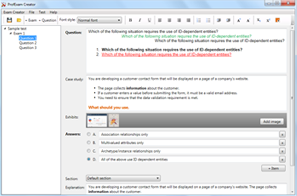
Files with VCEX extension can be opened by ProfExam Simulator.
Purchase
Coupon: TAURUSSIM_20OFF
Discount: 20%
Demo Questions
Question 1
To address shared monitoring and testing responsibilities in a cloud configuration, the provider might offer all these to the cloud customer except:
- Access to audit logs and performance data
- DLP solution results
- Security control administration
- SIM, SEIM. and SEM logs
Correct answer: C
Explanation:
While the provider might share any of the other options listed, the provider will not share administration of security controls with the customer. Security controls are the sole province of the provider. While the provider might share any of the other options listed, the provider will not share administration of security controls with the customer. Security controls are the sole province of the provider.
Question 2
What type of data does data rights management (DRM) protect?
- Consumer
- PII
- Financial
- Healthcare
Correct answer: A
Explanation:
DRM applies to the protection of consumer media, such as music, publications, video, movies, and soon. DRM applies to the protection of consumer media, such as music, publications, video, movies, and soon.
Question 3
Which ITIL component is an ongoing, iterative process of tracking all deployed and configured resources that an organization uses and depends on, whether they are hosted in a traditional data center or a cloud?
- Problem management
- Continuity management
- Availability management
- Configuration management
Correct answer: D
Explanation:
Configuration management tracks and maintains detailed information about all IT components within an organization. Availability management is focused on making sure system resources, processes, personnel, and toolsets are properly allocated and secured to meet SLA requirements. Continuity management (or business continuity management) is focused on planning for the successful restoration of systems or services after an unexpected outage, incident, or disaster. Problem management is focused on identifying and mitigating known problems and deficiencies before they occur. Configuration management tracks and maintains detailed information about all IT components within an organization. Availability management is focused on making sure system resources, processes, personnel, and toolsets are properly allocated and secured to meet SLA requirements. Continuity management (or business continuity management) is focused on planning for the successful restoration of systems or services after an unexpected outage, incident, or disaster. Problem management is focused on identifying and mitigating known problems and deficiencies before they occur.
Question 4
Key maintenance and security are paramount within a cloud environment due to the widespread use of encryption for both data and transmissions.
Which of the following key-management systems would provide the most robust control over and ownership of the key-management processes for the cloud customer?
- Remote key management service
- Local key management service
- Client key management service
- Internal key management service
Correct answer: A
Explanation:
A remote key management system resides away from the cloud environment and is owned and controlled by the cloud customer. With the use of a remote service, the cloud customer can avoid being locked into a proprietary system from the cloud provider, but also must ensure that service is compatible with the services offered by the cloud provider. A local key management system resides on the actual servers using the keys, which does not provide optimal security or control over them. Both the terms internal key management service and client key management service are provided as distractors. A remote key management system resides away from the cloud environment and is owned and controlled by the cloud customer. With the use of a remote service, the cloud customer can avoid being locked into a proprietary system from the cloud provider, but also must ensure that service is compatible with the services offered by the cloud provider. A local key management system resides on the actual servers using the keys, which does not provide optimal security or control over them. Both the terms internal key management service and client key management service are provided as distractors.
Question 5
What type of host is exposed to the public Internet for a specific reason and hardened to perform only that function for authorized users?
- Proxy
- Bastion
- Honeypot
- WAF
Correct answer: B
Explanation:
A bastion host is a server that is fully exposed to the public Internet, but is extremely hardened to prevent attacks and is usually dedicated for a specific application or usage; it is not something that will serve multiple purposes. This singular focus allows for much more stringent security hardening and monitoring. A bastion host is a server that is fully exposed to the public Internet, but is extremely hardened to prevent attacks and is usually dedicated for a specific application or usage; it is not something that will serve multiple purposes. This singular focus allows for much more stringent security hardening and monitoring.
Question 6
Which of the following APIs are most commonly used within a cloud environment?
- REST and SAML
- SOAP and REST
- REST and XML
- XML and SAML
Correct answer: B
Explanation:
Simple Object Access Protocol (SOAP) and Representational State Transfer (REST) are the most commonly used APIs within a cloud environment. Extensible Markup Language (XML) and Security Assertion Markup Language (SAML) are both standards for exchanging encoded data between two parties, with XML being for more general use and SAML focused on authentication and authorization data. Simple Object Access Protocol (SOAP) and Representational State Transfer (REST) are the most commonly used APIs within a cloud environment. Extensible Markup Language (XML) and Security Assertion Markup Language (SAML) are both standards for exchanging encoded data between two parties, with XML being for more general use and SAML focused on authentication and authorization data.
Question 7
Which of the following is considered an internal redundancy for a data center?
- Power feeds
- Chillers
- Network circuits
- Generators
Correct answer: B
Explanation:
Chillers and cooling systems are internal to a data center and its operations, and as such they are considered an internal redundancy. Power feeds, network circuits, and generators are all external to a data center and provide utility services to them, which makes them an external redundancy. Chillers and cooling systems are internal to a data center and its operations, and as such they are considered an internal redundancy. Power feeds, network circuits, and generators are all external to a data center and provide utility services to them, which makes them an external redundancy.
Question 8
What process entails taking sensitive data and removing the indirect identifiers from each data object so that the identification of a single entity would not be possible?
- Tokenization
- Encryption
- Anonymization
- Masking
Correct answer: C
Explanation:
Anonymization is a type of masking, where indirect identifiers are removed from a data set to prevent the mapping back of data to an individual. Although masking refers to the overall approach of covering sensitive data, anonymization is the best answer here because it is more specific to exactly what is being asked. Tokenization involves the replacement of sensitive data with a key value that can be matched back to the real value. However, it is not focused on indirect identifiers or preventing the matching to an individual. Encryption refers to the overall process of protecting data via key pairs and protecting confidentiality. Anonymization is a type of masking, where indirect identifiers are removed from a data set to prevent the mapping back of data to an individual. Although masking refers to the overall approach of covering sensitive data, anonymization is the best answer here because it is more specific to exactly what is being asked. Tokenization involves the replacement of sensitive data with a key value that can be matched back to the real value. However, it is not focused on indirect identifiers or preventing the matching to an individual. Encryption refers to the overall process of protecting data via key pairs and protecting confidentiality.
Question 9
Which of the following is considered an administrative control?
- Keystroke logging
- Access control process
- Door locks
- Biometric authentication
Correct answer: B
Explanation:
A process is an administrative control; sometimes, the process includes elements of other types of controls (in this case, the access control mechanism might be a technical control, or it might be a physical control), but the process itself is administrative. Keystroke logging is a technical control (or an attack, if done for malicious purposes, and not for auditing); door locks are a physical control; and biometric authentication is a technological control. A process is an administrative control; sometimes, the process includes elements of other types of controls (in this case, the access control mechanism might be a technical control, or it might be a physical control), but the process itself is administrative. Keystroke logging is a technical control (or an attack, if done for malicious purposes, and not for auditing); door locks are a physical control; and biometric authentication is a technological control.
Question 10
Which of the following areas of responsibility would be shared between the cloud customer and cloud provider within the Software as a Service (SaaS) category?
- Data
- Governance
- Application
- Physical
Correct answer: C
Explanation:
With SaaS, the application is a shared responsibility between the cloud provider and cloud customer. Although the cloud provider is responsible for deploying, maintaining, and securing the application, the cloud customer does carry some responsibility for the configuration of users and options. Regardless of the cloud service category used, the physical environment is always the sole responsibility of the cloud provider. With all cloud service categories, the data and governance are always the sole responsibility of the cloud customer. With SaaS, the application is a shared responsibility between the cloud provider and cloud customer. Although the cloud provider is responsible for deploying, maintaining, and securing the application, the cloud customer does carry some responsibility for the configuration of users and options. Regardless of the cloud service category used, the physical environment is always the sole responsibility of the cloud provider. With all cloud service categories, the data and governance are always the sole responsibility of the cloud customer.
Question 11
Within a federated identity system, which of the following would you be MOST likely to use for sending information for consumption by a relying party?
- XML
- HTML
- WS-Federation
- SAML
Correct answer: D
Explanation:
The Security Assertion Markup Language (SAML) is the most widely used method for encoding and sending attributes and other information from an identity provider to a relying party.WS-Federation, which is used by Active Directory Federation Services (ADFS), is the second most used method for sending information to a relying party, but it is not a better choice than SAML. XML is similar to SAML in the way it encodes and labels data, but it does not have all of the required extensions that SAML does. HTML is not used within federated systems at all. The Security Assertion Markup Language (SAML) is the most widely used method for encoding and sending attributes and other information from an identity provider to a relying party.WS-Federation, which is used by Active Directory Federation Services (ADFS), is the second most used method for sending information to a relying party, but it is not a better choice than SAML. XML is similar to SAML in the way it encodes and labels data, but it does not have all of the required extensions that SAML does. HTML is not used within federated systems at all.
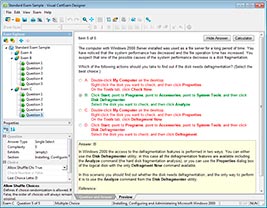
HOW TO OPEN VCE FILES
Use VCE Exam Simulator to open VCE files
HOW TO OPEN VCEX FILES
Use ProfExam Simulator to open VCEX files
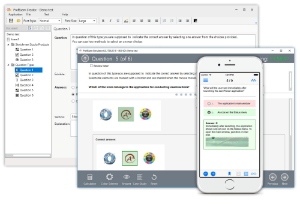
ProfExam at a 20% markdown
You have the opportunity to purchase ProfExam at a 20% reduced price
Get Now!