Download Oracle WebLogic Server 12c: Advanced Administrator II.1z0-134.ExamTopics.2026-07-14.45q.vcex
| Vendor: | Oracle |
| Exam Code: | 1z0-134 |
| Exam Name: | Oracle WebLogic Server 12c: Advanced Administrator II |
| Date: | Jul 14, 2026 |
| File Size: | 601 KB |
How to open VCEX files?
Files with VCEX extension can be opened by ProfExam Simulator.
Purchase
Coupon: TAURUSSIM_20OFF
Discount: 20%
Demo Questions
Question 1
You are using the administration console to monitor messages in a queue.
Which three tasks can be performed while doing this monitoring? (Choose three.)
- Create a new message in the queue.
- Duplicate a message.
- Monitor the content of a message.
- Delete the message from the queue.
- Merge two messages.
- Alter the ordering of the messages.
Correct answer: C, D, F
Question 2
In order to leverage replication and high availability features of your back-end database, among other benefits, you are configuring a JDBC TLOG store to persist transaction logs.
Since something went wrong during the setup of the TLOG, you are reviewing the configuration considerations for TLOG.
Which two guidelines are true for configuring JDBC TLOG stores? (Choose two.)
- Only one JDBC TLOG store can be configured per WebLogic Server.
- JDBC TLOG stores should only be configured for RAC databases.
- Only globally-scoped (not application-scoped) data sources can be targeted to a JDBC TLOG store.
- Multiple WebLogic Servers can share the same JDBC TLOG store.
Correct answer: A, C
Explanation:
A: Only one JDBC TLOG store can be configured per WebLogic Server. Conversely, multiple WebLogic Servers can not share a JDBC TLOG store.C: Only globally-scoped (not application-scoped) data sources can be targeted to a JDBC TLOG store.Reference:https://docs.oracle.com/cd/E24329_01/web.1211/e24432/store.htm#CNFGD290 A: Only one JDBC TLOG store can be configured per WebLogic Server. Conversely, multiple WebLogic Servers can not share a JDBC TLOG store.
C: Only globally-scoped (not application-scoped) data sources can be targeted to a JDBC TLOG store.
Reference:
https://docs.oracle.com/cd/E24329_01/web.1211/e24432/store.htm#CNFGD290
Question 3
You have an application already deployed in a production environment that needs a modification to one of its tuning parameters. Currently, that tuning parameter has a default value since there was neither a deployment descriptor used nor a deployment plan included with the application deployment. You now attempt to use the Administration Console web application to make a dynamic modification to that parameter.
Which statement is true? (Choose the best answer.)
- A new deployment plan will be generated and saved at the indicated location.
- The modification attempt will fail because there is no deployment descriptor included within the application.
- The modification attempt will fail because there is no existing deployment plan associated with the application.
- A new skeleton plan.xml will be generated if a plan folder is detected with the deployed application.
Correct answer: D
Explanation:
Defining tuning parameters is not required in order to successfully deploy an application. If an applications deployment descriptors and deployment plan do not define tuning parameters, WebLogic Server uses default values. The Administration Console automatically uses a deployment plan named plan.xml in the \plan subdirectory of an application root directory if one is available.Reference:https://docs.oracle.com/cd/E11035_01/wls100/deployment/config.html Defining tuning parameters is not required in order to successfully deploy an application. If an applications deployment descriptors and deployment plan do not define tuning parameters, WebLogic Server uses default values. The Administration Console automatically uses a deployment plan named plan.xml in the \plan subdirectory of an application root directory if one is available.
Reference:
https://docs.oracle.com/cd/E11035_01/wls100/deployment/config.html
Question 4
You are monitoring a WebLogic JDBC data source and have decided to drop some connections because an earlier peak usage condition has now ended. In addition, this data source has not been enabled for automatic shrinking.
What will occur once you execute the shrink() method on that JDBCDataSourceRuntimeMBean?
- The number of connections in the pool will be reduced to the greater of either the current number of connections in use or to the minCapacity property setting.
- The number of connections in the pool will be reduced to the current number of connections in use regardless of the minCapacity property setting.
- The number of connections in the pool will be reduced to the minCapacity property setting regardless of the current number of connections in use.
- The number of unused connections in the pool will be reduced by half.
Correct answer: A
Explanation:
When you shrink a data source, WebLogic Server reduces the number of connections in the pool to the greater of either the initial capacity or the number of connections currently in use.Reference:https://docs.oracle.com/cd/E13222_01/wls/docs92/jdbc_admin/manage.html#wp1048129 When you shrink a data source, WebLogic Server reduces the number of connections in the pool to the greater of either the initial capacity or the number of connections currently in use.
Reference:
https://docs.oracle.com/cd/E13222_01/wls/docs92/jdbc_admin/manage.html#wp1048129
Question 5
You are planning to use WebLogic JMS for implementing my enterprise messaging architecture. Which messaging paradigm is invalid in this context? (Choose the best answer.)
- Point to Point messaging
- Publish Subscribe messaging
- Datagram messaging
- Persistent messaging
Correct answer: C
Explanation:
Incorrect Answers:A, B: JMS supports two messaging models: point-to-point (PTP) and publish/subscribe (pub/sub).D: As per the "Message Delivery Mode" section of the JMS Specification, messages can be specified as persistent or non-persistent.Reference:http://docs.oracle.com/cd/E12840_01/wls/docs103/jms/fund.html Incorrect Answers:
A, B: JMS supports two messaging models: point-to-point (PTP) and publish/subscribe (pub/sub).
D: As per the "Message Delivery Mode" section of the JMS Specification, messages can be specified as persistent or non-persistent.
Reference:
http://docs.oracle.com/cd/E12840_01/wls/docs103/jms/fund.html
Question 6
You are managing and monitoring durable subscribers for your JMS topics to ensure that all the subscribers would receive persistent messages.
However, JMS connections are currently restricted, so only one connection with the same client ID could exist in the scope of your cluster.
On which page of the Administration Console can you set Client ID Policy to unrestricted in order to lift this restriction? (Choose the best answer.)
- Topic > Monitoring > Durable Subscribers
- Connection Factory > Configuration > Client
- Topic > Configuration > Thresholds and Quotas
- Topic > Configuration > Overrides
- Topic > Configuration > Durable Subscribers
- JMS Server > Configuration > Durable Subscribers
Correct answer: B
Explanation:
You can find help on Client ID Policy configuration through the following path:OTN Home > Oracle WebLogic Server 12.1.1.0 Documentation > Administration Console Online Help > JMS Connection Factory: Configuration: ClientReference:http://docs.oracle.com/cd/E24329_01/apirefs.1211/e24401/pagehelp/JMSjmsconnectionjmsconnectionfactoryconfigclientparamstitle.html You can find help on Client ID Policy configuration through the following path:
OTN Home > Oracle WebLogic Server 12.1.1.0 Documentation > Administration Console Online Help > JMS Connection Factory: Configuration: Client
Reference:
http://docs.oracle.com/cd/E24329_01/apirefs.1211/e24401/pagehelp/JMSjmsconnectionjmsconnectionfactoryconfigclientparamstitle.html
Question 7
You are creating a new domain with WLST.
Identify three parameters that can be customized with the setOption command. (Choose three.)
- the JDK that will be used to start the domain
- the domain name
- whether or not the domain will run in production mode
- the default persistent store type for the domain
- whether or not to automatically start the Node Manager
- the default diagnostic profile for the domain
Correct answer: A, B, C
Explanation:
setOption sets options related to a domain creation or update.Syntax: setOption(optionName, optionValue)Option names include:* JavaHomeHome directory for the JVM to be used when starting the server. The default for this option depends on the platform on which you install WebLogicServer. Update JavaHome to point to the jre directory for the JDK that you are using for WebLogic Server.* DomainNameName of the domain.* ServerStartModeMode to use when starting the server for the newly created domain. This value can be dev (development) or prod (production). This option defaults to dev.Reference:https://docs.oracle.com/cd/E13222_01/wls/docs100/config_scripting/reference.html#wp1258774 setOption sets options related to a domain creation or update.
Syntax: setOption(optionName, optionValue)
Option names include:
* JavaHomeHome directory for the JVM to be used when starting the server. The default for this option depends on the platform on which you install WebLogic
Server. Update JavaHome to point to the jre directory for the JDK that you are using for WebLogic Server.
* DomainNameName of the domain.
* ServerStartModeMode to use when starting the server for the newly created domain. This value can be dev (development) or prod (production). This option defaults to dev.
Reference:
https://docs.oracle.com/cd/E13222_01/wls/docs100/config_scripting/reference.html#wp1258774
Question 8
Which two objects can be considered potential clients of a Node Manager? (Choose two.)
- an administration server
- a WLST session
- an HTTP server
- any other Node Manager
- a remote JMS client
- the weblogic.Deployer utility
Correct answer: A, B
Explanation:
A Node Manager client can be local or remote to the Node Managers with which it communicates. You access either version of Node Managerthe Java version or the script-based (SSH) versionfrom the following clients:A: an administration server -B: WLST commands and scriptsWLST offline serves as a Node Manager command-line interface that can run in the absence of a running AdministrationServer.Reference:https://docs.oracle.com/cd/E28280_01/web.1111/e13740/overview.htm#NODEM119 A Node Manager client can be local or remote to the Node Managers with which it communicates. You access either version of Node Managerthe Java version or the script-based (SSH) versionfrom the following clients:
A: an administration server -
B: WLST commands and scriptsWLST offline serves as a Node Manager command-line interface that can run in the absence of a running Administration
Server.
Reference:
https://docs.oracle.com/cd/E28280_01/web.1111/e13740/overview.htm#NODEM119
Question 9
You have a versioned application deployed in your production environment. You have been asked to troubleshoot why the most recent production redeployment appeared to allow the older version to retire too quickly.
In this case, the application had active RMI clients, but their subsequent calls were directed to the newer version immediately rather than waiting for the expected five minutes defined by the retirement timeout argument. The script command was: java weblogic.Deployer adminurl http://localhost:7001 user weblogic
-password Welcome1 redeploy name myDeployment
-source /myDeployments/myApplication/appX
-retiretimeout 300
You expected the older version to remain active (when there are active RMI clients) for five minutes after executing the production redeployment.
Which modification should have been made to this command to ensure the older version remains active? (Choose the best answer.)
- java weblogic.Deployer adminurl http://localhost:7001 user weblogic -password Welcome1 redeploy name myDeployment -source /myDeployments/myApplication/appX -retiretimeout 300 rmigraceperiod 300
- java weblogic.Deployer adminurl http://localhost:7001 user weblogic -password Welcome1 redeploy name myDeployment -source /myDeployments/myApplication/appX -retiretimeout 300 -keepsessions
- java weblogic.Deployer adminurl http://localhost:7001 user weblogic -password Welcome1 redeploy name myDeployment -source /myDeployments/myApplication/appX -retiretimeout 300 timeout 300
- java weblogic.Deployer adminurl http://localhost:7001 user weblogic -password Welcome1 redeploy name myDeployment -source /myDeployments/myApplication/appX -retiretimeout 300 remote
Correct answer: D
Explanation:
The remote argument indicates that weblogic.Deployer is not running on the same machine as the Administration Server, and that source paths specified in the command are valid for the Administration Server machine itself. If you do not use the -remote option, weblogic.Deployer assumes that all source paths are valid paths on the local machine.Incorrect Answers:weblogic.Deployer does not have arguments named rmigraceperiod, -keepsessions, or timeout.Reference:https://docs.oracle.com/cd/E13222_01/wls/docs90/deployment/wldeployer.html The remote argument indicates that weblogic.Deployer is not running on the same machine as the Administration Server, and that source paths specified in the command are valid for the Administration Server machine itself. If you do not use the -remote option, weblogic.Deployer assumes that all source paths are valid paths on the local machine.
Incorrect Answers:
weblogic.Deployer does not have arguments named rmigraceperiod, -keepsessions, or timeout.
Reference:
https://docs.oracle.com/cd/E13222_01/wls/docs90/deployment/wldeployer.html
Question 10
What is the file extension for a domain extension template? (Choose the best answer.)
- .jar
- .zip
- .ext
- .tpl
- .war
- .ear
Correct answer: A
Explanation:
The WebLogic Server Default Domain Extension Template filename is wls_default.jar. It extends the Basic WebLogic Server domain with a web application designed to guide new users through an introduction to WebLogic Server.Reference:https://docs.oracle.com/cd/E13179_01/common/docs102/tempref/tempref.html#wp1215064 The WebLogic Server Default Domain Extension Template filename is wls_default.jar. It extends the Basic WebLogic Server domain with a web application designed to guide new users through an introduction to WebLogic Server.
Reference:
https://docs.oracle.com/cd/E13179_01/common/docs102/tempref/tempref.html#wp1215064
Question 11
You are tasked with creating an Extension Template for an existing domain.
What are three options that are presented during the extension creation process? (Choose three.)
- Use Domain as a Source
- Use Template as a Source
- Scripts and Files
- SQL Script Files
- Company Name
- Revision Number
- Creation Date
- Operating System requirement
Correct answer: A, B, D
Explanation:
AB: The Select a Template Configuration Source window prompts you to choose the application template or domain directory from which you want to create an extension template.D: The Import SQL Scripts window prompts you to add SQL scripts for each database that you expect to be used with the domains created from this template.Reference:https://docs.oracle.com/cd/E13196_01/platform/docs81/confgwiz/appbuild.html AB: The Select a Template Configuration Source window prompts you to choose the application template or domain directory from which you want to create an extension template.
D: The Import SQL Scripts window prompts you to add SQL scripts for each database that you expect to be used with the domains created from this template.
Reference:
https://docs.oracle.com/cd/E13196_01/platform/docs81/confgwiz/appbuild.html
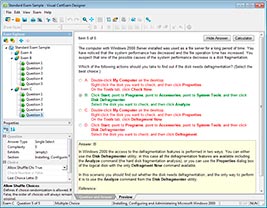
HOW TO OPEN VCE FILES
Use VCE Exam Simulator to open VCE files
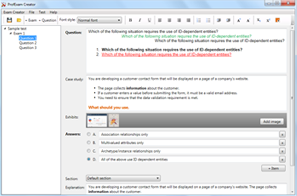
HOW TO OPEN VCEX FILES
Use ProfExam Simulator to open VCEX files
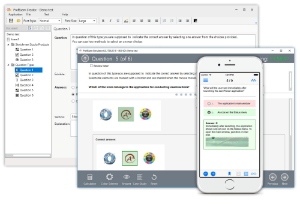
ProfExam at a 20% markdown
You have the opportunity to purchase ProfExam at a 20% reduced price
Get Now!