Download Portfolio Management Professional.PfMP.Actual4Test.2026-11-10.490q.vcex
| Vendor: | PMI |
| Exam Code: | PfMP |
| Exam Name: | Portfolio Management Professional |
| Date: | Nov 10, 2026 |
| File Size: | 2 MB |
How to open VCEX files?
Files with VCEX extension can be opened by ProfExam Simulator.
Purchase
Coupon: TAURUSSIM_20OFF
Discount: 20%
Demo Questions
Question 1
A portfolio manager needs to continuously balance the need and requirements with the available resources and needs to maintain a balanced portfolio and portfolio resources in order to optimize delivery. Capability and Capacity analysis is performed abundantly throughout the portfolio lifecycle and spans multiple processes.
While performing the capability and capacity analysis during the manage supply and demand process, which of the following you use to maximize the use of resources
- Soft Booking
- Allocating scarce resources
- Equity Protection
- Continuous monitoring of the progress
Correct answer: A
Question 2
Embracing a management-by-projects culture means there tends to be far more projects to pursue than available resources. An approach then is required to guide decisions as to components in the portfolio. A best practice to follow is to:
- Set forth in the portfolio strategic plan a prioritization model
- Develop a portfolio roadmap
- Focus on both internal and external environmental changes
- Focus on sustainment of project benefits
Correct answer: A
Explanation:
According to theStandard for Portfolio Management, when an organization faces a "management-by-projects" culture with more proposals than resources, it must move away from ad-hoc selection and toward a structured, objective method of evaluation. This is achieved through thePortfolio Strategic Plan.The rationale forOption Ais as follows:Foundation for Selection:ThePortfolio Strategic Planis the governing document that links the organizational strategy to the portfolio components. By including aPrioritization Modelwithin this plan, the organization establishes the "rules" for how projects will be ranked against one another. This ensures that resource allocation is based on strategic value rather than "who shouts the loudest" or internal politics.Objective Decision-Making:A prioritization model (often using weighted scoring, Net Present Value (NPV), or strategic alignment scores) allows the Portfolio Review Board to evaluate a high volume of projects consistently. It provides a transparent framework for deciding which components should be authorized, which should be deferred, and which should be rejected due to resource constraints.Resource Optimization:In a resource-scarce environment, the prioritization model acts as a filter. It ensures that the limited "available resources" are directed toward thevital fewinitiatives that offer the highest return on investment and the strongest alignment with the organization's long-term vision.Why the other options are incorrect:Option B (Develop a portfolio roadmap):A roadmap is a visual timeline of authorized components. While useful for planning, it does notguide the decisionof which components to include; it merely displays the result of the selection and prioritization process.Option C (Focus on environmental changes):Monitoring internal and external changes is a key part ofStrategic Management, but it is a data-gathering activity. It provides thecontextfor the prioritization model but is not the "approach" or "tool" used to make the actual decisions on component entry.Option D (Focus on sustainment of project benefits):Benefit sustainment occurs after a project is completed and transitioned to operations. While important for overall value realization, it does not address the immediate problem of choosing between a multitude ofproposedprojects. According to theStandard for Portfolio Management, when an organization faces a "management-by-projects" culture with more proposals than resources, it must move away from ad-hoc selection and toward a structured, objective method of evaluation. This is achieved through thePortfolio Strategic Plan.
The rationale forOption Ais as follows:
Foundation for Selection:ThePortfolio Strategic Planis the governing document that links the organizational strategy to the portfolio components. By including aPrioritization Modelwithin this plan, the organization establishes the "rules" for how projects will be ranked against one another. This ensures that resource allocation is based on strategic value rather than "who shouts the loudest" or internal politics.
Objective Decision-Making:A prioritization model (often using weighted scoring, Net Present Value (NPV), or strategic alignment scores) allows the Portfolio Review Board to evaluate a high volume of projects consistently. It provides a transparent framework for deciding which components should be authorized, which should be deferred, and which should be rejected due to resource constraints.
Resource Optimization:In a resource-scarce environment, the prioritization model acts as a filter. It ensures that the limited "available resources" are directed toward thevital fewinitiatives that offer the highest return on investment and the strongest alignment with the organization's long-term vision.
Why the other options are incorrect:
Option B (Develop a portfolio roadmap):A roadmap is a visual timeline of authorized components. While useful for planning, it does notguide the decisionof which components to include; it merely displays the result of the selection and prioritization process.
Option C (Focus on environmental changes):Monitoring internal and external changes is a key part ofStrategic Management, but it is a data-gathering activity. It provides thecontextfor the prioritization model but is not the "approach" or "tool" used to make the actual decisions on component entry.
Option D (Focus on sustainment of project benefits):Benefit sustainment occurs after a project is completed and transitioned to operations. While important for overall value realization, it does not address the immediate problem of choosing between a multitude ofproposedprojects.
Question 3
Your company is currently on the verge of bankruptcy due to the lack of transparency within the organization; this alerted the CEO to take decisive actions and request that new reporting lines be established in order to be fully transparent. The new reporting lines triggered changes in roles & responsibilities for managing communication and communication policies & constraints. Where are these changes reflected when it relates to your portfolio?
- Portfolio Process Assets updates
- Portfolio Updates
- Portfolio Management Plan updates
- Organizational Process Assets updates
Correct answer: C
Explanation:
According to theStandard for Portfolio Management(PMI), when an organization undergoes a significant structural shift-such as establishing new reporting lines, changing roles and responsibilities, or revising communication policies-the primary document that governs these activities must be updated.Portfolio Management Plan (PMP) updates (Option C): The PMP is the central document that defines how the portfolio will be managed, executed, and controlled. It contains several subsidiary plans, most notably thePortfolio Communication Management Planand thePortfolio Governance Plan.Roles & Responsibilities: Changes to who reports to whom and who is responsible for specific communication outputs are core components of the Management Plan.Policies & Constraints: New transparency requirements dictated by the CEO become part of the portfolio's management methodology.When the "how-to" of managing the portfolio changes (the rules of engagement), thePortfolio Management Planis the formal output of that change process.Why other options are incorrect:A). Portfolio Process Assets (PPAs) updates: These are the physical tools, such as software, templates, and specific risk registers usedbythe portfolio. While templates might change eventually, the high-level shift in"reporting lines and responsibilities" is a plan-level change first.B). Portfolio Updates: This refers to changes in the actual list of components (projects/programs) or their attributes (status, budget, priority). Changing a reporting line does not necessarily change the list of projects being executed.D). Organizational Process Assets (OPAs) updates: These are the organization's historical databases and enterprise-wide templates. While the new policy might become an OPA forfutureportfolios, the immediate reflection of these changes for theactiveportfolio occurs within its own Management Plan.In summary, thePortfolio Management Planis the "living document" that must reflect the new governance and communication structure mandated by the CEO to ensure transparency. According to theStandard for Portfolio Management(PMI), when an organization undergoes a significant structural shift-such as establishing new reporting lines, changing roles and responsibilities, or revising communication policies-the primary document that governs these activities must be updated.
Portfolio Management Plan (PMP) updates (Option C): The PMP is the central document that defines how the portfolio will be managed, executed, and controlled. It contains several subsidiary plans, most notably thePortfolio Communication Management Planand thePortfolio Governance Plan.
Roles & Responsibilities: Changes to who reports to whom and who is responsible for specific communication outputs are core components of the Management Plan.
Policies & Constraints: New transparency requirements dictated by the CEO become part of the portfolio's management methodology.
When the "how-to" of managing the portfolio changes (the rules of engagement), thePortfolio Management Planis the formal output of that change process.
Why other options are incorrect:
A). Portfolio Process Assets (PPAs) updates: These are the physical tools, such as software, templates, and specific risk registers usedbythe portfolio. While templates might change eventually, the high-level shift in
"reporting lines and responsibilities" is a plan-level change first.
B). Portfolio Updates: This refers to changes in the actual list of components (projects/programs) or their attributes (status, budget, priority). Changing a reporting line does not necessarily change the list of projects being executed.
D). Organizational Process Assets (OPAs) updates: These are the organization's historical databases and enterprise-wide templates. While the new policy might become an OPA forfutureportfolios, the immediate reflection of these changes for theactiveportfolio occurs within its own Management Plan.
In summary, thePortfolio Management Planis the "living document" that must reflect the new governance and communication structure mandated by the CEO to ensure transparency.
Question 4
A problem related to internal corruption has occurred in your company. The CEO has setup a new management team and had to do budget cuts until the situation is stabilized. Your portfolio is highly affected by this budget cut and you were obliged to cancel a few components. What is your best course of action in this case?
- Cancel the components that are not performing well
- Do not cancel components; and request additional budget from the management
- Prioritize components and assign the available resources to them
- Raise the issue to the sponsor so he can get you additional resources
Correct answer: C
Explanation:
ExplanationThe budget cut is final and is instructed by the CEO, so the portfolio manager should act upon this decision.Canceling the components that are not performing well is not a good approach as they can be major or prerequisites to other needed components, etc. The correct answer is to prioritize the components in order to cancel the components with the least priorities in order to remain within budget Explanation
The budget cut is final and is instructed by the CEO, so the portfolio manager should act upon this decision.
Canceling the components that are not performing well is not a good approach as they can be major or prerequisites to other needed components, etc. The correct answer is to prioritize the components in order to cancel the components with the least priorities in order to remain within budget
Question 5
You have been managing a complex portfolio for the banking industry and it is sought to be the shifting to the top-notch digital banking era for one of the major international banks. You know you will have changes along the lifecycle and you plan to manage them correctly in order to maintain alignment and correct execution. If you need to reflect changes based on cost, requirements, and schedule. To which of the following section in the portfolio management plan will you refer?
- Performance management
- Change control and management
- Manage strategic change
- Resource management
Correct answer: B
Question 6
Assume you recently were hired to be the first portfolio manager at the leading producer of soft drink beverages. While the company is well known for one product, it wants to be the leader in other products and services as well. When you were hired, you told the CEO it would take time to fully implement portfolio management, and you first would prepare a number of artifacts. He set up a Portfolio Review Board, and its members are reviewing your work. As they reviewed the portfolio management plan, one of the members suggested you prepare an in-depth portfolio performance plan. Your first step is to:
- Align strategic management to the goals and objectives
- Review the prioritization model
- Assess the risk profile
- Review portfolio goals
Correct answer: D
Question 7
A portfolio includes a lot of independent components with the same strategic aim. As a portfolio manager you will need to preare a qualified list of components to be used to reach the strategic goals and objectives. What input can you use in order to define the mix of portfolio components?
- Portfolio Strategic Plan, Portfolio Roadmap, Portfolio Charter,Portfolio Process Assets, Portfolio Management Plan
- Portfolio Strategic Plan, Portfolio Roadmap, Portfolio Charter, Portfolio Process Assets, Portfolio
- Portfolio Strategic Plan, Portfolio Management Plan, Portfolio Roadmap, Portfolio Charter,Portfolio Process Assets, Portfolio
- Portfolio Strategic Plan, Portfolio Roadmap, Portfolio Charter, Portfolio Process Assets, Organizational Process Assets
Correct answer: C
Question 8
Along your portfolio lifecycle, you have been conducting multiple review meetings to ensure continuation from one phase to another and to ensure the alignment and value delivery, in addition to communicating decisions and valuable information to the related stakeholders. Changes to the approach of portfolio governance may be a result of review meetings. Which of the following options include updates to the governance model?
- Portfolio Process Assets updates
- Portfolio Strategic Plan updates
- Portfolio Management Plan updates
- Portfolio Reports
Correct answer: C
Question 9
In managing portfolio risks, which document is most useful to communicate a newly identified risk to stakeholders?
- Portfolio report
- Risk register
- Risk component chart
- Status report
Correct answer: D
Question 10
You have finalized optimizing your portfolio and want to avoid any delay by directly recommending the initiation of multiple portfolio components. What do you need for starting this?
- Portfolio Management Plan, Portfolio, Portfolio Reports, Portfolio Process Assets
- Portfolio Management Plan, Portfolio, Portfolio Reports, Portfolio Process Assets, Portfolio Roadmap
- Portfolio Management Plan, Portfolio, Portfolio Reports
- Portfolio Management Plan, Portfolio, Portfolio Reports, Portfolio Process Assets, Portfolio Strategic Plan
Correct answer: C
Explanation:
ExplanationThe question clearly targets the authorize portfolio process where you initiate portfolio components, and specifically the scenario asks about the inputs for it. The answer to this question is Portfolio Management Plan, Portfolio, Portfolio Reports Explanation
The question clearly targets the authorize portfolio process where you initiate portfolio components, and specifically the scenario asks about the inputs for it. The answer to this question is Portfolio Management Plan, Portfolio, Portfolio Reports
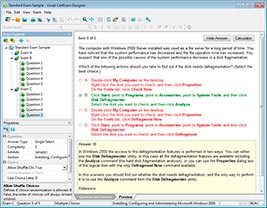
HOW TO OPEN VCE FILES
Use VCE Exam Simulator to open VCE files
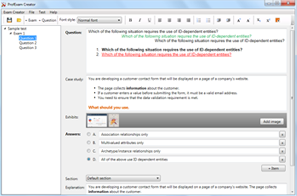
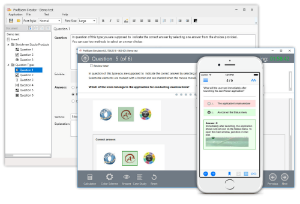
HOW TO OPEN VCEX FILES
Use ProfExam Simulator to open VCEX files
ProfExam at a 20% markdown
You have the opportunity to purchase ProfExam at a 20% reduced price
Get Now!