Download Salesforce Certified Slack Consultant.Slack-Con-201.DumpsBase.2026-07-08.30q.tqb
| Vendor: | Salesforce |
| Exam Code: | Slack-Con-201 |
| Exam Name: | Salesforce Certified Slack Consultant |
| Date: | Jul 08, 2026 |
| File Size: | 166 KB |
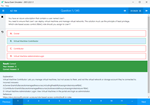
How to open TQB files?
Files with TQB (Taurus Question Bank) extension can be opened by Taurus Exam Studio.
Purchase
Coupon: TAURUSSIM_20OFF
Discount: 20%
Demo Questions
Question 1
Your client wants to enforce controls and display a warning every time that @channel, @here or @everyone is used in channels with six or more members.
How should you advise them?
- This is a default setting ― members will always get a warning when using @channel, @here or @everyone in any channel with at least six members.
- In org settings, organization policies, permissions tab, set up a Messaging policy to show a warning the first time someone logs on each day.
- In org settings, organization policies, permissions tab, you can set up a Messaging policy to show a warning at least once a day.
- In org settings, organization policies, permissions tab, set up a Messaging policy to show a warning when @channel, @here or @everyone is used.
Correct answer: D
Question 2
Your client is launching their Slack instance on Monday, March 1st and you have decided to offer three Slack User Essentials live training sessions to support their end users. The company is headquartered in San Francisco, and has additional offices in New York and in London.
How should you propose scheduling the three sessions to ensure you can deliver a tailored training experience in Slack?
- Host one session for San Francisco users prior to March 1st and the other two sessions after March 1st.
- Host weekly sessions on Mondays at 9am ET, starting on March 1st, ending on March 15th.
- Host three sessions to accommodate various time zones throughout the week of March 1st.
- Host three sessions at various times of the week prior to the March 1st launch.
Correct answer: C
Explanation:
The best answer is to host three sessions throughout the launch week to accommodate the company’s geographic spread. A live enablement plan must match the employee population, launch timing, and working time zones. Since the customer has users in San Francisco, New York, and London, one fixed session time creates an avoidable accessibility problem.Option C supports a tailored training experience because each regional audience can attend during reasonable working hours and ask questions relevant to their local usage patterns.Option A creates an uneven experience by training only one group before launch and delaying the others.Option B repeats the same session weekly but does not address regional time-zone needs.Option D trains before users can experience the live Slack environment, which can reduce relevance and retention. The Slack Consultant exam outline includes Learning and Enablement as a core domain, and the official prep trailmix separates enablement as a dedicated consultant workshop area.Reference topic: Learning and Enablement ― launch training, global user readiness, live training design, and adoption planning. The best answer is to host three sessions throughout the launch week to accommodate the company’s geographic spread. A live enablement plan must match the employee population, launch timing, and working time zones. Since the customer has users in San Francisco, New York, and London, one fixed session time creates an avoidable accessibility problem.
Option C supports a tailored training experience because each regional audience can attend during reasonable working hours and ask questions relevant to their local usage patterns.
Option A creates an uneven experience by training only one group before launch and delaying the others.
Option B repeats the same session weekly but does not address regional time-zone needs.
Option D trains before users can experience the live Slack environment, which can reduce relevance and retention. The Slack Consultant exam outline includes Learning and Enablement as a core domain, and the official prep trailmix separates enablement as a dedicated consultant workshop area.
Reference topic: Learning and Enablement ― launch training, global user readiness, live training design, and adoption planning.
Question 3
You learn during the project kickoff session that a client recently purchased Enterprise Grid with the hopes of growing their market share by strengthening partnerships with external vendors. The client is also looking to improve company culture by encouraging employees to engage in cross-functional collaboration more often.
You need to help the client draft their vision statement for Slack.
Which vision statement is the most appropriate for your client?
- Slack will help ensure our people and teams have the best collaboration tools by using a leading enterprise software that is intelligent, innovative and flexible.
- With Slack we will build deeper connections by using a single global collaboration platform.
- Slack will be the core communication platform and will scale our business by providing a secure method of communication with external organizations.
- Slack will enable us to expedite our sales cycle time by 50%, while supporting our employees with seamless communication power.
Correct answer: B
Explanation:
The best answer is B because it captures both major discovery themes: stronger external partnerships and stronger internal culture through cross-functional collaboration. A good Slack vision statement should be concise, outcome-oriented, and aligned to the client’s stated business goals. “Build deeper connections” maps directly to the client’s desire to improve employee culture and external partnership strength, while “single global collaboration platform” aligns to the Enterprise Grid purchase and cross-functional operating model.Option A is generic vendor-language and does not reflect the client’s specific goals.Option C focuses heavily on external communication security and business scale, but it misses the employee culture and cross-functional collaboration requirement.Option D introduces an unsupported metric, “expedite sales cycle time by 50%,” which was not stated in discovery; a consultant should not invent quantified outcomes unless the client has validated them. The correct vision statement must synthesize discovery inputs without overreaching.Reference topic: Discovery ― vision statement development, business-outcome alignment, external collaboration goals, culture goals, and Enterprise Grid value framing. The best answer is B because it captures both major discovery themes: stronger external partnerships and stronger internal culture through cross-functional collaboration. A good Slack vision statement should be concise, outcome-oriented, and aligned to the client’s stated business goals. “Build deeper connections” maps directly to the client’s desire to improve employee culture and external partnership strength, while “single global collaboration platform” aligns to the Enterprise Grid purchase and cross-functional operating model.
Option A is generic vendor-language and does not reflect the client’s specific goals.
Option C focuses heavily on external communication security and business scale, but it misses the employee culture and cross-functional collaboration requirement.
Option D introduces an unsupported metric, “expedite sales cycle time by 50%,” which was not stated in discovery; a consultant should not invent quantified outcomes unless the client has validated them. The correct vision statement must synthesize discovery inputs without overreaching.
Reference topic: Discovery ― vision statement development, business-outcome alignment, external collaboration goals, culture goals, and Enterprise Grid value framing.
Question 4
You’re advising your client to set up user support processes.
What is the best course of action for a user to resolve a Slack access issue?
- Restart the computer, and connect and disconnect to Wi-Fi. If the issue remains unresolved, request a new password by logging a service ticket.
- Log a service ticket with the IT department about access. If no response is received within 24 hours, follow up with an email.
- Post in the #help-slack channel and wait for a response. Follow up with a phone call to the service desk to regain access.
- Search the company’s IT resources by reading through troubleshooting instructions for access to Slack. If the issue remains unresolved, escalate to a service ticket.
Correct answer: D
Explanation:
The best course of action is a structured support path: self-service first, escalation second. A mature Slack support process should give users clear internal resources for common access issues, such as SSO instructions, password guidance, supported device requirements, or known troubleshooting steps. If the user cannot resolve the issue through documented resources, the next step is a service ticket so the IT or Slack admin team can handle the problem through a trackable support workflow.Option A is too narrow and assumes the issue is local connectivity or password-related.Option B skips self-service and increases ticket volume unnecessarily.Option C relies on a channel and a phone call, which may be useful in some urgent cases but is not the best general process for access issues because access problems often require identity-provider or admin intervention. Slack’s help ecosystem emphasizes searchable help resources and structured admin support, and the consultant’s role is to design support processes that scale beyond launch.Reference topic: Learning and Enablement ― user support model, self-service resources, escalation paths, and adoption operations. The best course of action is a structured support path: self-service first, escalation second. A mature Slack support process should give users clear internal resources for common access issues, such as SSO instructions, password guidance, supported device requirements, or known troubleshooting steps. If the user cannot resolve the issue through documented resources, the next step is a service ticket so the IT or Slack admin team can handle the problem through a trackable support workflow.
Option A is too narrow and assumes the issue is local connectivity or password-related.
Option B skips self-service and increases ticket volume unnecessarily.
Option C relies on a channel and a phone call, which may be useful in some urgent cases but is not the best general process for access issues because access problems often require identity-provider or admin intervention. Slack’s help ecosystem emphasizes searchable help resources and structured admin support, and the consultant’s role is to design support processes that scale beyond launch.
Reference topic: Learning and Enablement ― user support model, self-service resources, escalation paths, and adoption operations.
Question 5
In one of your proposed grid design options for a client, you include a social workspace for employees to build culture and to connect on special interests and hobbies.
Which workspace access type should you recommend?
- Open
- By Request
- Hidden
- Invite Only
Correct answer: A
Explanation:
The recommended access type is Open. A social workspace is intended to help employees build culture, join communities, and connect around special interests or hobbies. That purpose depends on broad discoverability and low-friction participation. An Open workspace allows eligible members of the Enterprise organization to find and join the workspace without approval, which fits a community-building use case.Option B, By Request, adds an approval step and is better suited for spaces where access should be reviewed, such as sensitive functions or semi-restricted business areas.Option C, Hidden, prevents users from discovering that the workspace exists, which directly conflicts with the purpose of encouraging employee connection.Option D, Invite Only, creates controlled access and is appropriate for limited membership or confidential work, not broad social engagement. A consultant should align workspace access level with the purpose of the workspace. For culture, community, and employee-interest spaces, the access model should reduce friction and encourage participation.Reference topic: Grid Design ― workspace access levels, social workspace design, community-building use cases, and Enterprise Grid access recommendations. The recommended access type is Open. A social workspace is intended to help employees build culture, join communities, and connect around special interests or hobbies. That purpose depends on broad discoverability and low-friction participation. An Open workspace allows eligible members of the Enterprise organization to find and join the workspace without approval, which fits a community-building use case.
Option B, By Request, adds an approval step and is better suited for spaces where access should be reviewed, such as sensitive functions or semi-restricted business areas.
Option C, Hidden, prevents users from discovering that the workspace exists, which directly conflicts with the purpose of encouraging employee connection.
Option D, Invite Only, creates controlled access and is appropriate for limited membership or confidential work, not broad social engagement. A consultant should align workspace access level with the purpose of the workspace. For culture, community, and employee-interest spaces, the access model should reduce friction and encourage participation.
Reference topic: Grid Design ― workspace access levels, social workspace design, community-building use cases, and Enterprise Grid access recommendations.
Question 6
During the enablement discovery call, your client confirmed that organization-wide communications are announced to employees by the executive leadership team. Subsequent communications are sent by department and/or director-level leadership with the expectation that they will optimize communications to align with the change management needs of their departments.
Which recommendation should be included in your client’s Communication Plan to meet these needs?
- Designate a department Slack channel dedicated to Slack announcements for each department at the organization.
- Do not allow threading in any announcement channels.
- Identify one stakeholder to facilitate general communications, as well as others to carry out department-specific communications.
- Create both custom emojis and workflows that can be used to gauge employee sentiment and feedback.
Correct answer: C
Explanation:
The correct recommendation is to identify one stakeholder for general communications and additional stakeholders for department-specific communications. The scenario describes a layered communication model: executive leadership owns broad organizational messaging, while department or director-level leaders adapt follow-up communications to the needs of their own teams. A strong Slack communication plan must mirror that operating model by defining communication owners, audiences, message responsibilities, and delivery channels.Option A may be useful in some organizations, but simply creating department announcement channels does not solve ownership and coordination.Option B is too rigid; threading can be useful for keeping questions and discussion organized depending on the channel’s purpose.Option D focuses on engagement tools, but sentiment capture is secondary to the core requirement: structured communication ownership across enterprise and department levels.Option C directly supports change management because it assigns accountability for enterprise-wide communications and localized reinforcement. This prevents message gaps, duplicate announcements, and inconsistent guidance during launch.Reference topic: Learning and Enablement ― communication planning, stakeholder ownership, change management, department-level reinforcement, and launch communications. The correct recommendation is to identify one stakeholder for general communications and additional stakeholders for department-specific communications. The scenario describes a layered communication model: executive leadership owns broad organizational messaging, while department or director-level leaders adapt follow-up communications to the needs of their own teams. A strong Slack communication plan must mirror that operating model by defining communication owners, audiences, message responsibilities, and delivery channels.
Option A may be useful in some organizations, but simply creating department announcement channels does not solve ownership and coordination.
Option B is too rigid; threading can be useful for keeping questions and discussion organized depending on the channel’s purpose.
Option D focuses on engagement tools, but sentiment capture is secondary to the core requirement: structured communication ownership across enterprise and department levels.
Option C directly supports change management because it assigns accountability for enterprise-wide communications and localized reinforcement. This prevents message gaps, duplicate announcements, and inconsistent guidance during launch.
Reference topic: Learning and Enablement ― communication planning, stakeholder ownership, change management, department-level reinforcement, and launch communications.
Question 7
You are designing a learning plan for your client. You are trying to determine the best way to provide enablement for their twenty Workspace Admins who are spread evenly across North America, China and Australia. The statement of work (SOW) only specifies one Admin Essentials training.
What recommendation can you make to provide admin training materials within the scope of the project?
- Create a tailored series of videos geared towards Workspace Admins.
- Offload Admin Essentials training to the client’s IT team.
- Suggest all Workspace Admins direct their questions to 24/7 support.
- Revise the SOW to include Admin Essentials sessions for each time zone.
Correct answer: A
Explanation:
The correct answer is A. The constraint is explicit: the SOW only includes one Admin Essentials training, but the client has twenty Workspace Admins distributed across North America, China, and Australia. A tailored video series provides reusable, asynchronous enablement that can reach all admins across time zones without exceeding scope. This is a practical learning-design response: it preserves project boundaries while still giving the admin audience role-specific training materials.Option B is poor consulting practice because offloading the training to the client’s IT team does not ensure quality, consistency, or alignment with the Slack launch plan.Option C is not enablement; 24/7 support is reactive and does not prepare admins to perform their role.Option D may be reasonable if the client wants expanded live training, but it changes scope and therefore does not meet the phrase “within the scope of the project.” The best answer is to supplement the single live Admin Essentials session with scalable admin-focused video content.Reference topic: Learning and Enablement ― admin training strategy, asynchronous enablement, time-zone coverage, SOW constraints, and scalable learning materials. The correct answer is A. The constraint is explicit: the SOW only includes one Admin Essentials training, but the client has twenty Workspace Admins distributed across North America, China, and Australia. A tailored video series provides reusable, asynchronous enablement that can reach all admins across time zones without exceeding scope. This is a practical learning-design response: it preserves project boundaries while still giving the admin audience role-specific training materials.
Option B is poor consulting practice because offloading the training to the client’s IT team does not ensure quality, consistency, or alignment with the Slack launch plan.
Option C is not enablement; 24/7 support is reactive and does not prepare admins to perform their role.
Option D may be reasonable if the client wants expanded live training, but it changes scope and therefore does not meet the phrase “within the scope of the project.” The best answer is to supplement the single live Admin Essentials session with scalable admin-focused video content.
Reference topic: Learning and Enablement ― admin training strategy, asynchronous enablement, time-zone coverage, SOW constraints, and scalable learning materials.
Question 8
Your client is considering pre-approving certain apps for their Enterprise Grid, and asks you to describe the benefits of using pre-approved apps.
Which two benefits would you share about pre-approving apps?
- Allows employees to connect directly with the app owner to answer any questions or troubleshoot errors.
- Decreases the number of app requests that Slack admins need to manage, thereby reducing the admin workload.
- Provides employees the ability to create custom workflows for their everyday use cases.
- Allows employees of the organization to install and use pre-approved apps without submitting an app request.
- Allows employees of the organization to install and use pre-approved apps by means of an elegant walkthrough wizard.
Correct answer: A, B, D
Explanation:
The correct answers are B andD. Pre-approving apps is an app governance mechanism that reduces administrative friction while maintaining control. When app approval is enabled, users may need approval before installing apps; however, apps that are already approved can be installed and used without creating a new approval request. That directly reduces the request queue for Slack admins and gives employees faster access to approved productivity tools.Option B is correct because the approval workload decreases when commonly needed apps are already approved.Option D is correct because pre-approved apps can be installed without submitting a separate app request.Option A describes support or troubleshooting behavior, not an app approval benefit.Option C describes Workflow Builder capabilities, not the result of pre-approving apps.Option E invents a “walkthrough wizard” concept that is not the control being tested. Slack’s official app approval documentation states that owners can pre-approve or restrict apps, and members can install apps approved by a Workspace Owner.Reference topic: Policies and Settings ― app approval, app governance, pre-approved apps, and admin workload reduction. The correct answers are B and
D. Pre-approving apps is an app governance mechanism that reduces administrative friction while maintaining control. When app approval is enabled, users may need approval before installing apps; however, apps that are already approved can be installed and used without creating a new approval request. That directly reduces the request queue for Slack admins and gives employees faster access to approved productivity tools.
Option B is correct because the approval workload decreases when commonly needed apps are already approved.
Option D is correct because pre-approved apps can be installed without submitting a separate app request.
Option A describes support or troubleshooting behavior, not an app approval benefit.
Option C describes Workflow Builder capabilities, not the result of pre-approving apps.
Option E invents a “walkthrough wizard” concept that is not the control being tested. Slack’s official app approval documentation states that owners can pre-approve or restrict apps, and members can install apps approved by a Workspace Owner.
Reference topic: Policies and Settings ― app approval, app governance, pre-approved apps, and admin workload reduction.
Question 9
What is one possible reason a client would pursue a grid migration?
- To be able to use Slack Connect with external organizations
- To enable a common set of policies & settings for all workspaces in a grid
- To enable Slack workflows and integrations
- To migrate one grid instance into another grid instance
Correct answer: B
Explanation:
The correct answer is B. A major reason for moving to Enterprise Grid is to centralize governance across multiple workspaces. Enterprise Grid allows an organization to manage policies, security controls, identity settings, app governance, and administrative structures at the organization level instead of managing each workspace independently. This becomes important when a company has several Slack workspaces and wants consistent controls, standardized access, centralized compliance, and a unified operating model.Option A is incorrect because Slack Connect is not exclusive to Enterprise Grid; it can be used on paid Slack plans, so it is not the strongest reason for a grid migration.Option C is also not specific to Enterprise Grid because workflows and app integrations are available outside Grid.Option D describes a type of migration scenario, but it is not the core business reason a client would pursue Enterprise Grid. The exam is testing whether the consultant understands the strategic value of Grid: enterprise-scale governance and centralized administration across workspaces.Reference topic: Delivery and Migration ― Enterprise Grid migration rationale, centralized policies, shared settings, multi-workspace governance, and enterprise administration. The correct answer is B. A major reason for moving to Enterprise Grid is to centralize governance across multiple workspaces. Enterprise Grid allows an organization to manage policies, security controls, identity settings, app governance, and administrative structures at the organization level instead of managing each workspace independently. This becomes important when a company has several Slack workspaces and wants consistent controls, standardized access, centralized compliance, and a unified operating model.
Option A is incorrect because Slack Connect is not exclusive to Enterprise Grid; it can be used on paid Slack plans, so it is not the strongest reason for a grid migration.
Option C is also not specific to Enterprise Grid because workflows and app integrations are available outside Grid.
Option D describes a type of migration scenario, but it is not the core business reason a client would pursue Enterprise Grid. The exam is testing whether the consultant understands the strategic value of Grid: enterprise-scale governance and centralized administration across workspaces.
Reference topic: Delivery and Migration ― Enterprise Grid migration rationale, centralized policies, shared settings, multi-workspace governance, and enterprise administration.
Question 10
You just kicked off a new engagement with a customer and you’re in the initial experience discovery phase, gathering information about your customer.
Why is it important to ask your client about existing Slack apps and frequently used apps for the Slack launch experience?
- There may be opportunities for new Slack integrations that can make the Slack user experience more productive.
- Users may need training on other apps to make their work more productive.
- There may be apps that impede the adoption of Slack.
- There may be unequal access to apps based on teams and departments.
Correct answer: A
Explanation:
The correct answer is that existing and frequently used apps reveal integration opportunities that can make the Slack launch more productive. Discovery is not just a fact-finding exercise; it is how the consultant identifies how work actually happens today and how Slack can improve that work. If employees rely heavily on tools such as Salesforce, Google Drive, Jira, ServiceNow, Zoom, Microsoft 365, or project-management platforms, those systems may become high-value Slack integrations. Bringing core work tools into Slack reduces context switching, improves visibility, and creates practical launch use cases that make Slack immediately useful.Option B is not the best answer because the question asks specifically about the Slack launch experience, not general training on non-Slack apps.Option C is possible in rare cases, but the primary consultant objective is to identify productive integration opportunities.Option D may surface during access discovery, but it is not the main reason to ask about frequently used applications.Reference topic: Discovery ― current-state analysis, app ecosystem assessment, integration opportunities, launch use cases, and productivity-centered Slack adoption. The correct answer is that existing and frequently used apps reveal integration opportunities that can make the Slack launch more productive. Discovery is not just a fact-finding exercise; it is how the consultant identifies how work actually happens today and how Slack can improve that work. If employees rely heavily on tools such as Salesforce, Google Drive, Jira, ServiceNow, Zoom, Microsoft 365, or project-management platforms, those systems may become high-value Slack integrations. Bringing core work tools into Slack reduces context switching, improves visibility, and creates practical launch use cases that make Slack immediately useful.
Option B is not the best answer because the question asks specifically about the Slack launch experience, not general training on non-Slack apps.
Option C is possible in rare cases, but the primary consultant objective is to identify productive integration opportunities.
Option D may surface during access discovery, but it is not the main reason to ask about frequently used applications.
Reference topic: Discovery ― current-state analysis, app ecosystem assessment, integration opportunities, launch use cases, and productivity-centered Slack adoption.
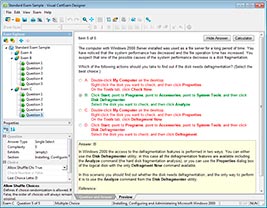
HOW TO OPEN VCE FILES
Use VCE Exam Simulator to open VCE files
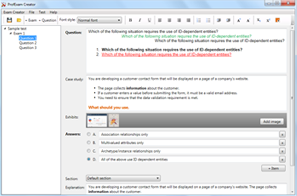
HOW TO OPEN VCEX FILES
Use ProfExam Simulator to open VCEX files
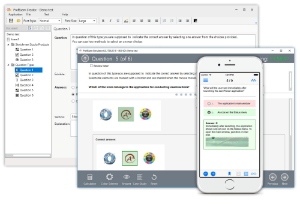
ProfExam at a 20% markdown
You have the opportunity to purchase ProfExam at a 20% reduced price
Get Now!