Download SAP Certified Associate - Back-End Developer - ABAP Cloud.C_ABAPD_2507.Actual4Test.2026-04-20.139q.tqb
| Vendor: | SAP |
| Exam Code: | C_ABAPD_2507 |
| Exam Name: | SAP Certified Associate - Back-End Developer - ABAP Cloud |
| Date: | Apr 20, 2026 |
| File Size: | 634 KB |
How to open TQB files?
Files with TQB (Taurus Question Bank) extension can be opened by Taurus Exam Studio.
Purchase
Coupon: TAURUSSIM_20OFF
Discount: 20%
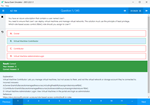
Demo Questions
Question 1
Which restrictions exist for ABAP SQL arithmetic expressions? Note: There are 2 correct answers to this question.
- Floating point types and integer types can NOT be used in the same expression.
- The operator/is allowed only in floating point expressions.
- Decimal types and integer types can NOT be used in the same expression.
- The operator is allowed only in floating point expressions.
Correct answer: B, D
Explanation:
ABAP SQL arithmetic expressions have different restrictions depending on the data type of the operands. The following are some of the restrictions:Floating point types and integer types can be used in the same expression, as long as the integer types are cast to floating point types using the cast function. For example, CAST ( num1 AS FLTP ) / CAST ( num2 AS FLTP ) is a valid expression, where num1 and num2 are integer types.The operator / is allowed only in floating point expressions, where both operands have the type FLTP or f. For example, num1 / num2 is a valid expression, where num1 and num2 are floating point types. If the operator / is used in an integer expression or a decimal expression, a syntax error occurs.Decimal types and integer types can be used in the same expression, as long as the expression is a decimal expression. A decimal expression has at least one operand with the type DEC, CURR, or QUAN or p with decimal places. For example, num1 + num2 is a valid expression, where num1 is a decimal type and num2 is an integer type.The operator ** is allowed only in floating point expressions, where both operands have the type FLTP or f. For example, num1 ** num2 is a valid expression, where num1 and num2 are floating point types. If the operator ** is used in an integer expression or a decimal expression, a syntax error occurs. ABAP SQL arithmetic expressions have different restrictions depending on the data type of the operands. The following are some of the restrictions:
Floating point types and integer types can be used in the same expression, as long as the integer types are cast to floating point types using the cast function. For example, CAST ( num1 AS FLTP ) / CAST ( num2 AS FLTP ) is a valid expression, where num1 and num2 are integer types.
The operator / is allowed only in floating point expressions, where both operands have the type FLTP or f. For example, num1 / num2 is a valid expression, where num1 and num2 are floating point types. If the operator / is used in an integer expression or a decimal expression, a syntax error occurs.
Decimal types and integer types can be used in the same expression, as long as the expression is a decimal expression. A decimal expression has at least one operand with the type DEC, CURR, or QUAN or p with decimal places. For example, num1 + num2 is a valid expression, where num1 is a decimal type and num2 is an integer type.
The operator ** is allowed only in floating point expressions, where both operands have the type FLTP or f. For example, num1 ** num2 is a valid expression, where num1 and num2 are floating point types. If the operator ** is used in an integer expression or a decimal expression, a syntax error occurs.
Question 2
You want to define the following CDS view entity with an input parameter:
Define view entity Z_CONVERT With parameters currency : ???
Which of the following can you use to replace "???? Note: There are 2 correct answers to this question.
- built-in ABAP type
- A built-in ABAP Dictionary type
- A data element
- A component of an ABAP Dictionary structure
Correct answer: A, C
Explanation:
The possible replacements for "???" in the CDS view entity definition with an input parameter are A. built-in ABAP type and C. A data element. These are the valid types that can be used to specify the data type of an input parameter in a CDS view entity. A built-in ABAP type is a predefined elementary type in the ABAP language, such as abap.char, abap.numc, abap.dec, etc. A data element is a reusable semantic element in the ABAP Dictionary that defines the technical attributes and the meaning of a field12. For example:The following code snippet defines a CDS view entity with an input parameter currency of type abap.cuky, which is a built-in ABAP type for currency key:Define view entity Z_CONVERT With parameters currency : abap.cuky as select from ... { ... } The following code snippet defines a CDS view entity with an input parameter currency of type waers, which is a data element for currency key:Define view entity Z_CONVERT With parameters currency : waers as select from ... { ... } You cannot do any of the following:B . A built-in ABAP Dictionary type: This is not a valid type for an input parameter in a CDS view entity. A built-in ABAP Dictionary type is a predefined elementary type in the ABAP Dictionary, such as CHAR, NUMC, DEC, etc. However, these types cannot be used directly in a CDS view entity definition. Instead, they have to be prefixed with abap. to form a built-in ABAP type, as explained above12.D . A component of an ABAP Dictionary structure: This is not a valid type for an input parameter in a CDS view entity. A component of an ABAP Dictionary structure is a field that belongs to a structure type, which is a complex type that consists of multiple fields. However, an input parameter in a CDS view entity can only be typed with an elementary type, which is a simple type that has no internal structure12. The possible replacements for "???" in the CDS view entity definition with an input parameter are A. built-in ABAP type and C. A data element. These are the valid types that can be used to specify the data type of an input parameter in a CDS view entity. A built-in ABAP type is a predefined elementary type in the ABAP language, such as abap.char, abap.numc, abap.dec, etc. A data element is a reusable semantic element in the ABAP Dictionary that defines the technical attributes and the meaning of a field12. For example:
The following code snippet defines a CDS view entity with an input parameter currency of type abap.cuky, which is a built-in ABAP type for currency key:
Define view entity Z_CONVERT With parameters currency : abap.cuky as select from ... { ... } The following code snippet defines a CDS view entity with an input parameter currency of type waers, which is a data element for currency key:
Define view entity Z_CONVERT With parameters currency : waers as select from ... { ... } You cannot do any of the following:
B . A built-in ABAP Dictionary type: This is not a valid type for an input parameter in a CDS view entity. A built-in ABAP Dictionary type is a predefined elementary type in the ABAP Dictionary, such as CHAR, NUMC, DEC, etc. However, these types cannot be used directly in a CDS view entity definition. Instead, they have to be prefixed with abap. to form a built-in ABAP type, as explained above12.
D . A component of an ABAP Dictionary structure: This is not a valid type for an input parameter in a CDS view entity. A component of an ABAP Dictionary structure is a field that belongs to a structure type, which is a complex type that consists of multiple fields. However, an input parameter in a CDS view entity can only be typed with an elementary type, which is a simple type that has no internal structure12.
Question 3
You have attached a system field to an input parameter of a CDS view entity as follows:
define view entity Z_ENTITY
with parameters
@Environment.systemField: #SYSTEM_LANGUAGE
language : spras
What are the effects of this annotation? (Select 2 correct answers)
- The value of sy-langu will be passed to the CDS view automatically both when you use the CDS view in ABAP and in another CDS view entity (view on view).
- You can still override the default value with a value of your own.
- The value of sy-langu will be passed to the CDS view automatically when you use the CDS view in ABAP but not when you use it in another view entity.
- It is no longer possible to pass your own value to the parameter.
Correct answer: A, B
Explanation:
Comprehensive and Detailed Explanation from Exact Extract:* With @Environment.systemField: #SYSTEM_LANGUAGE, the system field sy-langu is automatically supplied as a default value for the parameter.* This works both in ABAP and in view-on-view scenarios (A).* Developers can still override this value when calling the view explicitly (B).* Options C and D are incorrect: system fields are not limited to ABAP only, and overriding is allowed.Study Guide Reference: ABAP CDS Guide - System Fields in View Parameters. Comprehensive and Detailed Explanation from Exact Extract:
* With @Environment.systemField: #SYSTEM_LANGUAGE, the system field sy-langu is automatically supplied as a default value for the parameter.
* This works both in ABAP and in view-on-view scenarios (A).
* Developers can still override this value when calling the view explicitly (B).
* Options C and D are incorrect: system fields are not limited to ABAP only, and overriding is allowed.
Study Guide Reference: ABAP CDS Guide - System Fields in View Parameters.
Question 4
Which of the following is a generic internal table type?
- SORTED TABLE
- INDEX TABLE
- STANDARD TABLE
- HASHED TABLE
Correct answer: B
Explanation:
A generic internal table type is a table type that does not define all the attributes of an internal table in the ABAP Dictionary; it leaves some of these attributes undefined. A table type is generic in the following cases1:You have selected Index Table or Not Specified as the access type.You have not specified a table key or specified an incomplete table key.You have specified a generic secondary table key.A generic table type can be used only for typing formal parameters or field symbols. A generic table type cannot be used for defining data objects or constants2.Therefore, the correct answer is B. INDEX TABLE, which is a generic table type that does not specify the access type or the table key. The other options are not generic table types, because:A . SORTED TABLE is a table type that specifies the access type as sorted and the table key as a unique or non-unique primary key3.C . STANDARD TABLE is a table type that specifies the access type as standard and the table key as a non-unique standard key that consists of all the fields of the table row in the order in which they are defined4.D . HASHED TABLE is a table type that specifies the access type as hashed and the table key as a unique primary key5. A generic internal table type is a table type that does not define all the attributes of an internal table in the ABAP Dictionary; it leaves some of these attributes undefined. A table type is generic in the following cases1:
You have selected Index Table or Not Specified as the access type.
You have not specified a table key or specified an incomplete table key.
You have specified a generic secondary table key.
A generic table type can be used only for typing formal parameters or field symbols. A generic table type cannot be used for defining data objects or constants2.
Therefore, the correct answer is B. INDEX TABLE, which is a generic table type that does not specify the access type or the table key. The other options are not generic table types, because:
A . SORTED TABLE is a table type that specifies the access type as sorted and the table key as a unique or non-unique primary key3.
C . STANDARD TABLE is a table type that specifies the access type as standard and the table key as a non-unique standard key that consists of all the fields of the table row in the order in which they are defined4.
D . HASHED TABLE is a table type that specifies the access type as hashed and the table key as a unique primary key5.
Question 5
When does SAP recommend to use a sorted or a hashed table respectively? Note: There are 2 correct answers to this question.
- A sorted table, when you read a subset in a loop and specify a part of the key from the left ^ without gaps.
- A hashed table, when you read a single record and specify the complete key.
- A hashed table, when you read a subset in a loop and specify a part of the key from the left without gaps.
- A sorted table, when you read a single record and specify non key fields.
Correct answer: B, C
Question 6
Which of the following actions cause an indirect change to a database table requiring a table conversion? Note: There are 2 correct answers to this question.
- Renaming a field in a structure that is included in the table definition
- Changing the field labels of a data element that is used in the table definition.
- Deleting a field from a structure that is included in the table definition.
- Shortening the length of a domain used in a data element that is used in the table definition.
Correct answer: A, C
Explanation:
The following are the explanations for each action:A: Renaming a field in a structure that is included in the table definition causes an indirect change to the database table, as the field name in the table is derived from the structure. This change requires a table conversion, as the existing data in the table must be copied to a new table with the new field name, and the old table must be deleted.B: Changing the field labels of a data element that is used in the table definition does not cause an indirect change to the database table, as the field labels are only used for documentation and display purposes. This change does not require a table conversion, as the existing data in the table is not affected by the change.C: Deleting a field from a structure that is included in the table definition causes an indirect change to the database table, as the field is removed from the table as well. This change requires a table conversion, as the existing data in the table must be copied to a new table without the deleted field, and the old table must be deleted.D: Shortening the length of a domain used in a data element that is used in the table definition causes an indirect change to the database table, as the field length in the table is derived from the domain. This change requires a table conversion, as the existing data in the table must be checked for compatibility with the new field length, and any data that exceeds the new length must be truncated or rejected. The following are the explanations for each action:
A: Renaming a field in a structure that is included in the table definition causes an indirect change to the database table, as the field name in the table is derived from the structure. This change requires a table conversion, as the existing data in the table must be copied to a new table with the new field name, and the old table must be deleted.
B: Changing the field labels of a data element that is used in the table definition does not cause an indirect change to the database table, as the field labels are only used for documentation and display purposes. This change does not require a table conversion, as the existing data in the table is not affected by the change.
C: Deleting a field from a structure that is included in the table definition causes an indirect change to the database table, as the field is removed from the table as well. This change requires a table conversion, as the existing data in the table must be copied to a new table without the deleted field, and the old table must be deleted.
D: Shortening the length of a domain used in a data element that is used in the table definition causes an indirect change to the database table, as the field length in the table is derived from the domain. This change requires a table conversion, as the existing data in the table must be checked for compatibility with the new field length, and any data that exceeds the new length must be truncated or rejected.
Question 7
When processing an internal table with the statement LOOP AT itab... ENDLOOP, what system variable contains the current row number?
- sy-index
- sy-subrc
- sy-linno
- sy-tabix
Correct answer: D
Explanation:
When processing an internal table with the statement LOOP AT itab... ENDLOOP, the system variable that contains the current row number is sy-tabix. The sy-tabix variable is a predefined field of the system structure sy that holds the index or the row number of the current line in an internal table loop. The sy-tabix variable is initialized with the value 1 for the first loop pass and is incremented by 1 for each subsequent loop pass. The sy-tabix variable can be used to access or modify the current line of the internal table using the index access12. When processing an internal table with the statement LOOP AT itab... ENDLOOP, the system variable that contains the current row number is sy-tabix. The sy-tabix variable is a predefined field of the system structure sy that holds the index or the row number of the current line in an internal table loop. The sy-tabix variable is initialized with the value 1 for the first loop pass and is incremented by 1 for each subsequent loop pass. The sy-tabix variable can be used to access or modify the current line of the internal table using the index access12.
Question 8
What are some properties of database tables? Note: There are 2 correct answers to this question.
- They store information in two dimensions.
- They may have key fields.
- They can have any number of key fields.
- They can have relationships to other tables.
Correct answer: A, D
Explanation:
Database tables are data structures that store information in two dimensions, using rows and columns. Each row represents a record or an entity, and each column represents an attribute or a field. Database tables may have key fields, which are columns that uniquely identify each row or a subset of rows. Key fields can be used to enforce data integrity, perform efficient searches, and establish relationships to other tables. Database tables can have relationships to other tables, which are associations or links between the key fields of two or more tables. Relationships can be used to model the logical connections between different entities, join data from multiple tables, and enforce referential integrity12. Database tables are data structures that store information in two dimensions, using rows and columns. Each row represents a record or an entity, and each column represents an attribute or a field. Database tables may have key fields, which are columns that uniquely identify each row or a subset of rows. Key fields can be used to enforce data integrity, perform efficient searches, and establish relationships to other tables. Database tables can have relationships to other tables, which are associations or links between the key fields of two or more tables. Relationships can be used to model the logical connections between different entities, join data from multiple tables, and enforce referential integrity12.
Question 9
Which of the following types of Core Data Services Views can be used at the consumption layer?
Note: There are 3 correct answers to this question.
- Table Function
- Transactional Interface
- Transactional Query
- Analytical Query
- Hierarchy
Correct answer: A, D, E
Explanation:
Comprehensive and Detailed Explanation From Exact Extract:The consumption layer in ABAP CDS views is used to define views for user-facing applications, analytical scenarios, and UI services. The valid view types used at this layer include:* Table Function: Used where custom logic or complex data transformations are required. These are implemented with AMDP or class-based logic and exposed via CDS consumption views.* Analytical Query: Designed for analytical use cases with annotations like @Analytics.query: true to allow exposure to Fiori Analytical apps.* Hierarchy: Used for defining and consuming hierarchical data in CDS. These can be displayed in Fiori Tree tables and analytical contexts.The following options are incorrect:* Transactional Interface and Transactional Query are not standard view types or part of the CDS view hierarchy used in the consumption layer. These terms may have been incorrectly stated and do not reflect supported CDS artifacts.Reference: SAP Help 3, page 3 - Developing Common Capabilities, and ABAP CDS Development User Guide, section 3.1 - Creating and Activating Data Models Comprehensive and Detailed Explanation From Exact Extract:
The consumption layer in ABAP CDS views is used to define views for user-facing applications, analytical scenarios, and UI services. The valid view types used at this layer include:
* Table Function: Used where custom logic or complex data transformations are required. These are implemented with AMDP or class-based logic and exposed via CDS consumption views.
* Analytical Query: Designed for analytical use cases with annotations like @Analytics.query: true to allow exposure to Fiori Analytical apps.
* Hierarchy: Used for defining and consuming hierarchical data in CDS. These can be displayed in Fiori Tree tables and analytical contexts.
The following options are incorrect:
* Transactional Interface and Transactional Query are not standard view types or part of the CDS view hierarchy used in the consumption layer. These terms may have been incorrectly stated and do not reflect supported CDS artifacts.
Reference: SAP Help 3, page 3 - Developing Common Capabilities, and ABAP CDS Development User Guide, section 3.1 - Creating and Activating Data Models
Question 10
Which of the following Core Data Services built-in functions returns a result of type INTT4? Note:
There are 2 correct answers to this question.
- dats_add_days
- dats_add_months
- dats_is_valid
- dats_days_between
Correct answer: C, D
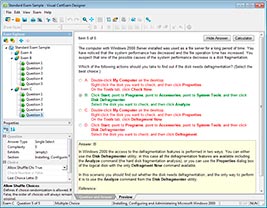
HOW TO OPEN VCE FILES
Use VCE Exam Simulator to open VCE files
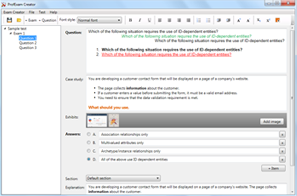
HOW TO OPEN VCEX FILES
Use ProfExam Simulator to open VCEX files
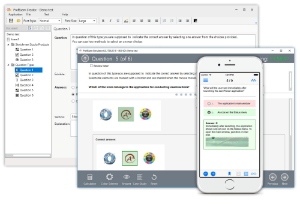
ProfExam at a 20% markdown
You have the opportunity to purchase ProfExam at a 20% reduced price
Get Now!