Download SAP Certified Associate - Security Administrator.C_SEC_2405.Actual4Test.2026-04-02.170q.tqb
| Vendor: | SAP |
| Exam Code: | C_SEC_2405 |
| Exam Name: | SAP Certified Associate - Security Administrator |
| Date: | Apr 02, 2026 |
| File Size: | 688 KB |
How to open TQB files?
Files with TQB (Taurus Question Bank) extension can be opened by Taurus Exam Studio.
Purchase
Coupon: TAURUSSIM_20OFF
Discount: 20%
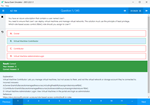
Demo Questions
Question 1
In the administration console of the Cloud Identity Services, which system property types can you add? Note:
There are 2correct answers to this question.
- Standard
- Internal
- Credential
- Default
Correct answer: A, B
Explanation:
In the administration console ofCloud Identity Services, system properties can be configured to enhance system integration and management. The two property types are:* Standard (A):These are predefined system properties provided by SAP. They help maintain consistent configurations across systems and streamline administrative tasks.* Internal (B):These properties are used internally by the system to manage configurations and processes specific to SAP Cloud Identity Services.SAP Security References:* SAP Cloud Identity Services Documentation* SAP Help Portal: Administration Guide for Cloud Identity Services In the administration console ofCloud Identity Services, system properties can be configured to enhance system integration and management. The two property types are:
* Standard (A):These are predefined system properties provided by SAP. They help maintain consistent configurations across systems and streamline administrative tasks.
* Internal (B):These properties are used internally by the system to manage configurations and processes specific to SAP Cloud Identity Services.
SAP Security References:
* SAP Cloud Identity Services Documentation
* SAP Help Portal: Administration Guide for Cloud Identity Services
Question 2
Under which of the following conditions can you merge authorizations for the same object during role maintenance? Note: There are 2 correct answers to this question.
- The activation status of a manual authorization must match the status of the changed authorizations.
- The activation status and the maintenance status of the authorizations must match.
- The maintenance status of the changed authorizations must match the status of a manual authorization.
- The activation status and the maintenance status of the authorizations must NOT match.
Correct answer: A, B
Explanation:
During role maintenance in SAP systems, merging authorizations for the same object is possible under specific conditions to streamline role management. The activation status of a manual authorization must match the status of the changed authorizations, ensuring consistency in how authorizations are applied within the role. Additionally, both the activation status and the maintenance status of the authorizations must align, meaning that the authorizations being merged should be in the same state (e.g., active or inactive) and maintenance phase (e.g., standard or changed). These conditions prevent conflicts and ensure that merged authorizations function correctly within the role, maintaining security and compliance. Mismatches in status or non-alignment of maintenance states can lead to errors or unintended access restrictions. During role maintenance in SAP systems, merging authorizations for the same object is possible under specific conditions to streamline role management. The activation status of a manual authorization must match the status of the changed authorizations, ensuring consistency in how authorizations are applied within the role. Additionally, both the activation status and the maintenance status of the authorizations must align, meaning that the authorizations being merged should be in the same state (e.g., active or inactive) and maintenance phase (e.g., standard or changed). These conditions prevent conflicts and ensure that merged authorizations function correctly within the role, maintaining security and compliance. Mismatches in status or non-alignment of maintenance states can lead to errors or unintended access restrictions.
Question 3
Which privilege types are available in SAP HANA Cloud? Note: There are 3correct answers to this question.
- Application
- Package
- System
- Analytic
- Object
Correct answer: B, C, E
Explanation:
* Context:Privileges in SAP HANA Cloud define access control and permissions for various system entities.* Solution Descriptions:* B. Package: Grants permissions for packages, a logical grouping of objects.* C. System: Controls system-level actions and configurations.* E. Object: Provides access control at the object level.SAP Security References:* SAP HANA Cloud Privilege Management Documentation * Context:Privileges in SAP HANA Cloud define access control and permissions for various system entities.
* Solution Descriptions:
* B. Package: Grants permissions for packages, a logical grouping of objects.
* C. System: Controls system-level actions and configurations.
* E. Object: Provides access control at the object level.
SAP Security References:
* SAP HANA Cloud Privilege Management Documentation
Question 4
In which order do you define the security-relevant objects in SAP BTP?
- Role3
- Role collection
- Role template
Correct answer: A, B, C
Question 5
Which of the following services does the Identity Authentication Service provide? Note: There are 2 correct answers to this question.
- Policy refinement
- Authentication
- Single Sign-On
- Central User Repository
Correct answer: B, C
Explanation:
The SAP Identity Authentication Service provides Authentication and Single Sign-On (SSO) services.Authentication verifies user identities by validating credentials, such as usernames and passwords, or integrating with external identity providers, ensuring secure access to SAP cloud applications. Single Sign-On enables users to access multiple SAP and non-SAP systems with a single set of credentials, streamlining user experience and reducing authentication overhead while maintaining security. These services are core to the Identity Authentication Service's role in SAP's cloud ecosystem, supporting secure and efficient access management. Policy refinement is not a function of this service, as it focuses on policy enforcement rather than creation. A Central User Repository is typically managed by other systems, like SAP Cloud Identity Services, not the Identity Authentication Service. By offering Authentication and SSO, the service ensures robust identity verification and seamless access across cloud-based SAP solutions, aligning with modern security standards and enhancing user productivity. The SAP Identity Authentication Service provides Authentication and Single Sign-On (SSO) services.
Authentication verifies user identities by validating credentials, such as usernames and passwords, or integrating with external identity providers, ensuring secure access to SAP cloud applications. Single Sign-On enables users to access multiple SAP and non-SAP systems with a single set of credentials, streamlining user experience and reducing authentication overhead while maintaining security. These services are core to the Identity Authentication Service's role in SAP's cloud ecosystem, supporting secure and efficient access management. Policy refinement is not a function of this service, as it focuses on policy enforcement rather than creation. A Central User Repository is typically managed by other systems, like SAP Cloud Identity Services, not the Identity Authentication Service. By offering Authentication and SSO, the service ensures robust identity verification and seamless access across cloud-based SAP solutions, aligning with modern security standards and enhancing user productivity.
Question 6
In SAP HANA Cloud, what can you configure in user groups? Note: There are 2 correct answers to this question.
- Authorization privileges
- Client connect restrictions
- Identity providers
- Password policy settings
Correct answer: B, D
Explanation:
In SAP HANA Cloud, user groups provide a mechanism to manage user settings collectively. Administrators can configure client connect restrictions within user groups to control which clients or applications can connect to the database, enhancing security by limiting access to authorized interfaces. Additionally, password policy settings can be defined for user groups, allowing administrators to enforce rules such as password length, complexity, or expiration periods, ensuring compliance with organizational security standards. Authorization privileges, however, are assigned directly to users or roles, not user groups, as groups in SAP HANA Cloud are not used for privilege management. Similarly, identity providers are configured at the system level, not within user groups, as they relate to authentication rather than group- specific settings. These capabilities enable efficient and secure user management in SAP HANA Cloud environments. In SAP HANA Cloud, user groups provide a mechanism to manage user settings collectively. Administrators can configure client connect restrictions within user groups to control which clients or applications can connect to the database, enhancing security by limiting access to authorized interfaces. Additionally, password policy settings can be defined for user groups, allowing administrators to enforce rules such as password length, complexity, or expiration periods, ensuring compliance with organizational security standards. Authorization privileges, however, are assigned directly to users or roles, not user groups, as groups in SAP HANA Cloud are not used for privilege management. Similarly, identity providers are configured at the system level, not within user groups, as they relate to authentication rather than group- specific settings. These capabilities enable efficient and secure user management in SAP HANA Cloud environments.
Question 7
Which of the following user types are excluded from some general password-related rules, such as password validity or initial password? Note: There are 2 correct answers to this question.
- System
- Communication
- Dialog
- Service
Correct answer: A, D
Question 8
Which entities share data with Business Partners in the S/4HANA Business User Concept? Note: There are 2 correct answers to this question.
- User
- Employer
- Administrator
- Employee
Correct answer: A, D
Explanation:
In the SAP S/4HANA Business User Concept, the entities that share data with Business Partners are User and Employee. The User entity represents the technical user account in the system, defined in user master records, and is linked to Business Partners to associate system access with business roles and authorizations. The Employee entity represents the human resource data of an individual, such as their organizational assignment or job role, and is synchronized with Business Partners to ensure that user access aligns with their employment details. This integration ensures that Business Partners, which serve as a central entity for managing business relationships, have consistent data for access control and business processes. The Employer entity is not directly linked to Business Partners, as it represents the organization, not an individual.Similarly, Administrator is a role or user type, not an entity sharing data with Business Partners. This data- sharing mechanism supports seamless identity and access management, enhancing security and operational alignment in SAP S/4HANA systems. In the SAP S/4HANA Business User Concept, the entities that share data with Business Partners are User and Employee. The User entity represents the technical user account in the system, defined in user master records, and is linked to Business Partners to associate system access with business roles and authorizations. The Employee entity represents the human resource data of an individual, such as their organizational assignment or job role, and is synchronized with Business Partners to ensure that user access aligns with their employment details. This integration ensures that Business Partners, which serve as a central entity for managing business relationships, have consistent data for access control and business processes. The Employer entity is not directly linked to Business Partners, as it represents the organization, not an individual.
Similarly, Administrator is a role or user type, not an entity sharing data with Business Partners. This data- sharing mechanism supports seamless identity and access management, enhancing security and operational alignment in SAP S/4HANA systems.
Question 9
Which object type is assigned to activated OData services in transaction SU24?
- HTTP
- G4BA
- IWSG
- IWSV
Correct answer: D
Explanation:
In SAP systems, activated OData services are assigned the object type IWSV (SAP Gateway Business Suite Enablement-Service) in transaction SU24. SU24 is used to maintain authorization defaults for transactions and services, and for OData services, which power SAP Fiori apps, the IWSV object type represents the service definitions required for front-end and back-end communication. When an OData service is activated, its authorization requirements, such as the S_SERVICE authorization object with the SRV_NAME field, are linked to the IWSV type in SU24, ensuring that these are proposed when the service is added to a PFCG role.The HTTP object type is not used for OData services, G4BA relates to OData V4 services, and IWSG represents service group metadata, not activated services. By associating OData services with IWSV in SU24, SAP ensures that authorization maintenance is streamlined, enabling secure and efficient access to Fiori apps while aligning with the system's authorization framework. In SAP systems, activated OData services are assigned the object type IWSV (SAP Gateway Business Suite Enablement-Service) in transaction SU24. SU24 is used to maintain authorization defaults for transactions and services, and for OData services, which power SAP Fiori apps, the IWSV object type represents the service definitions required for front-end and back-end communication. When an OData service is activated, its authorization requirements, such as the S_SERVICE authorization object with the SRV_NAME field, are linked to the IWSV type in SU24, ensuring that these are proposed when the service is added to a PFCG role.
The HTTP object type is not used for OData services, G4BA relates to OData V4 services, and IWSG represents service group metadata, not activated services. By associating OData services with IWSV in SU24, SAP ensures that authorization maintenance is streamlined, enabling secure and efficient access to Fiori apps while aligning with the system's authorization framework.
Question 10
Which of the following is part of the SAP S/4HANA central UI component?
- SAP Fiori object page
- SAP Fiori transactional application
- SAP Fiori launchpad
- SAP Fiori analytical application
Correct answer: C
Explanation:
The SAP Fiori launchpad is the central UI component in SAP S/4HANA, serving as the primary entry point for users to access Fiori applications. It provides a unified, role-based interface where users can navigate to transactional, analytical, or object page applications via tiles organized in catalogs and spaces. The launchpad integrates with the SAP Fiori infrastructure, ensuring consistent user experience and secure access to applications. SAP Fiori object pages, transactional applications, and analytical applications are specific types of Fiori apps accessed through the launchpad, not central UI components themselves. The launchpad's role as the central hub supports personalized navigation, single sign-on, and application management, making it a cornerstone of the S/4HANA user interface. By centralizing access, the Fiori launchpad enhances usability and security, ensuring that users only interact with applications authorized by their roles, aligning with SAP's modern, user-centric design philosophy for enterprise systems. The SAP Fiori launchpad is the central UI component in SAP S/4HANA, serving as the primary entry point for users to access Fiori applications. It provides a unified, role-based interface where users can navigate to transactional, analytical, or object page applications via tiles organized in catalogs and spaces. The launchpad integrates with the SAP Fiori infrastructure, ensuring consistent user experience and secure access to applications. SAP Fiori object pages, transactional applications, and analytical applications are specific types of Fiori apps accessed through the launchpad, not central UI components themselves. The launchpad's role as the central hub supports personalized navigation, single sign-on, and application management, making it a cornerstone of the S/4HANA user interface. By centralizing access, the Fiori launchpad enhances usability and security, ensuring that users only interact with applications authorized by their roles, aligning with SAP's modern, user-centric design philosophy for enterprise systems.
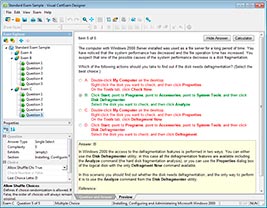
HOW TO OPEN VCE FILES
Use VCE Exam Simulator to open VCE files
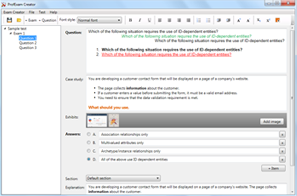
HOW TO OPEN VCEX FILES
Use ProfExam Simulator to open VCEX files
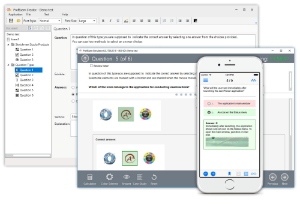
ProfExam at a 20% markdown
You have the opportunity to purchase ProfExam at a 20% reduced price
Get Now!