Download SAP Certified Associate - Process Data Analyst - SAP Signavio.C_SIGDA_2403.Actual4Test.2025-12-28.112q.tqb
| Vendor: | SAP |
| Exam Code: | C_SIGDA_2403 |
| Exam Name: | SAP Certified Associate - Process Data Analyst - SAP Signavio |
| Date: | Dec 28, 2025 |
| File Size: | 444 KB |
How to open TQB files?
Files with TQB (Taurus Question Bank) extension can be opened by Taurus Exam Studio.
Purchase
Coupon: TAURUSSIM_20OFF
Discount: 20%
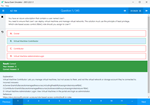
Demo Questions
Question 1
What is the first step in starting an analysis in SAP Signavio Process Intelligence?
- Upload the attribute log
- Create a new process
- Create a new investigation
- Upload the event log
Correct answer: D
Explanation:
The first step in starting an analysis in SAP Signavio Process Intelligence is:* Option D (Upload the event log): The event log is a critical data source for process mining and analysis in SAP Signavio Process Intelligence. It contains detailed records of process activities, including start and end times, performers, and other event attributes. Uploading the event log is the initial step to analyze the actual performance of business processes, enabling organizations to discover, monitor, and enhance their processes based on real data.References:* SAP Signavio Process Intelligence Documentation* "Process Mining: Theory and Practice" by various authors The first step in starting an analysis in SAP Signavio Process Intelligence is:
* Option D (Upload the event log): The event log is a critical data source for process mining and analysis in SAP Signavio Process Intelligence. It contains detailed records of process activities, including start and end times, performers, and other event attributes. Uploading the event log is the initial step to analyze the actual performance of business processes, enabling organizations to discover, monitor, and enhance their processes based on real data.
References:
* SAP Signavio Process Intelligence Documentation
* "Process Mining: Theory and Practice" by various authors
Question 2
Which of the following Widgets need to be linked to a process model to provide insights? Note: There are 3 correct answers to this question.
- Diagram
- Process Discovery
- Variant Explorer
- Process Funnel
- Process Conformance
Correct answer: A,D,E
Explanation:
Certain widgets in SAP Signavio Process Intelligence require a link to a process model (e.g., a BPMN model) to generate meaningful insights by contextualizing data against a defined structure. The documentation specifies:* Option A (Diagram):The Diagram Widget displays process models from the SAP Signavio Process Manager workspace and requires a link to a specific model to visualize it in the Collaboration Hub or Process Intelligence.* Option D (Process Funnel):The Process Funnel Widget visualizes case progression along a process path and often needs to be linked to a process model to define the steps in the funnel, ensuring accurate representation of the process flow.* Option E (Process Conformance):The Process Conformance Widget compares actual process execution against a reference BPMN model, requiring a direct link to the model to identify conformance issues.* Option B (Process Discovery)is incorrect because it generates process models automatically from event logs without needing a predefined process model.Reference:SAP Signavio Process Intelligence Widget Documentation, section on "Widget Configuration and Model Linking"; SAP Certified Associate - Process Data Analyst Study Guide, Chapter 4: Widget and Model Integration. Certain widgets in SAP Signavio Process Intelligence require a link to a process model (e.g., a BPMN model) to generate meaningful insights by contextualizing data against a defined structure. The documentation specifies:
* Option A (Diagram):The Diagram Widget displays process models from the SAP Signavio Process Manager workspace and requires a link to a specific model to visualize it in the Collaboration Hub or Process Intelligence.
* Option D (Process Funnel):The Process Funnel Widget visualizes case progression along a process path and often needs to be linked to a process model to define the steps in the funnel, ensuring accurate representation of the process flow.
* Option E (Process Conformance):The Process Conformance Widget compares actual process execution against a reference BPMN model, requiring a direct link to the model to identify conformance issues.
* Option B (Process Discovery)is incorrect because it generates process models automatically from event logs without needing a predefined process model.
Reference:SAP Signavio Process Intelligence Widget Documentation, section on "Widget Configuration and Model Linking"; SAP Certified Associate - Process Data Analyst Study Guide, Chapter 4: Widget and Model Integration.
Question 3
What are some types of subprocesses that exist in BPMN?Note: There are 2correct answers to this question.
- Expanded subprocess
- Grouped subprocess
- Supported subprocess
- Collapsed subprocess
Correct answer: A,D
Explanation:
In BPMN (Business Process Model and Notation), subprocesses are used to simplify complex process diagrams by grouping activities. The types of subprocesses in BPMN include:* Option A (Expanded subprocess):This subprocess is depicted as a rounded rectangle with a plus sign, indicating that it can be expanded to show the details of the subprocess within the main process diagram.* Option D (Collapsed subprocess):A collapsed subprocess is represented as a rounded rectangle with a plus sign, but unlike the expanded subprocess, it does not show the internal details within the same diagram. Instead, it simplifies the main process diagram by hiding the complexity of the subprocess.These subprocess types help manage the complexity of BPMN diagrams, making them easier to understand and navigate.References:* BPMN 2.0 Specification* SAP Signavio Process Manager User Guide In BPMN (Business Process Model and Notation), subprocesses are used to simplify complex process diagrams by grouping activities. The types of subprocesses in BPMN include:
* Option A (Expanded subprocess):This subprocess is depicted as a rounded rectangle with a plus sign, indicating that it can be expanded to show the details of the subprocess within the main process diagram.
* Option D (Collapsed subprocess):A collapsed subprocess is represented as a rounded rectangle with a plus sign, but unlike the expanded subprocess, it does not show the internal details within the same diagram. Instead, it simplifies the main process diagram by hiding the complexity of the subprocess.
These subprocess types help manage the complexity of BPMN diagrams, making them easier to understand and navigate.
References:
* BPMN 2.0 Specification
* SAP Signavio Process Manager User Guide
Question 4
What are some benefits of Process Mining?Note: There are 3 correct answ-ers to this que-stion.
- Process standardization
- Higher automation rate
- Automated process documentation
- Ensured compliance
- Reduced costs
Correct answer: A,D,E
Question 5
How can a metric be created in SAP Signavio Process Intelligence? Note: There are 3 correct answers to this question.
- Import a metric based on a JSON file
- Create a custom metric
- Upload logic from a Widget
- Import a metric from SAP Signavio Process Manager
- Add a metric from the library
Correct answer: A,B,E
Explanation:
Metrics in SAP Signavio Process Intelligence are used to quantify process performance, such as cycle time or error rates. The documentation outlines the methods for creating metrics:* Exact Extract:"Metrics can be created in SAP Signavio Process Intelligence by:* Importing metrics based on JSON files to define complex calculations.* Creating custom metrics using the metric editor to specify calculations based on event log data.* Adding predefined metrics from the metric library for common KPIs." (SAP Signavio Process Intelligence User Guide, section on "Metric Creation").* Explanation:* Option A (Import a metric based on a JSON file):Users can import metric definitions in JSON format, allowing for complex or predefined calculations to be reused across investigations.* Option B (Create a custom metric):The metric editor enables users to define custom metrics by specifying calculations, such as averaging cycle times or counting specific events, tailored to the analysis needs.* Option E (Add a metric from the library):The metric library provides a set of predefined metrics (e.g., total case count, average duration) that can be added directly to an investigation.* Option C (Upload logic from a Widget)is incorrect as widgets display metrics but do not provide logic for creating new metrics.* Option D (Import a metric from SAP Signavio Process Manager)is incorrect because Process Manager focuses on process modeling, not metric creation, and metrics are defined within Process Intelligence.Reference:SAP Signavio Process Intelligence User Guide, section on "Metric Creation"; SAP Certified Associate - Process Data Analyst Study Guide, Chapter 4: Metrics and KPIs. Metrics in SAP Signavio Process Intelligence are used to quantify process performance, such as cycle time or error rates. The documentation outlines the methods for creating metrics:
* Exact Extract:"Metrics can be created in SAP Signavio Process Intelligence by:
* Importing metrics based on JSON files to define complex calculations.
* Creating custom metrics using the metric editor to specify calculations based on event log data.
* Adding predefined metrics from the metric library for common KPIs." (SAP Signavio Process Intelligence User Guide, section on "Metric Creation").
* Explanation:
* Option A (Import a metric based on a JSON file):Users can import metric definitions in JSON format, allowing for complex or predefined calculations to be reused across investigations.
* Option B (Create a custom metric):The metric editor enables users to define custom metrics by specifying calculations, such as averaging cycle times or counting specific events, tailored to the analysis needs.
* Option E (Add a metric from the library):The metric library provides a set of predefined metrics (e.g., total case count, average duration) that can be added directly to an investigation.
* Option C (Upload logic from a Widget)is incorrect as widgets display metrics but do not provide logic for creating new metrics.
* Option D (Import a metric from SAP Signavio Process Manager)is incorrect because Process Manager focuses on process modeling, not metric creation, and metrics are defined within Process Intelligence.
Reference:SAP Signavio Process Intelligence User Guide, section on "Metric Creation"; SAP Certified Associate - Process Data Analyst Study Guide, Chapter 4: Metrics and KPIs.
Question 6
What is the purpose of the BPMN token concept for business process models?
- Explains the performing behavior
- Visualizes the distribution of information
- Shows IT-system support and automation potential
- Determines a complexity score
Correct answer: A
Explanation:
The BPMN token concept is a fundamental part of the BPMN notation, used to simulate the behavior of business processes during analysis and design phases. The correct answer is:* Option A (Explains the performing behavior):The token concept in BPMN is primarily used to explain the performing behavior of a process. Tokens are used tosimulate the flow through a process model, representing instances of the process as they move from start to end. This helps in understanding how tasks are executed in sequence or in parallel, and how decisions within the process flow influence the path taken by a process instance.References:* BPMN 2.0 Specification* SAP Signavio Process Manager User Documentation The BPMN token concept is a fundamental part of the BPMN notation, used to simulate the behavior of business processes during analysis and design phases. The correct answer is:
* Option A (Explains the performing behavior):The token concept in BPMN is primarily used to explain the performing behavior of a process. Tokens are used tosimulate the flow through a process model, representing instances of the process as they move from start to end. This helps in understanding how tasks are executed in sequence or in parallel, and how decisions within the process flow influence the path taken by a process instance.
References:
* BPMN 2.0 Specification
* SAP Signavio Process Manager User Documentation
Question 7
What are the goals of Business Process Management? Note: There are 3 correct answe rs to this questio n.
- To share processes
- To document processes
- To measure processes
- To monitor and control processes
- To save processes
Correct answer: B,C,D
Question 8
What is the SAP Signavio Process Collaboration Hub?Note: There are 2 correct answ-ers to this que-stion.
- A feature to document processes using a table-based approach
- A central entry point for all business processes and business process users
- A single source of truth for process-related information
- A platform where modelers can invite stakeholders to collaborate on a process
Correct answer: B
Question 9
What is a Variant in Process Mining?
- A variant is a set of attributes.
- A variant visualizes all tasks to complete the process.
- A variant has different process flows.
- A variant is a set of cases with the same sequence of tasks.
Correct answer: B
Question 10
What are some possible configurations for a task created in SAP Signavio Process Governance?Note: There are 3correct answers to this question.
- Assign it to a specific user.
- Set a due date.
- Add subtasks.
- Store attributes.
- Assign it to dictionary categories.
Correct answer: A,B,C
Explanation:
In SAP Signavio Process Governance, tasks can be configured with specific settings to enhance management and tracking. Key configurations include assigning tasks to a specific user, setting a due date to ensure timely completion, and adding subtasks to break down the main task into more manageable components. These configurations help in detailed task management and accountability in process governance. In SAP Signavio Process Governance, tasks can be configured with specific settings to enhance management and tracking. Key configurations include assigning tasks to a specific user, setting a due date to ensure timely completion, and adding subtasks to break down the main task into more manageable components. These configurations help in detailed task management and accountability in process governance.
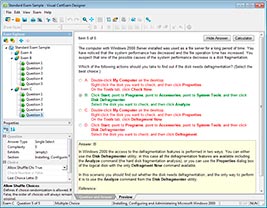
HOW TO OPEN VCE FILES
Use VCE Exam Simulator to open VCE files
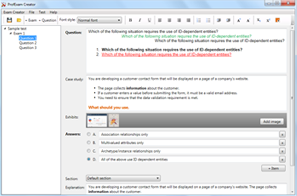
HOW TO OPEN VCEX FILES
Use ProfExam Simulator to open VCEX files
ProfExam at a 20% markdown
You have the opportunity to purchase ProfExam at a 20% reduced price
Get Now!