Download SAP Certified Technology Consultant - SAP S-4HANA System Administration.C_TADM_23.Actual4Test.2026-04-02.171q.tqb
| Vendor: | SAP |
| Exam Code: | C_TADM_23 |
| Exam Name: | SAP Certified Technology Consultant - SAP S/4HANA System Administration |
| Date: | Apr 02, 2026 |
| File Size: | 645 KB |
How to open TQB files?
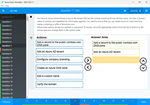
Files with TQB (Taurus Question Bank) extension can be opened by Taurus Exam Studio.
Purchase
Coupon: TAURUSSIM_20OFF
Discount: 20%
Demo Questions
Question 1
Which actions can be performed with the Software Update Manager (SUM) for an AS ABAP-based SAP system? Note: There are 3 correct answers to this question
- Applying an SAP kernel patch
- Installing an SAP Host Agent
- Correcting software information via a CISI run
- Setting up the Transport Management System (TMS)
- Applying a SPAM/SAINT update
Correct answer: A, C, E
Explanation:
The Software Update Manager (SUM) is a versatile tool used for various maintenance and update tasks in an AS ABAP-based SAP system, including:* A. Applying an SAP kernel patch:SUM allows for the application of patches to the SAP kernel, which is the core component of the SAP system. Kernel patches may include security fixes, performance improvements, and new functionalities. The ability to apply these patches ensures that the system remains secure, efficient, and up-to-date with the latest SAP innovations.* C. Correcting software information via a CISI run:CISI (Correcting Inconsistent Software Information) is a feature within SUM that detects and resolves inconsistencies in the system's software component versions. This is crucial for ensuring system stability and compatibility, especially before* and after system updates or migrations.* E. Applying a SPAM/SAINT update:SPAM (Support Package Manager) and SAINT (SAP Add-On Installation Tool) updates can be applied using SUM. These updates are essential for installing new support packages and add-ons, respectively, which can introduce new features, enhancements, and bug fixes to the system.These capabilities highlight the multifunctional nature of SUM, making it an indispensable tool for maintaining the health, performance, and security of AS ABAP-based SAP systems. The Software Update Manager (SUM) is a versatile tool used for various maintenance and update tasks in an AS ABAP-based SAP system, including:
* A. Applying an SAP kernel patch:SUM allows for the application of patches to the SAP kernel, which is the core component of the SAP system. Kernel patches may include security fixes, performance improvements, and new functionalities. The ability to apply these patches ensures that the system remains secure, efficient, and up-to-date with the latest SAP innovations.
* C. Correcting software information via a CISI run:CISI (Correcting Inconsistent Software Information) is a feature within SUM that detects and resolves inconsistencies in the system's software component versions. This is crucial for ensuring system stability and compatibility, especially before
* and after system updates or migrations.
* E. Applying a SPAM/SAINT update:SPAM (Support Package Manager) and SAINT (SAP Add-On Installation Tool) updates can be applied using SUM. These updates are essential for installing new support packages and add-ons, respectively, which can introduce new features, enhancements, and bug fixes to the system.
These capabilities highlight the multifunctional nature of SUM, making it an indispensable tool for maintaining the health, performance, and security of AS ABAP-based SAP systems.
Question 2
What is the purpose of a security policy in an AS ABAP-based SAP system? Note: There are 2 correct answers to this question
- To specify user-specific system logon behavior and password rules
- To restrict logon for selected users
- To eliminate user authentication at system logon
- To create security-relevant system profile parameters
Correct answer: A, D
Explanation:
A security policy in an AS ABAP-based SAP system serves multiple purposes, primarily focusing on enhancing system security and compliance. The key aspects of a security policy include:* A. To specify user-specific system logon behavior and password rules:A security policy allows administrators to define rules and behaviors related to user logins, such as password complexity requirements, password expiration, and account lockout policies. These settings help in enforcing strong authentication practices and protecting against unauthorized access.* D. To create security-relevant system profile parameters:The security policy encompasses the definition of system profile parameters that have a direct impact on the security posture of the SAP system. These parameters can control various security aspects, such as network communication security, encryption standards, and authorization checks, ensuring that the system adheres to the desired security standards and best practices.By addressing these areas, a security policy plays a crucial role in safeguarding the SAP system, ensuring that it operates securely and in compliance with organizational and regulatory requirements. A security policy in an AS ABAP-based SAP system serves multiple purposes, primarily focusing on enhancing system security and compliance. The key aspects of a security policy include:
* A. To specify user-specific system logon behavior and password rules:A security policy allows administrators to define rules and behaviors related to user logins, such as password complexity requirements, password expiration, and account lockout policies. These settings help in enforcing strong authentication practices and protecting against unauthorized access.
* D. To create security-relevant system profile parameters:The security policy encompasses the definition of system profile parameters that have a direct impact on the security posture of the SAP system. These parameters can control various security aspects, such as network communication security, encryption standards, and authorization checks, ensuring that the system adheres to the desired security standards and best practices.
By addressing these areas, a security policy plays a crucial role in safeguarding the SAP system, ensuring that it operates securely and in compliance with organizational and regulatory requirements.
Question 3
For an SAP HANA tailored datacenter integration (TDI) approach, what is the additional disk space factor required during delta merge operations?
- 3
- 2
- 1.2
- 1.6
Correct answer: C
Question 4
On an AS ABAP-based SAP system, you need to create a user that is not enabled for dialog interaction and is subject to the validity period of passwords. Which user type do you choose?
- System
- Reference
- Communications Data
- Service
Correct answer: C
Question 5
What can you do to determine the SAPUI5 patch level in an AS ABAP-based SAP system?
- Check the version of software component SAP_UI
- Execute the ICF service /sap/public/bc/ui5_ui5
- Use the program /UI5/UI5_UPLOAD_PATCH_TO_MIME
- Use the program WDG_MAINTAIN_UR_MIMES
Correct answer: A
Question 6
When performing a local client copy, which client copy profiles are available? Note: There are 3 correct answers to this question
- Customizing. User Master Records and User Variants
- Application Data and User Master Data
- User Master Records and Authorization Profiles
- Customizing Including Cross-Client Customizing
- All Client-Specific Data w/o Change Documents
Correct answer: A, C, E
Explanation:
Local client copy in SAP S/4HANA is a process used to copy data within the same SAP system from one client to another. The client copy profiles determine the type of data that will be copied. The available profiles include:* A. Customizing, User Master Records, and User Variants:This profile allows for the copying of customization settings, user master records (which include user login details and authorizations), and user-specific settings and variants for reports and screens. This profile is typically used when setting up a new client that needs to inherit specific configurations and user settings from an existing client.* C. User Master Records and Authorization Profiles:This profile focuses on copying only the user master data and their associated authorization profiles. It's particularly useful when the aim is to replicate user access rights and roles without transferring other system data or customizations.* E. All Client-Specific Data w/o Change Documents:This comprehensive profile copies all data specific to a client, excluding change documents. Change documents log changes made to certain objects in the system and might not always be necessary or desirable to copy, especially in testing or* sandbox environments where the focus is on the current state rather than the change history.These profiles provide the flexibility to perform client copies tailored to specific needs, whether for testing, training, or system setup purposes, ensuring that only the required data is transferred. Local client copy in SAP S/4HANA is a process used to copy data within the same SAP system from one client to another. The client copy profiles determine the type of data that will be copied. The available profiles include:
* A. Customizing, User Master Records, and User Variants:This profile allows for the copying of customization settings, user master records (which include user login details and authorizations), and user-specific settings and variants for reports and screens. This profile is typically used when setting up a new client that needs to inherit specific configurations and user settings from an existing client.
* C. User Master Records and Authorization Profiles:This profile focuses on copying only the user master data and their associated authorization profiles. It's particularly useful when the aim is to replicate user access rights and roles without transferring other system data or customizations.
* E. All Client-Specific Data w/o Change Documents:This comprehensive profile copies all data specific to a client, excluding change documents. Change documents log changes made to certain objects in the system and might not always be necessary or desirable to copy, especially in testing or
* sandbox environments where the focus is on the current state rather than the change history.
These profiles provide the flexibility to perform client copies tailored to specific needs, whether for testing, training, or system setup purposes, ensuring that only the required data is transferred.
Question 7
You want to add an SAP Fiori group to a user's SAP Fiori launchpad. To what do you have to assign the SAP Fiori group?
- To a role assigned to the user
- To a parameter ID of the user
- To a user group assigned to the user
- To an authorization profile assigned to the user
Correct answer: B
Question 8
Which instances have processes that establish a connection to the database of the SAP system? Note: There are 2 correct answers to this question
- Central Services
- Additional Application Server
- Primary Application Server
- Enqueue Replication Server
Correct answer: B, C
Explanation:
In an SAP system, instances that have processes establishing a connection to the database include the Additional Application Server (B) and the Primary Application Server (C). Both these instances host application server processes that directly interact with the database to fetch, store, and manipulate data as part of the SAP system's operations. The Central Services (A) instance primarily provides services like message passing and enqueue handling, and the Enqueue Replication Server (D) is involved in lock management replication in high-availability scenarios, neither of which directly establish database connections as part of their primary functions. In an SAP system, instances that have processes establishing a connection to the database include the Additional Application Server (B) and the Primary Application Server (C). Both these instances host application server processes that directly interact with the database to fetch, store, and manipulate data as part of the SAP system's operations. The Central Services (A) instance primarily provides services like message passing and enqueue handling, and the Enqueue Replication Server (D) is involved in lock management replication in high-availability scenarios, neither of which directly establish database connections as part of their primary functions.
Question 9
Which steps are mandatory to configure an AS ABAP-based SAP system for outbound mail? Note: There are 2 correct answers to this question.
- Maintain the default domain (transaction SCOT).
- Create a system user with authorization profile SA_SCON (transaction SU01).
- Maintain and activate the SAPconnect node in the ICF (transaction SICF)
- Maintain and activate an SMTP node (transaction SCOT).
Correct answer: A, D
Explanation:
To configure an AS ABAP-based SAP system for outbound mail, you need to perform the following steps:Maintain and activate an SMTP node in transaction SCOT. This node defines the connection parameters and the authentication data for the SMTP server that will send the mails to the recipients.Maintain the default domain in transaction SCOT. This domain is used to complete the email addresses of the recipients if they are not fully qualified.Optionally, you can also maintain the sender addresses, the address areas, and the output formats for the outbound mails in transaction SCOT. The other options are not mandatory for the outbound mail configuration. You do not need to create a system user with authorization profile SA_SCON, as this profile is only required for the administration of SAPconnect. You do not need to maintain and activate the SAPconnect node in the ICF, as this node is only required for the inbound mail processing. Reference: [ADM103], Unit 5: Communication and Integration Technologies, Lesson: SAPconnect, Slide 8-12; [SAPTEC], Unit 4: User Administration, Lesson: Authorizations, Slide 9. To configure an AS ABAP-based SAP system for outbound mail, you need to perform the following steps:
Maintain and activate an SMTP node in transaction SCOT. This node defines the connection parameters and the authentication data for the SMTP server that will send the mails to the recipients.
Maintain the default domain in transaction SCOT. This domain is used to complete the email addresses of the recipients if they are not fully qualified.
Optionally, you can also maintain the sender addresses, the address areas, and the output formats for the outbound mails in transaction SCOT. The other options are not mandatory for the outbound mail configuration. You do not need to create a system user with authorization profile SA_SCON, as this profile is only required for the administration of SAPconnect. You do not need to maintain and activate the SAPconnect node in the ICF, as this node is only required for the inbound mail processing. Reference: [ADM103], Unit 5: Communication and Integration Technologies, Lesson: SAPconnect, Slide 8-12; [SAPTEC], Unit 4: User Administration, Lesson: Authorizations, Slide 9.
Question 10
In an SAP S/4HANA Server system, a target system alias, FIORI, is maintained for source system alias S4FIN. Which connection is relevant for the extraction of back-end catalogs with alias S4FIN?
- S4FIN_HTTPS
- FIORI_RFC
- S4FIN_RFC
- FIORI_HTTPS
Correct answer: A
HOW TO OPEN VCE FILES
Use VCE Exam Simulator to open VCE files
HOW TO OPEN VCEX FILES
Use ProfExam Simulator to open VCEX files
ProfExam at a 20% markdown
You have the opportunity to purchase ProfExam at a 20% reduced price
Get Now!