Download SAP Certified Associate-SAP S-4HANA Cloud Private Edition-Sales.C_TS462_2023.Actual4Test.2025-12-28.186q.vcex
| Vendor: | SAP |
| Exam Code: | C_TS462_2023 |
| Exam Name: | SAP Certified Associate-SAP S-4HANA Cloud Private Edition-Sales |
| Date: | Dec 28, 2025 |
| File Size: | 75 KB |
How to open VCEX files?
Files with VCEX extension can be opened by ProfExam Simulator.
Purchase
Coupon: TAURUSSIM_20OFF
Discount: 20%
Demo Questions
Question 1
What are some of the differences between the Create Billing Documents (VF04) transaction and the Create Billing Documents - Billing Due List Items app Note: There are 2 correct answers to this question.
- With the app, a user can set default billing blocks for sales documents.
- With transaction VF04, a user can cancel a collective billing run.
- With transaction VF04, a user can generate a log for the collective run.
- With the app, a user can block the automatic posting of billing documents.
Correct answer: C,D
Explanation:
Billing Process and Customizing Billing Process and Customizing
Question 2
You are a consultant on an SAP S/4HANA Cloud brownfield project. In a meeting the customer decides to remodel an existing business process in accordance with clean core principles.
Which of the following SAP Signavio solutions can be used for the remodeling?
- SAP Signavio Process Insights
- SAP Signavio Process Governance
- SAP Signavio Process Intelligence
- SAP Signavio Process Manager
Correct answer: B,D
Question 3
Which channels are supported by BRF+ output management? Note: There are 3 correct answers to this question.
- DALE
- Print
- XML
- E-mail
- Fax
Correct answer: B,C,D
Explanation:
Channels supported by BRF+ output management include:B . Print: Traditional paper-based documents.C . XML: Electronic data interchange format.D . E-mail: Electronic mailing of documents. Channels supported by BRF+ output management include:
B . Print: Traditional paper-based documents.
C . XML: Electronic data interchange format.
D . E-mail: Electronic mailing of documents.
Question 4
When an outbound delivery is created for a sales order, from which object does the system determine the default delivery type to be used?
- Sales order item category
- Shipping point
- Shipping conditions
- Sales order type
Correct answer: D
Question 5
You want to evaluate sales discount condition records.
Which tool can you use? Note: There are 2 correct answers to this question.
- Pricing reports
- Manage Prices - Sales app
- Listing
- Price lists
Correct answer: B,D
Question 6
Where do you configure the default billing type to be used for delivery-related billing?
- Sales document type
- Delivery type
- Sales document item category
- Copying control
Correct answer: A
Explanation:
Billing Process and Customizing Billing Process and Customizing
Question 7
You want to automatically supply your customers with an alternative material if the ordered material is not available. How would you do this?
- Create a material listing that includes both the ordered and substitution materials.
- Ensure all affected orders are included in a backorder processing run.
- Create a material determination record with an appropriate substitution reason.
- Create an assortment module that determines the permitted substitution materials.
Correct answer: C
Explanation:
To automatically supply customers with an alternative material if the ordered material is not available, you would:C . Create a material determination record with an appropriate substitution reason: Material determination allows you to automatically replace requested materials with alternatives under specified conditions. To automatically supply customers with an alternative material if the ordered material is not available, you would:
C . Create a material determination record with an appropriate substitution reason: Material determination allows you to automatically replace requested materials with alternatives under specified conditions.
Question 8
When performing backorder processing, which confirmation strategies can you select? Note: There are 3 correct answers to this question.
- Redistribute
- Drop
- Fill
- Obtain
- Gain
Correct answer: A,C,E
Question 9
When performing backorder processing, which confirmation strategies can you select? Note: There are 3 correct answers to this question.
- Fill
- Redistribute
- Drop
- Gain
- Obtain
Correct answer: A,B,D
Explanation:
Confirmation strategies available in backorder processing include:A . Fill: This strategy aims to completely fulfill as many sales orders as possible.B . Redistribute: This strategy redistributes available stock among existing orders to optimize order fulfillment.D . Gain: This strategy focuses on maximizing the fulfillment of high-priority orders, potentially at the expense of lower-priority ones. Confirmation strategies available in backorder processing include:
A . Fill: This strategy aims to completely fulfill as many sales orders as possible.
B . Redistribute: This strategy redistributes available stock among existing orders to optimize order fulfillment.
D . Gain: This strategy focuses on maximizing the fulfillment of high-priority orders, potentially at the expense of lower-priority ones.
Question 10
You are a consultant on an SAP S/4HANA Cloud brownfield project. In a meeting the customer decides to remodel an existing business process in accordance with clean core principles.
Which of the following SAP Signavio solutions can be used for the remodeling?
- SAP Signavio Process Insights
- SAP Signavio Process Governance
- SAP Signavio Process Manager
- SAP Signavio Process Intelligence
Correct answer: B,C
Explanation:
Basic Functions (customizing) Basic Functions (customizing)
Question 11
A new plant has been defined in your SAP S/4HANA system.
To which organizational element do you assign this new plant for it to be an allowed delivering plant for sales orders?
- Division
- Warehouse number
- Distribution chain.
- Distribution channel
Correct answer: C
Question 12
You want to be able to create and goods issue an outbound delivery for a stock material.
What settings should you make? Note: There are 3 correct answers to this question.
- Define the goods movement type in the delivery item category.
- Set the order item category to be relevant for delivery.
- Set the schedule line category to be relevant for delivery.
- Activate schedule lines allowed in the order item category.
- Define the goods movement type in the schedule line category.
Correct answer: C,D,E
Explanation:
Shipping Process and Customizing Shipping Process and Customizing
Question 13
What are the effects of posting the goods issue during a sales process? Note: There are 3 correct answers to this question.
- The billing document can now be created.
- The warehouse task status is set to complete.
- The document flow is updated.
- The overall status of the delivery is set to complete.
- Delivery requirements in material planning are updated.
Correct answer: A,C,E
Question 14
You want to use billing as part of the sales process.Which organizational units must be configured? Note:
There are 2 correct answers to this question.
- Business area
- Sales organization
- Profit center
- Company code
Correct answer: B,D
Question 15
When performing backorder processing, which confirmation strategies can you select? Note: There are 3 correct answers to this question.
- Drop
- Fill
- Redistribute
- Gain
- Obtain
Correct answer: B,C,D
Explanation:
Sales Process and Analytics Sales Process and Analytics
Question 16
You want to process and monitor outbound deliveries. Which organizational unit supports this?
- Warehouse number
- Shipping point
- Plant
- Distribution channel
Correct answer: B
Question 17
Which field from the material master is used in route determination in a sales order?
- Weight group
- Loading group
- Transportation group
- Material freight group
Correct answer: C
Explanation:
Master Data Master Data
Question 18
You are configuring the organizational structure in your system. Which assignments are possible? Note: There are 3 correct answers to this question.
- Assign a plant to multiple sales organizations/distribution channels.
- Assign multiple loading points to a plant.
- Assign multiple plants to one company code.
- Assign multiple distribution channels to one company code.
- Assign a shipping point to multiple plants.
Correct answer: B,C,E
Explanation:
Possible organizational structure assignments include:B . Assign multiple loading points to a plant: A plant can have several loading points, which are places within the plant from where goods are loaded for shipping.C . Assign multiple plants to one company code: Multiple plants can operate under the same company code, representing legal and accounting entities.E . Assign a shipping point to multiple plants: A shipping point, the place where goods are shipped from, can serve multiple plants, facilitating centralized distribution. Possible organizational structure assignments include:
B . Assign multiple loading points to a plant: A plant can have several loading points, which are places within the plant from where goods are loaded for shipping.
C . Assign multiple plants to one company code: Multiple plants can operate under the same company code, representing legal and accounting entities.
E . Assign a shipping point to multiple plants: A shipping point, the place where goods are shipped from, can serve multiple plants, facilitating centralized distribution.
Question 19
How do you restrict the reasons for rejection for a sales document?
- Specify the permitted reasons for rejection in the relevant customer master.
- Assign the permitted reasons for rejection to the relevant sales item category.
- Specify the permitted reasons for rejection in the customer material info record.
- Assign the permitted reasons for rejection to the relevant sales document type.
Correct answer: D
Question 20
Which of the following is a prerequisite for billing?
- You need an order item category that is configured to be billing relevant.
- You need an billing item category that is configured to be billing relevant.
- You need a sales document type that is configured to be billing relevant.
- You need a billing type that is configured to be billing relevant.
Correct answer: A
Question 21
You want to use condition exclusion.
For which of the following pricing elements can you set the condition exclusion indicator? Note: There are 2 correct answers to this question.
- Condition type
- Condition type groups
- Condition record
- Condition category
Correct answer: A,C
Explanation:
Pricing and condition technique Pricing and condition technique
Question 22
You want to set up a discount with a scale value (condition type K029) that is based on the material group
"spare parts". The discount should be granted fo all items in a sales order that are spare parts.
What do you need to set up for condition type K029 so it meets this requirement?
- You need to set up condition type K029 as a group condition.
- You need to set the Condition Index indicator for condition type K029.
- You need to set up condition type K029 as a header condition.
- You need to set the Condition Update indicator for condition type K029.
Correct answer: A
Question 23
You want to set up a discount with a scale value (condition type K029) that is based on the material group "spare parts". The discount should be granted fo all items in a sales order that are spare parts.
What do you need to set up for condition type K029 so it meets this requirement?
- You need to set the Condition Index indicator for condition type K029.
- You need to set up condition type K029 as a group condition.
- You need to set the Condition Update indicator for condition type K029.
- You need to set up condition type K029 as a header condition.
Correct answer: B
Explanation:
Pricing and condition technique Pricing and condition technique
Question 24
Which documents can only be created with reference to a billing document? Note: There are 2 correct answers to this question.
- Invoice cancellation
- Invoice correction request
- Returns order
- Debit memo request
Correct answer: A,B
Question 25
What are some of the differences between the Create Billing Documents (VF04) transaction and the Create Billing Documents - Billing Due List Items app? Note: There are 2 correct answers to this question.
- With the app, a user can set default billing blocks for sales documents.
- With transaction VF04, a user can simulate the creation of multiple billing documents.
- With transaction VF04, a user can cancel a collective billing run.
- With the app, a user can block the automatic posting of billing documents.
Correct answer: B,C
Explanation:
Differences between the Create Billing Documents (VF04) transaction and the Create Billing Documents - Billing Due List Items app include:B . With transaction VF04, a user can simulate the creation of multiple billing documents: This feature allows users to preview the results of the billing run without actually generating the documents.C . With transaction VF04, a user can cancel a collective billing run: This functionality provides users with the option to undo a billing run if necessary, which might not be directly available in the Fiori app. Differences between the Create Billing Documents (VF04) transaction and the Create Billing Documents - Billing Due List Items app include:
B . With transaction VF04, a user can simulate the creation of multiple billing documents: This feature allows users to preview the results of the billing run without actually generating the documents.
C . With transaction VF04, a user can cancel a collective billing run: This functionality provides users with the option to undo a billing run if necessary, which might not be directly available in the Fiori app.
Question 26
Which of the following SAP S/4HANA Sales organizational unit assignments are mandatory? Note: There are 2 correct answers to this question.
- Plant to combination of sales organization and distribution channel
- Division to sales organization
- Sales office to sales area
- Sales group to sales office
Correct answer: A,B
Question 27
Texts are copied from a sold-to party to a sales order. Any later change to the sold-to party texts should not be visible in this order. Which object controls this behavior?
- Text procedure assignment
- Text determination procedure
- Access sequence
- Text ID
Correct answer: C
Explanation:
The behavior regarding the copying of texts and subsequent changes is controlled by:C . Access sequence: The access sequence in text determination defines where the system looks for texts and how it behaves when texts are changed after being copied to a document. The behavior regarding the copying of texts and subsequent changes is controlled by:
C . Access sequence: The access sequence in text determination defines where the system looks for texts and how it behaves when texts are changed after being copied to a document.
Question 28
Which of the following API types does SAP recommend to use to achieve clean core integrations? Note:
There are 2 correct answers to this question.
- SOAP
- OData
- RFC
- IDoc
Correct answer: A,B
Question 29
Which option can you use to set up complex pricing scenarios?
Nole: There are 2 correct answers to this question
- Define process categories
- Set up counter field
- Define requirements
- Add new fields for pricing
Correct answer: C,D
Explanation:
To set up complex pricing scenarios in SAP, you can use the following options:C . Define requirements: Requirements in the context of pricing are specific conditions that must be met for a pricing condition to apply. By defining custom requirements, you can control when a particular pricing condition becomes active, allowing for the creation of complex pricing scenarios based on various factors such as customer, material, sales area, etc.D . Add new fields for pricing: By adding new fields to the pricing procedure, you can incorporate additional data points into your pricing calculations. This allows for more nuanced and complex pricing scenarios that take into account a wider range of variables, such as specific attributes of a customer, order, or material.Setting up counter fields (Option B) can also contribute to complex pricing scenarios by allowing sequential processing of conditions that meet certain criteria, but the primary tools for creating complexity are defining requirements and adding new fields to accommodate diverse pricing logic. To set up complex pricing scenarios in SAP, you can use the following options:
C . Define requirements: Requirements in the context of pricing are specific conditions that must be met for a pricing condition to apply. By defining custom requirements, you can control when a particular pricing condition becomes active, allowing for the creation of complex pricing scenarios based on various factors such as customer, material, sales area, etc.
D . Add new fields for pricing: By adding new fields to the pricing procedure, you can incorporate additional data points into your pricing calculations. This allows for more nuanced and complex pricing scenarios that take into account a wider range of variables, such as specific attributes of a customer, order, or material.
Setting up counter fields (Option B) can also contribute to complex pricing scenarios by allowing sequential processing of conditions that meet certain criteria, but the primary tools for creating complexity are defining requirements and adding new fields to accommodate diverse pricing logic.
Question 30
When determining a storage location during delivery processing, the system uses a rule defined in which of the following?
- Outbound delivery type
- Material
- Shipping point
- Outbound delivery item category
Correct answer: A
Question 31
You are a consultant on an SAP S/4HANA Cloud greenfield project.
Which of the following aspects should you focus on to achieve and maintain clean core data quality? Note:
There are 2 correct answers to this question.
- Timeliness
- Accuracy
- Efficiency
- Stability
Correct answer: C,D
Question 32
What are the effects of posting the goods issue during a sales process? Note: There are 3 correct answers to this question.
- Delivery requirements in material planning are updated.
- The document flow is updated.
- The overall status of the delivery is set to complete.
- The warehouse task status is set to complete.
- The billing document can now be created.
Correct answer: A,B,E
Explanation:
Pricing and condition technique Pricing and condition technique
Question 33
You want to evaluate sales discount condition records.
Which tool can you use?
Note: There are 2 correct answers to this question.
- Price lists
- Pricing reports
- Listing
- Manage Prices - Sales app
Correct answer: B,D
Explanation:
To evaluate sales discount condition records, you can use:B . Pricing reports: Pricing reports in SAP allow you to analyze various pricing conditions, including sales discounts. These reports can provide detailed information about condition records, their application in sales documents, and how they influence final pricing.D . Manage Prices - Sales app: In SAP S/4HANA, the "Manage Prices - Sales" app is a Fiori application that provides a user-friendly interface for managing and evaluating pricing conditions, including discounts. This app allows you to view, create, and edit condition records directly, offering a convenient way to assess the impact of sales discounts. To evaluate sales discount condition records, you can use:
B . Pricing reports: Pricing reports in SAP allow you to analyze various pricing conditions, including sales discounts. These reports can provide detailed information about condition records, their application in sales documents, and how they influence final pricing.
D . Manage Prices - Sales app: In SAP S/4HANA, the "Manage Prices - Sales" app is a Fiori application that provides a user-friendly interface for managing and evaluating pricing conditions, including discounts. This app allows you to view, create, and edit condition records directly, offering a convenient way to assess the impact of sales discounts.
Question 34
Which of the following is a use case for a billing plan type?
- Convergent billing
- Settlement management
- Milestone billing
- Invoice lists
Correct answer: C
Question 35
You sell a product for which there is a bill of material. What must you set to ensure that the components automatically appear as sub-items in the order?
- The delivery group in the item category of the sub-item
- The structure scope in the item category of the main item
- The item usage during the item category determination of each sub-item
- The material entry type in the sales document type
Correct answer: B
Explanation:
To ensure components automatically appear as sub-items in an order for a product with a bill of material, you must set:B . The structure scope in the item category of the main item: This determines whether and how sub-items (components) are included in sales documents. To ensure components automatically appear as sub-items in an order for a product with a bill of material, you must set:
B . The structure scope in the item category of the main item: This determines whether and how sub-items (components) are included in sales documents.
Question 36
What are some features of the Sales Order Fulfillment Issues app? Note: There are 2 correct answers to this question.
- The process flow can be used to directly resolve issues as quickly as possible.
- Icons and colors are used in the app to represent different types of issues.
- The app shows cost simulations for all possible order fulfillment scenarios.
- The app allows a user to monitor sales orders in critical stages and efficiently address issues.
Correct answer: A,D
Question 37
SAP S/4HANA combines online transaction processing (OLTP) and online analytical processing (OLAP) on a single platform. What are the direct results of this? Note: There are 2 correct answers to this question.
- OLTP now runs on the data sets provided by OLAP.
- OLAP now uses real-time data.
- OLAP now uses its own set of aggregated data.
- There is no longer a need for Extract, Transform, and Load (ETL) activities.
Correct answer: B,D
Explanation:
Direct results of combining OLTP and OLAP on a single platform in SAP S/4HANA include:B . OLAP now uses real-time data: With SAP S/4HANA, analytical processes can access live transactional data, enabling real-time insights.D . There is no longer a need for Extract, Transform, and Load (ETL) activities: Since the same system is used for both OLTP and OLAP, data does not need to be moved between systems, reducing the need for ETL processes. Direct results of combining OLTP and OLAP on a single platform in SAP S/4HANA include:
B . OLAP now uses real-time data: With SAP S/4HANA, analytical processes can access live transactional data, enabling real-time insights.
D . There is no longer a need for Extract, Transform, and Load (ETL) activities: Since the same system is used for both OLTP and OLAP, data does not need to be moved between systems, reducing the need for ETL processes.
Question 38
When the system uses a free goods determination record to allocate free goods in a sales order, which elements influence item category determination for the free-of-charge item? Note: There are 3 correct answers to this question.
- The item category of the higher-level item
- The item category usage provided by the ABAP code
- The item category group from the material master
- The condition category for the discount condition type
- The material price group from the material master
Correct answer: A,C,D
Explanation:
In free goods determination, the item category for the free-of-charge item is influenced by:A . The item category of the higher-level item: This sets the context for the sub-items, including free goods.C . The item category group from the material master: This influences how the material is processed in sales documents.D . The condition category for the discount condition type: This determines how the system handles the free goods condition in the context of pricing and billing. In free goods determination, the item category for the free-of-charge item is influenced by:
A . The item category of the higher-level item: This sets the context for the sub-items, including free goods.
C . The item category group from the material master: This influences how the material is processed in sales documents.
D . The condition category for the discount condition type: This determines how the system handles the free goods condition in the context of pricing and billing.
Question 39
What must every condition record contain? Note: There are 2 correct answers to this question.
- Scale
- Quantity
- Validity period
- Calculation type
Correct answer: C,D
Question 40
You want to use condition exclusion.
For which of the following pricing elements can you set the condition exclusion indicator? Note: There are 2 correct answers to this question.
- Condition record
- Condition type
- Condition category
- Condition type groups
Correct answer: A,B
Question 41
Which of the following are characteristics of an invoice list process? Note: There are 2 correct answers to this question.
- You must set up a periodic billing plan for the invoice list creation.
- You must send the payer a single invoice list instead of the individual invoices.
- You use preliminary billing documents for the invoice list creation.
- You must create an invoice list at specified time intervals or on specific dates.
Correct answer: B,D
Question 42
Which of the following is a prerequisite for billing?
- You need an order item category that is configured to be billing relevant.
- You need a sales document type that is configured to be billing relevant.
- You need an billing item category that is configured to be billing relevant.
- You need a billing type that is configured to be billing relevant.
Correct answer: A
Explanation:
Billing Process and Customizing Billing Process and Customizing
Question 43
Which fields are used in the determination of the shipping point? Note: There are 3 correct answers to this question.
- Transportation group
- Plant
- Shipping conditions
- Sales document type
- Loading group
Correct answer: B,C,E
Explanation:
Shipping Process and Customizing Shipping Process and Customizing
Question 44
You save a sales order and receive a system message that a business partner of a specific partner function is missing.
Which of the following partner functions can cause this problem? Note: There are 2 correct answers to this question.
- Invoicing party (11)
- Sold-to party (SP)
- Ordering party (1)
- Ship-to party (SH)
Correct answer: B,D
Question 45
What are some of the prerequisites for the creation of a credit memo based on a credit memo request? Note:
There are 2 correct answers to this question.
- An appropriate reason for rejection must be assigned to the original sales order item.
- The billing document of the original customer invoice must be cancelled.
- The Billing Block field in the credit memo request must be empty.
- Copying control must exist between the sales document and the billing document.
Correct answer: A,C
Question 46
In your pricing procedure you have several condition types for a price such as PROO, PR02, PN00 and HM00. Only one of these prices is taken into account Which setting causes this behavior?
- Condition function
- Exclusion indicator
- Condition class
- Header condition
Correct answer: B
Explanation:
In SAP S/4HANA, apricing proceduredetermines how pricing conditions (e.g., PROO, PR02, PN00, HM00) are applied to calculate the final price in a sales document, such as a sales order. The question states that only one of several condition types for a price is taken into account, meaning that only one price condition is selected or applied, while the others are ignored. This behavior is controlled by theExclusion indicatorin the pricing procedure configuration.Let's break down the question and analyze each option to understand why theExclusion indicatoris the correct choice:Understanding Pricing in SAP S/4HANA* Apricing procedureis a sequence of steps that determines how prices, discounts, surcharges, and taxes are calculated in a sales document.* Condition types(e.g., PROO, PR02, PN00, HM00) represent individual pricing elements, such as base prices, promotional prices, or net prices. Each condition type has specific settings that control its behavior.* When multiple condition types for prices exist in a pricing procedure (e.g., multiple price conditions), SAP allows configuration to ensure only one price is applied to avoid conflicts or double pricing.* The question implies that the system selects only one price condition from PROO, PR02, PN00, or HM00, which suggests a mechanism is in place to exclude the others.Analysis of Options* A. Condition function:* TheCondition functionis not a standard term in SAP S/4HANA pricing configuration. It may refer to the role of a condition type (e.g., price, discount, surcharge), but it is not a specific setting that controls whether only one condition is applied. Instead, the condition function is determined by settings like thecondition classandcalculation type, which define the purpose and calculation logic of a condition type.* Why incorrect: There is no "Condition function" setting that directly causes only one price condition to be selected among multiple price conditions.* B. Exclusion indicator:* TheExclusion indicatoris a setting in the pricing procedure configuration that controls condition type exclusivity. It is used to definecondition exclusion groups, which determine which condition types are mutually exclusive. If multiple price condition types (e.g., PROO, PR02, PN00, HM00) are assigned to an exclusion group, the system applies a rule (e.g., selecting the condition with the best price, most specific condition, or first valid condition) to ensure only one condition is active.* In SAP, condition exclusion is configured viacondition exclusion groups(transaction V/08 or SPRO > Sales and Distribution > Basic Functions > Pricing > Condition Exclusion). For example:* You create an exclusion group and assign condition types PROO, PR02, PN00, and HM00 to it.* You define an exclusion rule, such as "select the condition with the lowest price" or "select the first valid condition."* During pricing, the system evaluates the conditions in the exclusion group and applies only one based on the rule, deactivating the others.* This mechanism perfectly explains the behavior described in the question, where only one price condition is taken into account.* Why correct: The Exclusion indicator (via condition exclusion groups) ensures that only one of the price condition types is applied, based on the defined exclusion rule.* C. Condition class:* TheCondition classis a setting in the condition type configuration (transaction V/06) that categorizes the condition type's purpose, such as:* B: Prices (e.g., PROO, PR02 for base prices).* A: Discounts or surcharges.* C: Taxes, etc.* While the condition class determines whether a condition is treated as a price, discount, or tax, it does not control whether multiple price conditions are mutually exclusive. For example, multiple condition types can have the condition class "B" (Prices) and still coexist unless an exclusion rule is applied.* Why incorrect: The Condition class defines the type of condition but does not enforce the selection of only one price condition among multiple price conditions.* D. Header condition:* AHeader conditionis a setting in the condition type configuration that determines whether a condition is applied at the header level (affecting the entire document) or the item level (affecting specific items). For example, a header condition might apply a flat surcharge to the entire sales order, while item conditions like PROO or PR02 apply to specific materials.* While header conditions affect how a condition is applied, they do not control whether only one price condition is selected from multiple price conditions at the item level.* Why incorrect: The Header condition setting is unrelated to ensuring that only one price condition (e.g., PROO, PR02, PN00, or HM00) is applied.Why Exclusion Indicator is the Correct Choice* TheExclusion indicatoris part of the condition exclusion configuration in the pricing procedure. It is used to manage scenarios where multiple price condition types (e.g., PROO for standard price, PR02 for promotional price, PN00 for net price, HM00 for manual price) are defined, but only one should be applied to avoid conflicting prices.* For example:* In the pricing procedure (transaction V/08), you define a condition exclusion group and assign PROO, PR02, PN00, and HM00 to it.* You set an exclusion rule, such as:* Rule A: Select the condition with the lowest price.* Rule B: Select the condition with the highest price.* Rule C: Select the first valid condition in the sequence.* During sales order processing, the system evaluates the conditions in the exclusion group, applies the rule, and deactivates all other conditions in the group, ensuring only one price is used.* This is a common setup in SAP S/4HANA to handle scenarios with multiple price conditions, such as standard prices, promotional prices, or customer-specific prices, ensuring clarity and consistency in pricing.Practical Context* In the SAP system, condition exclusion is configured in the following path:* SPRO > Sales and Distribution > Basic Functions > Pricing > Condition Exclusion > Condition Exclusion for Groups of Conditions.* Alternatively, use transactionVOK8to maintain condition exclusion groups and assign condition types.* During sales order creation, the system checks the pricing procedure, identifies the exclusion group, and applies the exclusion rule to select one condition type (e.g., PROO) while deactivating others (e.g., PR02, PN00, HM00).* For example, if PROO has a price of $100, PR02 has $90, and the exclusion rule is "select the lowest price," the system will apply PR02 and exclude the others.Why Other Options Don't Fit* Condition function: Not a standard SAP term or setting for controlling exclusivity.* Condition class: Defines the type of condition (e.g., price vs. discount) but doesn't manage exclusivity between multiple price conditions.* Header condition: Controls the level of application (header vs. item) but doesn't determine which price condition is selected. In SAP S/4HANA, apricing proceduredetermines how pricing conditions (e.g., PROO, PR02, PN00, HM00) are applied to calculate the final price in a sales document, such as a sales order. The question states that only one of several condition types for a price is taken into account, meaning that only one price condition is selected or applied, while the others are ignored. This behavior is controlled by theExclusion indicatorin the pricing procedure configuration.
Let's break down the question and analyze each option to understand why theExclusion indicatoris the correct choice:
Understanding Pricing in SAP S/4HANA
* Apricing procedureis a sequence of steps that determines how prices, discounts, surcharges, and taxes are calculated in a sales document.
* Condition types(e.g., PROO, PR02, PN00, HM00) represent individual pricing elements, such as base prices, promotional prices, or net prices. Each condition type has specific settings that control its behavior.
* When multiple condition types for prices exist in a pricing procedure (e.g., multiple price conditions), SAP allows configuration to ensure only one price is applied to avoid conflicts or double pricing.
* The question implies that the system selects only one price condition from PROO, PR02, PN00, or HM00, which suggests a mechanism is in place to exclude the others.
Analysis of Options
* A. Condition function:
* TheCondition functionis not a standard term in SAP S/4HANA pricing configuration. It may refer to the role of a condition type (e.g., price, discount, surcharge), but it is not a specific setting that controls whether only one condition is applied. Instead, the condition function is determined by settings like thecondition classandcalculation type, which define the purpose and calculation logic of a condition type.
* Why incorrect: There is no "Condition function" setting that directly causes only one price condition to be selected among multiple price conditions.
* B. Exclusion indicator:
* TheExclusion indicatoris a setting in the pricing procedure configuration that controls condition type exclusivity. It is used to definecondition exclusion groups, which determine which condition types are mutually exclusive. If multiple price condition types (e.g., PROO, PR02, PN00, HM00) are assigned to an exclusion group, the system applies a rule (e.g., selecting the condition with the best price, most specific condition, or first valid condition) to ensure only one condition is active.
* In SAP, condition exclusion is configured viacondition exclusion groups(transaction V/08 or SPRO > Sales and Distribution > Basic Functions > Pricing > Condition Exclusion). For example:
* You create an exclusion group and assign condition types PROO, PR02, PN00, and HM00 to it.
* You define an exclusion rule, such as "select the condition with the lowest price" or "select the first valid condition."
* During pricing, the system evaluates the conditions in the exclusion group and applies only one based on the rule, deactivating the others.
* This mechanism perfectly explains the behavior described in the question, where only one price condition is taken into account.
* Why correct: The Exclusion indicator (via condition exclusion groups) ensures that only one of the price condition types is applied, based on the defined exclusion rule.
* C. Condition class:
* TheCondition classis a setting in the condition type configuration (transaction V/06) that categorizes the condition type's purpose, such as:
* B: Prices (e.g., PROO, PR02 for base prices).
* A: Discounts or surcharges.
* C: Taxes, etc.
* While the condition class determines whether a condition is treated as a price, discount, or tax, it does not control whether multiple price conditions are mutually exclusive. For example, multiple condition types can have the condition class "B" (Prices) and still coexist unless an exclusion rule is applied.
* Why incorrect: The Condition class defines the type of condition but does not enforce the selection of only one price condition among multiple price conditions.
* D. Header condition:
* AHeader conditionis a setting in the condition type configuration that determines whether a condition is applied at the header level (affecting the entire document) or the item level (affecting specific items). For example, a header condition might apply a flat surcharge to the entire sales order, while item conditions like PROO or PR02 apply to specific materials.
* While header conditions affect how a condition is applied, they do not control whether only one price condition is selected from multiple price conditions at the item level.
* Why incorrect: The Header condition setting is unrelated to ensuring that only one price condition (e.g., PROO, PR02, PN00, or HM00) is applied.
Why Exclusion Indicator is the Correct Choice
* TheExclusion indicatoris part of the condition exclusion configuration in the pricing procedure. It is used to manage scenarios where multiple price condition types (e.g., PROO for standard price, PR02 for promotional price, PN00 for net price, HM00 for manual price) are defined, but only one should be applied to avoid conflicting prices.
* For example:
* In the pricing procedure (transaction V/08), you define a condition exclusion group and assign PROO, PR02, PN00, and HM00 to it.
* You set an exclusion rule, such as:
* Rule A: Select the condition with the lowest price.
* Rule B: Select the condition with the highest price.
* Rule C: Select the first valid condition in the sequence.
* During sales order processing, the system evaluates the conditions in the exclusion group, applies the rule, and deactivates all other conditions in the group, ensuring only one price is used.
* This is a common setup in SAP S/4HANA to handle scenarios with multiple price conditions, such as standard prices, promotional prices, or customer-specific prices, ensuring clarity and consistency in pricing.
Practical Context
* In the SAP system, condition exclusion is configured in the following path:
* SPRO > Sales and Distribution > Basic Functions > Pricing > Condition Exclusion > Condition Exclusion for Groups of Conditions.
* Alternatively, use transactionVOK8to maintain condition exclusion groups and assign condition types.
* During sales order creation, the system checks the pricing procedure, identifies the exclusion group, and applies the exclusion rule to select one condition type (e.g., PROO) while deactivating others (e.g., PR02, PN00, HM00).
* For example, if PROO has a price of $100, PR02 has $90, and the exclusion rule is "select the lowest price," the system will apply PR02 and exclude the others.
Why Other Options Don't Fit
* Condition function: Not a standard SAP term or setting for controlling exclusivity.
* Condition class: Defines the type of condition (e.g., price vs. discount) but doesn't manage exclusivity between multiple price conditions.
* Header condition: Controls the level of application (header vs. item) but doesn't determine which price condition is selected.
Question 47
How is the link between SAP S/4HANA Sales and SAP S/4HANA Finance set up?
- Via the copying control between the invoice and the accounting document
- Via the general billing interface available in the system
- Via the link between a billing document request and an accounting document
- Via a unique assignment of a sales organization to a company code
Correct answer: D
Explanation:
The link between SAP S/4HANA Sales and SAP S/4HANA Finance is set up:D . Via a unique assignment of a sales organization to a company code: This linkage ensures that sales transactions in S/4HANA Sales are properly integrated with financial accounting in S/4HANA Finance, facilitating automatic posting of sales-related financial transactions to the correct company code. The link between SAP S/4HANA Sales and SAP S/4HANA Finance is set up:
D . Via a unique assignment of a sales organization to a company code: This linkage ensures that sales transactions in S/4HANA Sales are properly integrated with financial accounting in S/4HANA Finance, facilitating automatic posting of sales-related financial transactions to the correct company code.
Question 48
Which field from the material master is used in route determination in a sales order?
- Transportation group
- Material freight group
- Loading group
- Weight group
Correct answer: A
Question 49
Which fields are used to determine the delivery item category? Note: There are 3 correct answers to this question.
- MRP type
- Shipping point
- Item category group
- Higher-level item category
- Delivery type
Correct answer: C,D,E
Question 50
You want to set up automatic pricing in a sales order. Which actions should you take to achieve this? Note:
There are 2 correct answers to this question.
- Set up condition tables and assign them to the relevant condition types.
- Set up the pricing procedure and assign it to the relevant sales document type.
- Set up condition types and assign them to the relevant pricing procedure.
- Set up condition tables and assign them to the relevant access sequences.
Correct answer: C,D
Question 51
To what do you assign a material listing procedure?
- Sales document type
- Sales item category
- Sales organization and sales document type
- Sales area, document pricing procedure, and customer pricing procedure
Correct answer: C
Explanation:
This assignment ensures that material listing (or exclusion) checks are performed based on the combination of sales organization and the type of sales document being processed. This assignment ensures that material listing (or exclusion) checks are performed based on the combination of sales organization and the type of sales document being processed.
Question 52
You maintain a sales order with several items and apply a freight charge. The system should automatically distribute the freight charge among the items based on the net value.What do you need to do?
- Set up condition type groups for the freight charge.
- Set up calculation type B (fixed amount) for the freight charge.
- Set up the freight charge as a header condition.
- Assign a group condition routine to the freight charge.
Correct answer: C
Explanation:
By setting up the freight charge as a header condition and using the appropriate condition class, the system can distribute the charge across all items proportionally based on their values. By setting up the freight charge as a header condition and using the appropriate condition class, the system can distribute the charge across all items proportionally based on their values.
Question 53
You want to set up automatic pricing in a sales order. Which actions should you take to achieve this? Note: There are 2 correct answers to this question.
- Set up condition tables and assign them to the relevant access sequences.
- Set up the pricing procedure and assign it to the relevant sales document type.
- Set up condition types and assign them to the relevant pricing procedure.
- Set up condition tables and assign them to the relevant condition types.
Correct answer: C,D
Explanation:
To set up automatic pricing in a sales order, you should:C . Set up condition types and assign them to the relevant pricing procedure: Condition types define the various elements that can affect pricing, such as discounts or surcharges.D . Set up condition tables and assign them to the relevant condition types: Condition tables define the combination of fields (such as material or customer) that the system uses to find pricing records. To set up automatic pricing in a sales order, you should:
C . Set up condition types and assign them to the relevant pricing procedure: Condition types define the various elements that can affect pricing, such as discounts or surcharges.
D . Set up condition tables and assign them to the relevant condition types: Condition tables define the combination of fields (such as material or customer) that the system uses to find pricing records.
Question 54
You maintain a sales order with several items and apply a manual freight charge. The system should automatically distribute the freight charge among the items based on the net value.
What do you need to do?
- Assign a group condition routine to the freight charge.
- Set up calculation type B (fixed amount) for the freight charge.
- Set up the freight charge as a header condition.
- Set up condition type groups for the freight charge.
Correct answer: D
Question 55
How do you limit the choice of order reasons for a sales document?
- Assign the permitted reasons to the relevant sales item category.
- Specify the permitted reasons in the customer material info record.
- Assign the permitted order reasons to the relevant sales document type.
- Specify the permitted order reasons in the relevant customer master.
Correct answer: C
Explanation:
To limit the choice of order reasons for a sales document, you should:C . Assign the permitted order reasons to the relevant sales document type.This approach allows you to control which order reasons are available for selection when creating sales documents of a particular type, ensuring consistency and adherence to business rules specific to different sales processes or scenarios. By configuring the allowed order reasons at the sales document type level, you can tailor the order processing workflow to meet specific business requirements and constraints. To limit the choice of order reasons for a sales document, you should:
C . Assign the permitted order reasons to the relevant sales document type.
This approach allows you to control which order reasons are available for selection when creating sales documents of a particular type, ensuring consistency and adherence to business rules specific to different sales processes or scenarios. By configuring the allowed order reasons at the sales document type level, you can tailor the order processing workflow to meet specific business requirements and constraints.
Question 56
When you create a sales order with reference to a quotation, you want to ensure the entire quotation is always included in the order. Where do you make this setting?
- Copying control
- Order type
- Order item category
- Quotation type
Correct answer: A
Explanation:
Shipping Process and Customizing Shipping Process and Customizing
Question 57
Which of the following basic functions are based on the condition technique? Note: There are 3 correct answers to this question.
- Partner determination
- Listing and exclusion
- Account determination
- Free goods
- Incompletion processing
Correct answer: A,B,C
Explanation:
Basic functions based on the condition technique include:A . Partner determination: The condition technique can be used to define rules for determining partners in various business transactions.B . Listing and exclusion: This function allows specifying which products can or cannot be sold in certain areas, to certain customers, etc.C . Account determination: This is crucial for determining the correct G/L accounts for posting sales transactions, based on conditions like material, customer, and sales area. Basic functions based on the condition technique include:
A . Partner determination: The condition technique can be used to define rules for determining partners in various business transactions.
B . Listing and exclusion: This function allows specifying which products can or cannot be sold in certain areas, to certain customers, etc.
C . Account determination: This is crucial for determining the correct G/L accounts for posting sales transactions, based on conditions like material, customer, and sales area.
Question 58
Which of the following SAP S/4HANA Sales organizational unit assignments are mandatory? Note: There are 2 correct answers to this question.
- Division to sales organization
- Plant to combination of sales organization and distribution channel
- Sales office to sales area
- Sales group to sales office
Correct answer: A,B
Explanation:
Mandatory SAP S/4HANA Sales organizational unit assignments include:A . Division to sales organization: A division must be assigned to a sales organization to define the product range that the sales organization is responsible for.B . Plant to combination of sales organization and distribution channel: This assignment ensures that the system knows where products are available for a given sales organization and distribution channel. Mandatory SAP S/4HANA Sales organizational unit assignments include:
A . Division to sales organization: A division must be assigned to a sales organization to define the product range that the sales organization is responsible for.
B . Plant to combination of sales organization and distribution channel: This assignment ensures that the system knows where products are available for a given sales organization and distribution channel.
Question 59
You are configuring the organizational structure in your system.Which assignments are possible? Note: There are 3 correct answers to this question.
- Assign multiple distribution channels to one company code.
- Assign multiple loading points to a plant.
- Assign a shipping point to multiple plants.
- Assign a plant to multiple sales organizations/distribution channels.
- Assign multiple plants to one company code.
Correct answer: C,D,E
Question 60
Which controls can you set when you configure a schedule line category? Note: There are 2 correct answers to this question.
- Goods movement type
- Delivery relevance
- Create delivery group
- Structure scope
Correct answer: A,B
Question 61
What are some features of the Sales Order Fulfillment Issues app? Note: There are 2 correct answers to this question.
- The process flow can be used to directly resolve issues as quickly as possible.
- The app shows cost simulations for all possible order fulfillment scenarios.
- Icons and colors are used in the app to represent different types of issues.
- The app allows a user to monitor sales orders in critical stages and efficiently address issues.
Correct answer: A,D
Explanation:
Sales Process and Analytics Sales Process and Analytics
Question 62
Which of the following API types does SAP recommend to use to achieve clean core integrations? Note: There are 2 correct answers to this question.
- SOAP
- OData
- RFC
- IDoc
Correct answer: A,B
Question 63
What settings should you make to ensure precise scheduling is used when the system performs delivery scheduling? Note: There are 3 correct answers to this question.
- Maintain the transit time in the route in hours and minutes.
- Assign a set of working times to the plant.
- Maintain shifts defining the times for starting and ending work.
- Assign a shift sequence to the working times.
- Assign a set of working times to the shipping point.
Correct answer: A,B,E
Explanation:
To ensure precise scheduling during delivery scheduling, the settings should include:A . Maintain the transit time in the route in hours and minutes: This allows the system to calculate the transportation time with precision.B . Assign a set of working times to the plant: The working times of the plant determine when goods can be produced or prepared for shipping, impacting scheduling.E . Assign a set of working times to the shipping point: The working times of the shipping point are crucial for determining when goods can be shipped, affecting delivery dates. To ensure precise scheduling during delivery scheduling, the settings should include:
A . Maintain the transit time in the route in hours and minutes: This allows the system to calculate the transportation time with precision.
B . Assign a set of working times to the plant: The working times of the plant determine when goods can be produced or prepared for shipping, impacting scheduling.
E . Assign a set of working times to the shipping point: The working times of the shipping point are crucial for determining when goods can be shipped, affecting delivery dates.
Question 64
What are some characteristics of SAP Smart Business? Note: There are 3 correct answers to this question.
- Key performance indicators (KPIs) are visualized and target thresholds can be defined.
- It supports an exception-based working model.
- Every transaction code used in SAP Smart Business can be linked to a unique URL.
- SAP Smart Business is configured entirely based on SAP Best Practices.
- It combines real-time insights with analytics and transactional follow-up activities.
Correct answer: A,B,E
Explanation:
Characteristics of SAP Smart Business include:A . Key performance indicators (KPIs) are visualized and target thresholds can be defined: This allows users to monitor critical metrics and their performance against predefined targets.B . It supports an exception-based working model: SAP Smart Business helps users focus on important tasks by highlighting exceptions and areas requiring attention.E . It combines real-time insights with analytics and transactional follow-up activities: This integration enables users to take immediate action based on analytics insights within the same environment. Characteristics of SAP Smart Business include:
A . Key performance indicators (KPIs) are visualized and target thresholds can be defined: This allows users to monitor critical metrics and their performance against predefined targets.
B . It supports an exception-based working model: SAP Smart Business helps users focus on important tasks by highlighting exceptions and areas requiring attention.
E . It combines real-time insights with analytics and transactional follow-up activities: This integration enables users to take immediate action based on analytics insights within the same environment.
Question 65
Which pricing element uses a calculation type and scale base type?
- Condition Type
- Access Sequence
- Pricing Procedure
- Pricing Type
Correct answer: A
Explanation:
The pricing element that uses a calculation type and scale base type is:A . Condition TypeIn SAP pricing, a condition type represents a specific aspect of the pricing process, such as a discount, surcharge, freight, or tax. The calculation type determines how the system calculates the value of the condition (e.g., as a percentage, a fixed amount, or based on quantity). The scale base type determines how the system should interpret scales associated with the condition type (e.g., based on the weight, value, or quantity of the items in the sales document). The pricing element that uses a calculation type and scale base type is:
A . Condition Type
In SAP pricing, a condition type represents a specific aspect of the pricing process, such as a discount, surcharge, freight, or tax. The calculation type determines how the system calculates the value of the condition (e.g., as a percentage, a fixed amount, or based on quantity). The scale base type determines how the system should interpret scales associated with the condition type (e.g., based on the weight, value, or quantity of the items in the sales document).
Question 66
How does the system determine the warehouse number in an order-to-cash process?
- It is linked to a combination of plant and storage location.
- It is linked to a combination of plant and shipping point.
- It is linked to a combination of sales area and plant.
- It is linked to a combination of plant and distribution channel.
Correct answer: A
Question 67
For which type of outline agreement do you determine the material from the item category?
- Scheduling agreement
- Condition contract
- Quantity contract
- Value contract
Correct answer: C
Explanation:
The material for an outline agreement is determined from the item category in:C . Quantity contract: In quantity contracts, the specific materials are often defined at the item level, and the item category can determine how the material is handled within the contract. The material for an outline agreement is determined from the item category in:
C . Quantity contract: In quantity contracts, the specific materials are often defined at the item level, and the item category can determine how the material is handled within the contract.
Question 68
Which of the following is a characteristic of decision table processing as used in BRF+ output management?
- Every table row is processed in sequence. In each row, every condition column cell isprocessed from right to left.
- It is possible to evaluate the content of condition column cells by using comparison operators or value ranges.
- It is possible to maintain multiple condition column cells, but only one result column cell for each table row
- Every condition column is processed in sequence. In each condition column, every row is processed from top to bottom.
Correct answer: B
Explanation:
A characteristic of decision table processing in BRF+ output management is:B . It is possible to evaluate the content of condition column cells by using comparison operators or value ranges: This allows for flexible and complex decision-making logic based on the data entered into the decision table. A characteristic of decision table processing in BRF+ output management is:
B . It is possible to evaluate the content of condition column cells by using comparison operators or value ranges: This allows for flexible and complex decision-making logic based on the data entered into the decision table.
Question 69
Which fields are used to determine the delivery item category? Note: There are 3 correct answers to this question.
- Higher-level item category
- MRP type
- Delivery type
- Shipping point
- Item category group
Correct answer: A,C,E
Explanation:
The delivery item category is determined using:A . Higher-level item category: This can influence the determination of sub-item categories in deliveries.C . Delivery type: This plays a direct role in how items within the delivery are categorized.E . Item category group: Defined in the material master, this influences the default item category in sales and delivery documents. The delivery item category is determined using:
A . Higher-level item category: This can influence the determination of sub-item categories in deliveries.
C . Delivery type: This plays a direct role in how items within the delivery are categorized.
E . Item category group: Defined in the material master, this influences the default item category in sales and delivery documents.
Question 70
What can you configure in a billing type? Note: There are 2 correct answers to this question.
- Billing type for cancellation
- Default delivery type for billing
- Item number increment
- Reference mandatory indicator
Correct answer: A,C
Question 71
In which type of outline agreement would you see details of confirmed material quantities and delivery dates?
- Material-related value contract
- Scheduling agreement
- General value contract
- Quantity contract
Correct answer: B
Explanation:
Confirmed material quantities and delivery dates are detailed in:B . Scheduling agreement: This type of agreement includes specific delivery schedules, including quantities and dates, which are confirmed and can be adjusted as needed. Confirmed material quantities and delivery dates are detailed in:
B . Scheduling agreement: This type of agreement includes specific delivery schedules, including quantities and dates, which are confirmed and can be adjusted as needed.
Question 72
You want to be able to enter a special price in a sales order for a certain customer that should ignore all applicable discounts. How can you achieve this?
- Activate the Condition Update indicator in the condition records for the special price.
- Set the Exclusion indicator in the condition records for all discounts.
- Create a condition record for a customer-specific price.
- Set the Exclusion indicator in the condition record for the special price.
Correct answer: D
Explanation:
To enter a special price in a sales order for a certain customer that should ignore all applicable discounts, you can:D . Set the Exclusion indicator in the condition record for the special price: This ensures that when the special price condition is applied, other discount conditions are excluded for the calculation. To enter a special price in a sales order for a certain customer that should ignore all applicable discounts, you can:
D . Set the Exclusion indicator in the condition record for the special price: This ensures that when the special price condition is applied, other discount conditions are excluded for the calculation.
Question 73
How does the system determine the warehouse number in an order-to-cash process?
- It is linked to a combination of plant and distribution channel.
- It is linked to a combination of plant and shipping point.
- It is linked to a combination of plant and storage location.
- It is linked to a combination of sales area and plant.
Correct answer: C
Explanation:
The warehouse number in an order-to-cash process is determined by its linkage to:C . It is linked to a combination of plant and storage location: This ensures that the system knows from which warehouse (within a plant and specific storage location) goods should be picked for sales orders. The warehouse number in an order-to-cash process is determined by its linkage to:
C . It is linked to a combination of plant and storage location: This ensures that the system knows from which warehouse (within a plant and specific storage location) goods should be picked for sales orders.
Question 74
Which of the following API types does SAP recommend to use to achieve clean core integrations? Note:
There are 2 correct answers to this question.
- OData
- SOAP
- RFC
- IDoc
Correct answer: A,B
Explanation:
Managing Clean Core Managing Clean Core
Question 75
You save a sales order and receive a system message that a business partner of a specific partner function is missing.
Which of the following partner functions can cause this problem? Note: There are 2 correct answers to this question.
- Ship-to party (SH)
- Sold-to party (SP)
- Invoicing party (11)
- Ordering party (1)
Correct answer: A,B
Explanation:
Master Data Master Data
Question 76
What are some of the prerequisites for the creation of a credit memo based on a credit memo request? Note: There are 2 correct answers to this question.
- An appropriate reason for rejection must be assigned to the original sales order item.
- The billing document of the original customer invoice must be cancelled.
- The Billing Block field in the credit memo request must be empty.
- Copying control must exist between the sales document and the billing document.
Correct answer: A,C
Question 77
What are the characteristics of the process where new fields are copied from a customer master record to a sales document in SAP S/4HANA?
Note: There are 2 correct answers to this question.
- Fields are moved from the sold-to party, ship-to party, bill-to party or payer views to the sales order tables using a user exit.
- Fields are copied from the customer master tables to the sold-to party, ship-to party, bill-to party or payer views using a user exit.
- Fields are copied from the customer master tables to the sales order tables using the condition technique.
- Fields are copied from the customer master tables directly to the sales order tables using Application Link Enabling (ALE) settings.
Correct answer: A,B
Explanation:
In SAP S/4HANA, when new fields are copied from a customer master record to a sales document, the characteristics of this process include:A . Fields are moved from the sold-to party, ship-to party, bill-to party, or payer views to the sales order tables using a user exit: User exits allow for the customization of standard SAP behavior without modifying the core code. This method can be used to copy additional fields from customer master data to sales documents, providing flexibility to meet specific business requirements.B . Fields are copied from the customer master tables to the sold-to party, ship-to party, bill-to party, or payer views using a user exit: Similar to option A, this process involves using user exits to extend the standard SAP functionality. The fields can be copied to these partner function views within the sales document, enriching the document with additional data from the customer master.Option C, involving the condition technique, is typically used for determining pricing conditions, not for copying fields from the customer master to sales documents. Option D, mentioning ALE settings, is not a standard approach for directly copying fields from customer master records to sales documents; ALE is more commonly used for integrating data across different systems. In SAP S/4HANA, when new fields are copied from a customer master record to a sales document, the characteristics of this process include:
A . Fields are moved from the sold-to party, ship-to party, bill-to party, or payer views to the sales order tables using a user exit: User exits allow for the customization of standard SAP behavior without modifying the core code. This method can be used to copy additional fields from customer master data to sales documents, providing flexibility to meet specific business requirements.
B . Fields are copied from the customer master tables to the sold-to party, ship-to party, bill-to party, or payer views using a user exit: Similar to option A, this process involves using user exits to extend the standard SAP functionality. The fields can be copied to these partner function views within the sales document, enriching the document with additional data from the customer master.
Option C, involving the condition technique, is typically used for determining pricing conditions, not for copying fields from the customer master to sales documents. Option D, mentioning ALE settings, is not a standard approach for directly copying fields from customer master records to sales documents; ALE is more commonly used for integrating data across different systems.
Question 78
You normally include multiple sales orders in your outbound deliveries.
Which sales order fields would prevent this from happening if their content was different? Note: There are 3 correct answers to this question.
- Shipping point
- Plant
- Route
- Material group
- Ship-to party
Correct answer: A,C,E
Question 79
You need to change standard sales processing logic and your requirement cannot be met in Customizing. What options will ensure there are no changes to SAP-delivered objects? Note: There are 3 correct answers to this question.
- Customer exit
- Business transaction event (BTE)
- Enhancement point
- SAP Best Practices
- Modification
Correct answer: A,B,C
Explanation:
To change standard sales processing logic without altering SAP-delivered objects, consider:A . Customer exit: This is a predefined enhancement point provided by SAP that allows customers to add their own custom code.B . Business transaction event (BTE): BTEs offer a way to add custom processing to standard SAP transactions.C . Enhancement point: Enhancement points are spots within SAP code where custom code can be inserted without direct modification to standard objects. To change standard sales processing logic without altering SAP-delivered objects, consider:
A . Customer exit: This is a predefined enhancement point provided by SAP that allows customers to add their own custom code.
B . Business transaction event (BTE): BTEs offer a way to add custom processing to standard SAP transactions.
C . Enhancement point: Enhancement points are spots within SAP code where custom code can be inserted without direct modification to standard objects.
Question 80
What are some characteristics of the process flow in SAP S/4HANA? Note: There are 2 correct answers to this question.
- Issue solving is supported by a wizard based on machine learning (ML).
- The process flow supports direct navigation to applications that can be used to solve problems.
- Color coding is used to indicate the status of a document.
- The status of a document is predicted using artificial intelligence (AI) algorithms.
Correct answer: B,C
Explanation:
Characteristics of the process flow in SAP S/4HANA include:B . The process flow supports direct navigation to applications that can be used to solve problems: This helps users to quickly resolve issues by accessing the relevant applications directly from the process flow.C . Color coding is used to indicate the status of a document: Visual cues like color coding help users quickly understand the status and health of documents in the process flow. Characteristics of the process flow in SAP S/4HANA include:
B . The process flow supports direct navigation to applications that can be used to solve problems: This helps users to quickly resolve issues by accessing the relevant applications directly from the process flow.
C . Color coding is used to indicate the status of a document: Visual cues like color coding help users quickly understand the status and health of documents in the process flow.
Question 81
You want to process and monitor outbound deliveries. Which organizational unit supports this?
- Distribution channel
- Warehouse number
- Plant
- Shipping point
Correct answer: D
Explanation:
Master Data Master Data
Question 82
Where can you control whether a material availability check can be performed? Note: There are 3 correct answers to this question.
- In the material master record
- In the schedule line category
- In the sales order item category
- In the customer master record
- In the requirements class
Correct answer: A,B,E
Explanation:
A material availability check can be controlled from:A . In the material master record: This contains settings related to availability checks for the material.B . In the schedule line category: This determines whether and how availability checks are performed for schedule lines.E . In the requirements class: This is linked to the material via the material master and controls the parameters for the availability check. A material availability check can be controlled from:
A . In the material master record: This contains settings related to availability checks for the material.
B . In the schedule line category: This determines whether and how availability checks are performed for schedule lines.
E . In the requirements class: This is linked to the material via the material master and controls the parameters for the availability check.
Question 83
You are using incompleteness procedures in your system. To which elements can they be assigned? Note: There are 3 correct answers to this question.
- Item category
- Business partner category
- Schedule line category
- Material type
- Partner function
Correct answer: A,C,E
Explanation:
Incompleteness procedures can be assigned to:A . Item category: This allows for the definition of mandatory fields at the item level in sales documents.C . Schedule line category: Incompleteness checks can be applied to schedule lines to ensure all necessary information is provided.E . Partner function: This ensures that all required partner functions are maintained in the document. Incompleteness procedures can be assigned to:
A . Item category: This allows for the definition of mandatory fields at the item level in sales documents.
C . Schedule line category: Incompleteness checks can be applied to schedule lines to ensure all necessary information is provided.
E . Partner function: This ensures that all required partner functions are maintained in the document.
Question 84
How can you manage which materials can be released for a value contract? Note: There are 2 correct answers to this question.
- Set up the dependent profitability segment for the value contract.
- Assign a sales item proposal to the value contract.
- Assign an assortment module to the value contract.
- Assign a product hierarchy to the value contract.
Correct answer: B,C
Explanation:
To manage which materials can be released for a value contract, you can:B . Assign a sales item proposal to the value contract: Item proposals can be used to suggest specific materials for inclusion in sales documents, including value contracts.C . Assign an assortment module to the value contract: Assortment modules define a group of materials that are allowed or restricted for a particular sales document, such as a value contract. To manage which materials can be released for a value contract, you can:
B . Assign a sales item proposal to the value contract: Item proposals can be used to suggest specific materials for inclusion in sales documents, including value contracts.
C . Assign an assortment module to the value contract: Assortment modules define a group of materials that are allowed or restricted for a particular sales document, such as a value contract.
Question 85
Which channels are supported by SAP S/4HANA output management? Note: There are 3 correct answers to this question.
- ALE
- Fax
- E-mail
- XML
- Print
Correct answer: C,D,E
Explanation:
Basic Functions (customizing) Basic Functions (customizing)
Question 86
You sell a product for which there is a bill of material. What must you set to ensure that the components automatically appear as sub-items in the order?
- The delivery group in the item category of the sub-item
- The material entry type in the sales document type
- The structure scope in the item category of the main item
- The item usage during the item category determination of each sub-item
Correct answer: C
Question 87
What settings should you make to ensure precise scheduling is used when the system performs delivery scheduling? Note: There are 3 correct answers to this question.
- Assign a set of working times to the shipping point.
- Assign a set of working times to the plant.
- Maintain the transit time in the route in hours and minutes.
- Maintain shifts defining the times for starting and ending work.
- Assign a shift sequence to the working times.
Correct answer: A,B,D
Question 88
Which information comes from the payer? Note: There are 2 correct answers to this question.
- Billing plan
- Invoicing list scheduling
- Billing address
- Payment terms
Correct answer: C,D
Explanation:
Information that comes from the payer includes:C . Billing address: The billing address is typically associated with the payer and is used for invoicing purposes.D . Payment terms: Payment terms, which define how and when payment for invoices is to be made, are often maintained in the payer's master data. Information that comes from the payer includes:
C . Billing address: The billing address is typically associated with the payer and is used for invoicing purposes.
D . Payment terms: Payment terms, which define how and when payment for invoices is to be made, are often maintained in the payer's master data.
Question 89
When you create a sales order with reference to a quotation, you want to ensure the entire quotation is always included in the order. Where do you make this setting?
- Copying control
- Order type
- Quotation type
- Order item category
Correct answer: A
Explanation:
To ensure the entire quotation is always included in the sales order, the setting is made in:A . Copying control: This defines how data is transferred from one document to another, such as from a quotation to a sales order, and can be configured to ensure the complete transfer of all items from the quotation. To ensure the entire quotation is always included in the sales order, the setting is made in:
A . Copying control: This defines how data is transferred from one document to another, such as from a quotation to a sales order, and can be configured to ensure the complete transfer of all items from the quotation.
Question 90
What can you configure in a billing type? Note: There are 2 correct answers to this question.
- Billing type for cancellation
- Reference mandatory indicator
- Default delivery type for billing
- Item number increment
Correct answer: A,D
Explanation:
Billing Process and Customizing Billing Process and Customizing
Question 91
The delivering plant should be determined automatically for a sales order item. Which master data sources can be used to achieve this? Note: There are 3 correct answers to this question.
- Customer material info record
- Sold-to party
- Ship-to party
- Material determination
- Material master
Correct answer: A,C,E
Explanation:
The delivering plant for a sales order item can be determined from:A . Customer material info record: This record can specify the delivering plant for a material for a specific customer.C . Ship-to party: The ship-to party master can contain information on preferred delivering plants.E . Material master: The material master can specify the delivering plant, which is used if no other more specific data is available. The delivering plant for a sales order item can be determined from:
A . Customer material info record: This record can specify the delivering plant for a material for a specific customer.
C . Ship-to party: The ship-to party master can contain information on preferred delivering plants.
E . Material master: The material master can specify the delivering plant, which is used if no other more specific data is available.
Question 92
A new plant has been defined in your SAP S/4HANA system.
To which organizational element do you assign this new plant for it to be an allowed delivering plant for sales orders?
- Distribution channel
- Division
- Distribution chain
- Sales organization
Correct answer: C
Explanation:
To allow a new plant to be a delivering plant for sales orders, you assign the plant to the:C . Distribution chainIn SAP S/4HANA, the distribution chain (which is a combination of a sales organization and a distribution channel) is the organizational element where you define which plants are allowed to deliver products. This setup ensures that when sales orders are created within a particular sales organization and distribution channel, only the assigned plants are considered for the delivery of goods To allow a new plant to be a delivering plant for sales orders, you assign the plant to the:
C . Distribution chain
In SAP S/4HANA, the distribution chain (which is a combination of a sales organization and a distribution channel) is the organizational element where you define which plants are allowed to deliver products. This setup ensures that when sales orders are created within a particular sales organization and distribution channel, only the assigned plants are considered for the delivery of goods
Question 93
What are some of the differences between the Create Billing Documents (VF04) transaction and the Create Billing Documents - Billing Due List Items app Note: There are 2 correct answers to this question.
- With the app, a user can set default billing blocks for sales documents.
- With transaction VF04, a user can cancel a collective billing run.
- With the app, a user can block the automatic posting of billing documents.
- With transaction VF04, a user can generate a log for the collective run.
Correct answer: C,D
Question 94
Which of the following are characteristics of Core Data Services (CDS) views? Note: There are 2 correct answers to this question.
- CDS views are developed, maintained and extended in the HANA database layer of SAPS/4HANA.
- Use of CDS views supports hybrid transactional and analytical applications, such as SAP Smart Business cockpits.
- The content of CDS views represents a virtual data model based on the data tables of SAPS/4HANA.
- CDS views speed up reporting by providing a dedicated persistency layer.
Correct answer: B,C
Explanation:
Characteristics of Core Data Services (CDS) views include:B . Use of CDS views supports hybrid transactional and analytical applications, such as SAP Smart Business cockpits: CDS views enable the development of complex data models and are instrumental in supporting applications that combine transactional and analytical operations.C . The content of CDS views represents a virtual data model based on the data tables of SAP S/4HANA: CDS views facilitate the creation of a semantic layer on top of the physical data model, enabling easier data consumption and interpretation. Characteristics of Core Data Services (CDS) views include:
B . Use of CDS views supports hybrid transactional and analytical applications, such as SAP Smart Business cockpits: CDS views enable the development of complex data models and are instrumental in supporting applications that combine transactional and analytical operations.
C . The content of CDS views represents a virtual data model based on the data tables of SAP S/4HANA: CDS views facilitate the creation of a semantic layer on top of the physical data model, enabling easier data consumption and interpretation.
Question 95
Which of the following is a use case for a billing plan type?
- Invoice lists
- Milestone billing
- Settlement management
- Convergent billing
Correct answer: B
Explanation:
Organizational Structures Organizational Structures
Question 96
When BRF+ output management successfully issues an output, where is the rendered PDF document stored?
- Spool file
- Business Object Builder
- KPro archive
- OData service
Correct answer: C
Explanation:
When BRF+ output management successfully issues an output, the rendered PDF document is stored in:C . KPro archive: The Knowledge Provider (KPro) is SAP's content management system, which stores documents such as PDF outputs. When BRF+ output management successfully issues an output, the rendered PDF document is stored in:
C . KPro archive: The Knowledge Provider (KPro) is SAP's content management system, which stores documents such as PDF outputs.
Question 97
Which business partner categories can you use to create customer master records? Note: There are 2 correct answers to this question.
- Company
- Group
- Organization
- Sold-to party
Correct answer: B,C
Explanation:
Master Data Master Data
Question 98
When you create a business partner, allocation of the business partner number is controlled by a number range assigned to which object?
- Business partner grouping
- Business partner role
- Business partner category
- Account group
Correct answer: A
Explanation:
Number ranges for business partner numbers are defined at the business partner grouping level, which determines how business partners are categorized and numbered in the system. Number ranges for business partner numbers are defined at the business partner grouping level, which determines how business partners are categorized and numbered in the system.
Question 99
You are a consultant on an SAP S/4HANA Cloud greenfield project.
Which of the following aspects should you focus on to achieve and maintain clean core data quality?
Note: There are 2 correct answers to this question.
- Stability
- Accuracy
- Efficiency
- Timeliness
Correct answer: A,C
Explanation:
Managing Clean Core Managing Clean Core
Question 100
Which decisions do you have to make when configuring a new delivery item category? Note: There are 2 correct answers to this question.
- Whether a delivery should be split by warehouse number
- Whether over-delivery is allowed
- Whether the route should be redetermined
- Whether a storage location should be determined
Correct answer: B,D
Explanation:
Shipping Process and Customizing Shipping Process and Customizing
Question 101
When a user creates a sales order with reference to a quotation, a header text must be automatically copied from the sold-to party if it cannot be found in the quotation. If it is copied from the sold-to party, it must be in the sold-to party language. What must you do? Note: There are 3 correct answers to this question.
- Assign an appropriate text type to the sales document type.
- Ensure that the access sequence reads the sold-to party text first.
- In the access sequence, set the partner function language for this text to "sold-to party".
- Include the text type with an appropriate access sequence in the text determination procedure.
- Assign the text determination procedure to the sales document type.
Correct answer: A,D,E
Explanation:
To ensure that a header text is automatically copied from the sold-to party to a sales order when it's not found in the quotation, and that it's in the sold-to party's language, you should:A . Assign an appropriate text type to the sales document type: This ensures that the text field is available and can be populated in the sales document.D . Include the text type with an appropriate access sequence in the text determination procedure: The access sequence specifies where the system looks for the text, starting with the quotation and then moving to the sold-to party if the text is not found in the quotation.E . Assign the text determination procedure to the sales document type: This links the text determination rules, including the access sequence and text types, to the specific sales document type being used, ensuring that the text copying behavior is applied whenever a sales order of this type is created. To ensure that a header text is automatically copied from the sold-to party to a sales order when it's not found in the quotation, and that it's in the sold-to party's language, you should:
A . Assign an appropriate text type to the sales document type: This ensures that the text field is available and can be populated in the sales document.
D . Include the text type with an appropriate access sequence in the text determination procedure: The access sequence specifies where the system looks for the text, starting with the quotation and then moving to the sold-to party if the text is not found in the quotation.
E . Assign the text determination procedure to the sales document type: This links the text determination rules, including the access sequence and text types, to the specific sales document type being used, ensuring that the text copying behavior is applied whenever a sales order of this type is created.
Question 102
You are using multiple address handling in a sales document. At which levels can you assign the address determination? Note: There are 2 correct answers to this question.
- Partner determination procedure
- Origin and source of the partner function
- Generic partner function
- Address usage of the business partner
Correct answer: A,D
Question 103
What are some features of the Sales Order Fulfillment Issues app? Note: There are 2 correct answers to this question.
- The app allows a user to monitor sales orders in critical stages and efficiently address issues.
- The app shows cost simulations for all possible order fulfillment scenarios.
- Icons and colors are used in the app to represent different types of issues.
- The process flow can be used to directly resolve issues as quickly as possible.
Correct answer: A,C
Explanation:
Features of the Sales Order Fulfillment Issues app include:A . The app allows a user to monitor sales orders in critical stages and efficiently address issues: This helps in quickly identifying and resolving issues that can delay order processing.C . Icons and colors are used in the app to represent different types of issues: This visual representation helps users quickly understand the nature and severity of issues. Features of the Sales Order Fulfillment Issues app include:
A . The app allows a user to monitor sales orders in critical stages and efficiently address issues: This helps in quickly identifying and resolving issues that can delay order processing.
C . Icons and colors are used in the app to represent different types of issues: This visual representation helps users quickly understand the nature and severity of issues.
Question 104
In your pricing procedure you have several condition types for a price such as PROO, PR02, PN00 and HM00. Only one of these prices is taken into account Which setting causes this behavior?
- Condition class
- Exclusion indicator
- Condition function
- Header condition
Correct answer: A
Question 105
What are some of the prerequisites for the creation of a credit memo based on a credit memo request? Note: There are 2 correct answers to this question.
- Copying control must exist between the sales document and the billing document.
- The Billing Block field in the credit memo request must be empty.
- An appropriate reason for rejection must be assigned to the original sales order item.
- The billing document of the original customer invoice must be cancelled.
Correct answer: A,B
Explanation:
Prerequisites for the creation of a credit memo based on a credit memo request include:A . Copying control must exist between the sales document and the billing document: This ensures that data can be transferred from the credit memo request to the credit memo for accurate billing.B . The Billing Block field in the credit memo request must be empty: This ensures that the credit memo request is ready for processing and there are no blocks preventing its conversion into a credit memo. Prerequisites for the creation of a credit memo based on a credit memo request include:
A . Copying control must exist between the sales document and the billing document: This ensures that data can be transferred from the credit memo request to the credit memo for accurate billing.
B . The Billing Block field in the credit memo request must be empty: This ensures that the credit memo request is ready for processing and there are no blocks preventing its conversion into a credit memo.
Question 106
You want to be able to create and goods issue an outbound delivery for a sales order. What settings should you make? Note: There are 3 correct answers to this question.
- Activate schedule lines allowed in the order item category.
- Set the schedule line category to be relevant for delivery.
- Set the order item category to be relevant for delivery.
- Define the goods movement type in the delivery item category.
- Define the goods movement type in the schedule line category.
Correct answer: A,B,D
Explanation:
To create and goods issue an outbound delivery for a sales order, the settings should include:A . Activate schedule lines allowed in the order item category: This ensures that schedule lines can be created for the items, which is necessary for delivery.B . Set the schedule line category to be relevant for delivery: This determines which schedule lines can lead to the creation of deliveries.D . Define the goods movement type in the delivery item category: This specifies the type of goods movement that occurs when the delivery is processed. To create and goods issue an outbound delivery for a sales order, the settings should include:
A . Activate schedule lines allowed in the order item category: This ensures that schedule lines can be created for the items, which is necessary for delivery.
B . Set the schedule line category to be relevant for delivery: This determines which schedule lines can lead to the creation of deliveries.
D . Define the goods movement type in the delivery item category: This specifies the type of goods movement that occurs when the delivery is processed.
Question 107
You are a consultant on an SAP S/4HANA Cloud greenfield project. As part of their clean core journey, the customer must analyze the current IT landscape to eliminate redundant systems and establish an efficient architectural design.
Which of the following can you use to do the analysis?
- SAP Cloud ALM
- SAP Solution Manager
- Lean IX
- SAP Best Practices
Correct answer: D
Question 108
When an outbound delivery is created for a sales order, from which object does the system determine the default delivery type to be used?
- Sales order type
- Shipping point
- Shipping conditions
- Sales order item category
Correct answer: A
Explanation:
The default delivery type for an outbound delivery created from a sales order is determined from:A . Sales order type: The sales order type has configurations that determine the subsequent document flow, including the default delivery type to be used. The default delivery type for an outbound delivery created from a sales order is determined from:
A . Sales order type: The sales order type has configurations that determine the subsequent document flow, including the default delivery type to be used.
Question 109
When determining a storage location during delivery processing, the system uses a rule defined in which of the following?
- Shipping point
- Outbound delivery item category
- Materia
- Outbound delivery type
Correct answer: B
Explanation:
If storage location for picking is not specified in the order item, the system determines the storage location when it creates the outbound delivery and copies it into the delivery item. Otherwise, the storage location entered in the order item is used in the outbound delivery. If storage location for picking is not specified in the order item, the system determines the storage location when it creates the outbound delivery and copies it into the delivery item. Otherwise, the storage location entered in the order item is used in the outbound delivery.
Question 110
You want to be able to create and goods issue an outbound delivery for a stock material. What settings should you make? Note: There are 3 correct answers to this question.
- Define the goods movement type in the delivery item category.
- Set the schedule line category to be relevant for delivery.
- Activate schedule lines allowed in the order item category.
- Define the goods movement type in the schedule line category.
- Set the order item category to be relevant for delivery.
Correct answer: B,C,D
Question 111
You normally include multiple sales orders in your outbound deliveries. Which sales order fields would prevent this from happening if their content was different? Note: There are 3 correct answers to this question.
- Ship-to party
- Delivery date
- Plant
- Incoterms
- Material group
Correct answer: A,C,D
Explanation:
Fields that would prevent the inclusion of multiple sales orders in a single outbound delivery if their content was different include:A . Ship-to party: Different ship-to parties generally require separate deliveries.C . Plant: Goods for a delivery must come from a single plant.D . Incoterms: Different shipping terms can necessitate separate deliveries due to varying shipping conditions. Fields that would prevent the inclusion of multiple sales orders in a single outbound delivery if their content was different include:
A . Ship-to party: Different ship-to parties generally require separate deliveries.
C . Plant: Goods for a delivery must come from a single plant.
D . Incoterms: Different shipping terms can necessitate separate deliveries due to varying shipping conditions.
Question 112
The delivering plant should be determined automatically for a sales order item.
Which sources can be used to achieve this? Note: There are 3 correct answers to this question.
- Sold-to party
- Material determination
- Material master
- Ship-to party
- Customer material info record
Correct answer: A,C,E
Question 113
You want to set up automatic pricing in a sales order. Which actions should you take to achieve this? Note: There are 2 correct answers to this question.
- Set up condition tables and assign them to the relevant condition types.
- Set up the pricing procedure and assign it to the relevant sales document type.
- Set up condition types and assign them to the relevant pricing procedure.
- Set up condition tables and assign them to the relevant access sequences.
Correct answer: C,D
Question 114
To which elements do you assign a partner determination procedure? Note: There are 2 correct answers to this question.
- Delivery item category
- Business partner category
- Account group
- Delivery type
Correct answer: C,D
Explanation:
A partner determination procedure is assigned to:C . Account group: This determines how partners are identified and managed within different account groups in the system.D . Delivery type: This defines how partners are involved in the delivery processes and what roles they play. A partner determination procedure is assigned to:
C . Account group: This determines how partners are identified and managed within different account groups in the system.
D . Delivery type: This defines how partners are involved in the delivery processes and what roles they play.
Question 115
You already have a condition record for a material price that is valid for the whole year. In addition to this standard price, you now have to set up a special sales price for this material that is only valid for the next two weeks. After this special price period, the standard price should be valid How do you maintain this requirement? Note: There are 2 correct answers to this question.
- Use the Manage Prices - Sales app.
- Use the Create condition with template transaction (transaction code VK14).
- Use the Creation of Price Lists app.
- Use the Change condition transaction (transaction code VK12).
Correct answer: A,D
Explanation:
D . Use the Change condition transaction (transaction code VK12): This allows you to maintain existing condition records, including adding date restrictions for special pricing.A . Use the Manage Prices - Sales app: This Fiori app provides a user-friendly interface for maintaining pricing conditions, including setting time-limited special prices. D . Use the Change condition transaction (transaction code VK12): This allows you to maintain existing condition records, including adding date restrictions for special pricing.
A . Use the Manage Prices - Sales app: This Fiori app provides a user-friendly interface for maintaining pricing conditions, including setting time-limited special prices.
Question 116
Which of the following settings are required to be able to deliver a product? Note: There are 2 correct answers to this question.
- You need to set up the item category as relevant for delivery-related billing.
- You need to set up copying control in Logistics Execution System for the item category.
- You need to set the Schedule Lines Allowed indicator in the item category.
- You need to set the Item Relevant for Delivery indicator in the item category.
Correct answer: B,D
Explanation:
Required settings to deliver a product include:B . You need to set up copying control in Logistics Execution System for the item category: This determines how data is transferred from sales to delivery documents.D . You need to set the Item Relevant for Delivery indicator in the item category: This specifies that items of this category should be included in deliveries. Required settings to deliver a product include:
B . You need to set up copying control in Logistics Execution System for the item category: This determines how data is transferred from sales to delivery documents.
D . You need to set the Item Relevant for Delivery indicator in the item category: This specifies that items of this category should be included in deliveries.
Question 117
What are some characteristics of the process flow in SAP S/4HANA? Note: There are 2 correct answers to this question.
- The status of a document is updated using artificial intelligence (AI) algorithms.
- Color coding is used to indicate the status of a document.
- The process flow supports direct navigation to applications that can be used to solve problems.
- Issue solving is supported by a wizard based on machine learning (ML).
Correct answer: A,C
Question 118
Which fields are used to determine the delivery item category? Note: There are 3 correct answers to this question.
- Item category group
- Shipping point
- MRP type
- Higher-level item category
- Delivery type
Correct answer: A,D,E
Explanation:
Sales Process and Analytics Sales Process and Analytics
Question 119
You save a sales order and receive a system message that a business partner of a specific partner function is missing. Which of the following partner functions can cause this problem? Note: There are 2 correct answers to this question.
- Invoicing party (11)
- Ordering party (1 )
- Ship-to party (SH)
- Sold-to party (SP)
Correct answer: C,D
Explanation:
A missing business partner of a specific partner function in a sales order could be due to:C . Ship-to party (SH): This is a mandatory partner function in many sales processes, required for determining delivery and shipping details.D . Sold-to party (SP): This is the main business partner in sales documents, responsible for the financial and contractual aspects of the transaction. A missing business partner of a specific partner function in a sales order could be due to:
C . Ship-to party (SH): This is a mandatory partner function in many sales processes, required for determining delivery and shipping details.
D . Sold-to party (SP): This is the main business partner in sales documents, responsible for the financial and contractual aspects of the transaction.
Question 120
What could be the origin of a partner in a sales order? Note: There are 2 correct answers to this question.
- General value contract
- Customer hierarchy
- Business partner category
- Preceding condition contract
Correct answer: B,D
Explanation:
The origin of a partner in a sales order can be:B . Customer hierarchy: Partners can be determined based on their position in a customer hierarchy, which organizes customers in a tree-like structure.D . Preceding condition contract: Partners can be inherited from a condition contract, which is a type of agreement specifying conditions like prices or discounts for a set of customers. The origin of a partner in a sales order can be:
B . Customer hierarchy: Partners can be determined based on their position in a customer hierarchy, which organizes customers in a tree-like structure.
D . Preceding condition contract: Partners can be inherited from a condition contract, which is a type of agreement specifying conditions like prices or discounts for a set of customers.
Question 121
What can you set up in copying control for billing documents? Note: There are 2 correct answers to this question.
- Update document flow
- Billing type for cancellation
- Update pricing
- Assignment number
Correct answer: A,C
Explanation:
In copying control for billing documents, you can set up:A . Update document flow: This ensures that the document flow is updated to reflect the creation of the billing document, maintaining the link between related documents.C . Update pricing: This allows for the update of pricing in the billing document, which might be necessary due to changes in pricing conditions since the creation of the preceding document. In copying control for billing documents, you can set up:
A . Update document flow: This ensures that the document flow is updated to reflect the creation of the billing document, maintaining the link between related documents.
C . Update pricing: This allows for the update of pricing in the billing document, which might be necessary due to changes in pricing conditions since the creation of the preceding document.
Question 122
What are some of the prerequisites for the creation of a credit memo based on a credit memo request?
Note: There are 2 correct answers to this question.
- The Billing Block field in the credit memo request must be empty.
- Copying control must exist between the sales document and the billing document.
- The billing document of the original customer invoice must be cancelled.
- An appropriate reason for rejection must be assigned to the original sales order item.
Correct answer: A,D
Explanation:
Sales Process and Analytics Sales Process and Analytics
Question 123
Which of the following is a characteristic of decision table processing as used in SAP S/4HANA output management?
- It is possible to maintain one condition column cell with multiple result column cells for each table row.
- Every table row is processed in sequence. In each row, every condition column cell is processed from right to left.
- It is possible to evaluate the content of condition column cells by using comparison operators or value ranges.
- Every condition column is processed in sequence. In each condition column, every row is processed from top to bottom.
Correct answer: B
Question 124
You are using multiple address handling in a sales document. At which levels can you configure the address determination? Note: There are 2 correct answers to this question.
- Address usage of the business partner
- Generic partner function
- Origin and source of the partner function
- Partner determination procedure
Correct answer: A,D
Explanation:
In a sales document using multiple address handling, address determination can be configured at:A . Address usage of the business partner: This determines how different addresses are used for the same business partner in various contexts.D . Partner determination procedure: This includes the rules for determining which partners (and their associated addresses) are involved in a transaction. In a sales document using multiple address handling, address determination can be configured at:
A . Address usage of the business partner: This determines how different addresses are used for the same business partner in various contexts.
D . Partner determination procedure: This includes the rules for determining which partners (and their associated addresses) are involved in a transaction.
Question 125
What can you configure in a billing type? Note: There are 2 correct answers to this question.
- Reference mandatory indicator
- Billing type for cancellation
- Item number increment
- Default delivery type for billing
Correct answer: A,B
Explanation:
In a billing type, you can configure:A . Reference mandatory indicator: This can be set to ensure that a reference document (like a delivery or order) is required to create a billing document of this type.B . Billing type for cancellation: This defines which billing type is used when a billing document of this type is canceled. In a billing type, you can configure:
A . Reference mandatory indicator: This can be set to ensure that a reference document (like a delivery or order) is required to create a billing document of this type.
B . Billing type for cancellation: This defines which billing type is used when a billing document of this type is canceled.
Question 126
When determining a storage location during delivery processing, the system uses a rule defined in which of the following?
- Outbound delivery type
- Material
- Outbound delivery item category
- Shipping point
Correct answer: A
Explanation:
Shipping Process and Customizing Shipping Process and Customizing
Question 127
Which of the following is a characteristic of a service item in a sales order?
- The item in the sales order is blocked for delivery.
- The material has a specific item category group.
- The Delivering Plant field is not required.
- The service item has no schedule line assigned.
Correct answer: B
Question 128
Which time components are used to calculate the confirmed delivery date in a sales order? Note: There are 2 correct answers to this question.
- Loading time of the shipping point
- Transit time of the route
- Transportation lead time of the forwarding agent
- Pick/pack time of the warehouse number
Correct answer: A,B
Explanation:
Time components used to calculate the confirmed delivery date in a sales order include:A . Loading time of the shipping point: This is the time required to load goods at the shipping point.B . Transit time of the route: This is the time it takes for goods to be transported from the shipping point to the destination. Time components used to calculate the confirmed delivery date in a sales order include:
A . Loading time of the shipping point: This is the time required to load goods at the shipping point.
B . Transit time of the route: This is the time it takes for goods to be transported from the shipping point to the destination.
Question 129
You want to set up a discount with a scale value (condition type K029) that is based on the material group "spare parts". The discount should be granted fo all items in a sales order that are spare parts.
What do you need to set up for condition type K029 so it meets this requirement?
- You need to set up condition type K029 as a group condition.
- You need to set the Condition Index indicator for condition type K029.
- You need to set up condition type K029 as a header condition.
- You need to set the Condition Update indicator for condition type K029.
Correct answer: A
Question 130
To which elements do you assign a partner determination procedure? Note: There are 3 correct answers to this question.
- Delivery item category
- Business partner category
- Sales item category
- Account group
- Delivery type
Correct answer: C,D,E
Explanation:
Basic Functions (customizing) Basic Functions (customizing)
Question 131
Which of the following is a use case for a billing plan type?
- Milestone billing
- Convergent billing
- Settlement management
- Invoice lists
Correct answer: A
Explanation:
A use case for a billing plan type includes:A . Milestone billing: This allows for billing based on the completion of certain milestones in a project or delivery schedule. A use case for a billing plan type includes:
A . Milestone billing: This allows for billing based on the completion of certain milestones in a project or delivery schedule.
Question 132
Which channels are supported by SAP S/4HANA output management? Note: There are 3 correct answers to this question.
- Fax
- XML
- E-mail
- Print
- ALE
Correct answer: B,C,D
Question 133
A new plant has been defined in your SAP S/4HANA system.
To which organizational element do you assign this new plant for it to be an allowed delivering plant for sales orders?
- Warehouse number
- Distribution channel
- Distribution chain.
- Division
Correct answer: A
Explanation:
Organizational Structures Organizational Structures
Question 134
You sell a product for which there is a bill of material.
What must you set to ensure that the components automatically appear as sub-items in the order?
- The delivery group in the item category of the sub-item
- The material entry type in the sales document type
- The structure scope in the item category of the main item
- The item usage during the item category determination of each sub-item
Correct answer: C
Question 135
Which documents can only be created with reference to a billing document? Note: There are 2 correct answers to this question.
- Invoice correction request
- Debit memo request
- Returns order
- Invoice cancellation
Correct answer: A,D
Explanation:
Sales Process and Analytics Sales Process and Analytics
Question 136
You are a consultant on an SAP S/4HANA Cloud greenfield project.
Which of the following aspects should you focus on to achieve and maintain clean core data quality? Note: There are 2 correct answers to this question.
- Timeliness
- Accuracy
- Efficiency
- Stability
Correct answer: C,D
Question 137
You want to use billing as part of the sales process.Which organizational units must be configured?
Note: There are 2 correct answers to this question.
- Company code
- Sales organization
- Business area
- Profit center
Correct answer: A,B
Explanation:
Organizational Structures Organizational Structures
Question 138
Which fields are used in the determination of the shipping point? Note: There are 3 correct answers to this question.
- Transportation group
- Sales document type
- Shipping conditions
- Plant
- Loading group
Correct answer: C,D,E
Question 139
Where do you configure the default billing type to be used for delivery-related billing?
- Copying control
- Sales document type
- Sales document item category
- Delivery type
Correct answer: B
Question 140
Which time components are used to calculate the confirmed delivery date in a sales order? Note: There are 2 correct answers to this question.
- Loading time of the shipping point
- Transportation lead time of the forwarding agent
- Transit time of the route
- Pick/pack time of the warehouse number
Correct answer: A,D
Explanation:
Sales Process and Analytics Sales Process and Analytics
Question 141
Which time components are used to calculate the confirmed delivery date in a sales order? Note: There are 2 correct answers to this question.
- Transit time of the route
- Loading time of the shipping point
- Pick/pack time of the warehouse number
- Transportation lead time of the forwarding agent
Correct answer: B,C
Question 142
Which of the following settings are required to be able to deliver a product? Note: There are 2 correct answers to this question.
- You need to set the Schedule Lines Allowed indicator in the item category.
- You need to set up the item category as relevant for delivery-related billing.
- You need to set up copying control in Logistics Execution System for the item category.
- You need to set the Item Relevant for Delivery indicator in the item category.
Correct answer: A,B
Question 143
Which information comes from the payer? Note: There are 2 correct answers to this question.
- Invoicing list scheduling
- Billing plan
- Billing address
- Payment terms
Correct answer: A,D
Question 144
When a user creates a sales order with reference to a quotation, a header text must be automatically copied from the sold-to party if it cannot be found in quotation. If it is copied from the sold-to party, it must be in the sold-to party language.
What must you do? Note: There are 3 correct answers to this question.
- Ensure that the access sequence reads the sold-to party text first.
- In the access sequence, set the partner function language for this text to "sold-to party".
- Assign an appropriate text type to the sales document type.
- Assign the text determination procedure to the sales document type.
- Include the text type with an appropriate access sequence in the text determination procedure.
Correct answer: B,D,E
Question 145
You want to determine the item category in a sales document.
What do you need to consider? Note: There are 2 correct answers to this question.
- The sales organization
- The customer Master Data
- The material Master Data
- The higher-level item
Correct answer: C,D
Question 146
You are using multiple address handling in a sales document. At which levels can you assign the address determination? Note: There are 2 correct answers to this question.
- Address usage of the business partner
- Origin and source of the partner function
- Generic partner function
- Partner determination procedure
Correct answer: A,D
Explanation:
Basic Functions (customizing) Basic Functions (customizing)
Question 147
Which decisions do you have to make when configuring a new delivery item category? Note: There are 2 correct answers to this question.
- Whether a delivery should be split by warehouse number
- Whether the route should be redetermined
- Whether packing information should be entered
- Whether over-delivery is allowed
Correct answer: C,D
Explanation:
When configuring a new delivery item category, decisions include:C . Whether packing information should be entered: This setting determines if the item requires packing during the delivery process.D . Whether over-delivery is allowed: This setting controls if the system permits delivery of quantities exceeding the order quantity for an item. When configuring a new delivery item category, decisions include:
C . Whether packing information should be entered: This setting determines if the item requires packing during the delivery process.
D . Whether over-delivery is allowed: This setting controls if the system permits delivery of quantities exceeding the order quantity for an item.
Question 148
You want to evaluate sales discount condition records.
Which tool can you use? Note: There are 2 correct answers to this question.
- Price lists
- Pricing reports
- Listing
- Manage Prices - Sales app
Correct answer: A,D
Explanation:
Pricing and condition technique Pricing and condition technique
Question 149
To which elements do you assign a partner determination procedure? Note: There are 3 correct answers to this question.
- Business partner category
- Delivery item category
- Account group
- Sales item category
- Delivery type
Correct answer: C,D,E
Question 150
Your company uses various strategies to supply your customers with goods and/or services. Which organizational structure element can be used to model these strategies?
- Sales office
- Distribution channel
- Shipping point
- Sales organization
Correct answer: B
Explanation:
The organizational structure element used to model various strategies for supplying customers is:B . Distribution channel: This element defines the path through which goods and services flow from the company to the customer and can be used to model different distribution strategies. The organizational structure element used to model various strategies for supplying customers is:
B . Distribution channel: This element defines the path through which goods and services flow from the company to the customer and can be used to model different distribution strategies.
Question 151
You want to process and monitor outbound deliveries. Which organizational unit supports this?
- Plant
- Warehouse number
- Distribution channel
- Shipping point
Correct answer: D
Explanation:
The organizational unit that supports the processing and monitoring of outbound deliveries is:D . Shipping point: This is the part of an organization responsible for the shipping processes, including the preparation and handling of outbound deliveries. The organizational unit that supports the processing and monitoring of outbound deliveries is:
D . Shipping point: This is the part of an organization responsible for the shipping processes, including the preparation and handling of outbound deliveries.
Question 152
What settings should you make to ensure precise scheduling is used when the system performs delivery scheduling? Note: There are 3 correct answers to this question.
- Maintain the transit time in the route in hours and minutes.
- Assign a shift sequence to the working times.
- Assign a set of working times to the plant.
- Assign a set of working times to the shipping point.
- Maintain shifts defining the times for starting and ending work.
Correct answer: C,D,E
Explanation:
Shipping Process and Customizing Shipping Process and Customizing
Question 153
The delivering plant should be determined automatically for a sales order item.
Which Master Data sources can be used to achieve this? Note: There are 3 correct answers to this question.
- Sold-to party
- Material master
- Customer material info record
- Ship-to party
- Material determination
Correct answer: A,B,C
Explanation:
Sales Process and Analytics Sales Process and Analytics
Question 154
You want to set up automatic pricing in a sales order. Which actions should you take to achieve this?
Note: There are 2 correct answers to this question.
- Set up condition tables and assign them to the relevant access sequences.
- Set up condition tables and assign them to the relevant condition types.
- Set up condition types and assign them to the relevant pricing procedure.
- Set up the pricing procedure and assign it to the relevant sales document type.
Correct answer: A,C
Explanation:
Pricing and condition technique Pricing and condition technique
Question 155
You want to set up a discount with a scale value (condition type K029) that is based on the material group "spare parts". The discount should be granted for all items in a sales order that are spare parts. What do you need to set up for condition type K029 so it meets this requirement?
- You need to set up condition type K029 as a header condition.
- You need to set up condition type K029 as a group condition.
- You need to set the Condition Index indicator for condition type K029.
- You need to set the Condition Update indicator for condition type K029.
Correct answer: B
Explanation:
Group conditions allow the system to consider the total quantity or value of all items in a group (in this case, the "spare parts" material group) when determining the discount. Group conditions allow the system to consider the total quantity or value of all items in a group (in this case, the "spare parts" material group) when determining the discount.
Question 156
You normally include multiple sales orders in your outbound deliveries.
Which sales order fields would prevent this from happening if their content was different? Note: There are 3 correct answers to this question.
- Route
- Plant
- Material group
- Shipping point
- Ship-to party
Correct answer: A,D,E
Explanation:
Shipping Process and Customizing Shipping Process and Customizing
Question 157
You investigate the standard behavior of the two sales document types Delivery Free of Charge (FD) and Subsequent Delivery Free of Charge (SD). What do you find out? Note: There are 2 correct answers to this question.
- Documents of both document types can use the same item category.
- In both cases, materials are priced and billed normally but the shipping is free of charge.
- A Subsequent Delivery Free of Charge has to be created with reference to a preceding document.
- A Delivery Free of Charge is used to deliver material due to a complaint.
Correct answer: A,D
Explanation:
Regarding the standard behavior of Delivery Free of Charge (FD) and Subsequent Delivery Free of Charge (SD):A . Documents of both document types can use the same item category: This is possible as both document types may deal with delivering goods free of charge, but under different circumstances.D . A Delivery Free of Charge is used to deliver material due to a complaint: This is a common use of FD documents, where goods are delivered free of charge as a goodwill gesture or to rectify a complaint. Regarding the standard behavior of Delivery Free of Charge (FD) and Subsequent Delivery Free of Charge (SD):
A . Documents of both document types can use the same item category: This is possible as both document types may deal with delivering goods free of charge, but under different circumstances.
D . A Delivery Free of Charge is used to deliver material due to a complaint: This is a common use of FD documents, where goods are delivered free of charge as a goodwill gesture or to rectify a complaint.
Question 158
Which business partner categories can you use to create customer master records? Note: There are 2 correct answers to this question.
- Organization
- Group
- Company
- Sold-to party
Correct answer: A,D
Explanation:
Business partner categories used to create customer master records include:A . Organization: This category is used for legal entities or organizational units within a company.D . Sold-to party: This is a specific role within the business partner concept, representing the customer who places orders. Business partner categories used to create customer master records include:
A . Organization: This category is used for legal entities or organizational units within a company.
D . Sold-to party: This is a specific role within the business partner concept, representing the customer who places orders.
Question 159
Which of the following is a characteristic of a service item in a sales order?
- The material has a specific item category group.
- The service item has no schedule line assigned.
- The item in the sales order is blocked for delivery.
- The Delivering Plant field is not required.
Correct answer: D
Explanation:
A characteristic of a service item in a sales order is:D . The Delivering Plant field is not required: Since service items do not involve physical inventory, specifying a delivering plant is unnecessary. A characteristic of a service item in a sales order is:
D . The Delivering Plant field is not required: Since service items do not involve physical inventory, specifying a delivering plant is unnecessary.
Question 160
To avoid critical situations in demand and procurement, the material availability check can be combined with product allocations. Which benefit can be achieved by this?
- Capacity overloads can be avoided.
- More sales orders can be confirmed.
- Procurement costs can be reduced.
- Goods distribution can be optimized.
Correct answer: D
Explanation:
Combining material availability check with product allocations can achieve:D . Goods distribution can be optimized: By combining these two, the system can ensure that available stock is allocated in a way that meets strategic sales and distribution objectives, optimizing overall goods distribution. Combining material availability check with product allocations can achieve:
D . Goods distribution can be optimized: By combining these two, the system can ensure that available stock is allocated in a way that meets strategic sales and distribution objectives, optimizing overall goods distribution.
Question 161
Which fields are used in the determination of the shipping point? Note: There are 3 correct answers to this question.
- Transportation group
- Plant
- Loading group
- Shipping conditions
- Sales document type
Correct answer: A,B,C
Explanation:
The shipping point determination uses the following fields:A . Transportation group: Defined in the material master and used for shipping logistics.B . Plant: Where the goods are produced or stored, crucial for determining the shipping point.C . Loading group: Also defined in the material master, indicates how the product is to be loaded, affecting the choice of shipping point. The shipping point determination uses the following fields:
A . Transportation group: Defined in the material master and used for shipping logistics.
B . Plant: Where the goods are produced or stored, crucial for determining the shipping point.
C . Loading group: Also defined in the material master, indicates how the product is to be loaded, affecting the choice of shipping point.
Question 162
You want to use billing as part of the sales process. Which organizational units must be configured? Note: There are 2 correct answers to this question.
- Profit center
- Business area
- Company code
- Sales organization
Correct answer: C,D
Explanation:
For billing as part of the sales process, the configured organizational units must include:C . Company code: Billing documents are financial documents and are associated with a company code, which represents a legal entity in financial accounting.D . Sales organization: The sales organization is responsible for distributing goods and services, negotiating sales conditions, and bears the responsibility for those transactions. For billing as part of the sales process, the configured organizational units must include:
C . Company code: Billing documents are financial documents and are associated with a company code, which represents a legal entity in financial accounting.
D . Sales organization: The sales organization is responsible for distributing goods and services, negotiating sales conditions, and bears the responsibility for those transactions.
Question 163
You want to use condition exclusion. For which of the following pricing elements can you set the condition exclusion indicator? Note: There are 2 correct answers to this question.
- Condition record
- Condition category
- Condition type groups
- Condition type
Correct answer: A,D
Explanation:
You can set the condition exclusion indicator for condition records and condition types. This indicator determines whether a condition record or a condition type is excluded from the pricing procedure if another condition record or condition type with the same condition exclusion group is found. You can set the condition exclusion indicator for condition records and condition types. This indicator determines whether a condition record or a condition type is excluded from the pricing procedure if another condition record or condition type with the same condition exclusion group is found.
Question 164
You want to change the default description of a specific condition type for selected condition records. How can you achieve this? Note: There are 2 correct answers to this question.
- Use the Manage Prices - Sales app.
- Use the Creation of Pricing Lists app.
- Use report COND_AV.
- Use the Change condition (VK12) transaction.
Correct answer: A,D
Explanation:
To change the default description of a specific condition type for selected condition records, you can:A . Use the Manage Prices - Sales app: This Fiori app allows for the management and adjustment of pricing conditions, including descriptions.D . Use the Change condition (VK12) transaction: This transaction allows for the maintenance of condition records, including the ability to modify descriptions. To change the default description of a specific condition type for selected condition records, you can:
A . Use the Manage Prices - Sales app: This Fiori app allows for the management and adjustment of pricing conditions, including descriptions.
D . Use the Change condition (VK12) transaction: This transaction allows for the maintenance of condition records, including the ability to modify descriptions.
Question 165
Texts are copied from a sold-to party to a sales order. Any later change to the sold-to party texts should not be visible in this order. Which object controls this behavior?
- Access sequence
- Text determination procedure
- Text ID
- Text procedure assignment
Correct answer: B
Question 166
You want to determine the item category in a sales document. What do you need to consider? Note: There are 2 correct answers to this question.
- The sales organization
- The material master data
- The higher-level item
- The customer master data
Correct answer: B,C
Explanation:
When determining the item category in a sales document, consider:B . The material master data: The item category group from the material master influences the determination process.C . The higher-level item: For sub-items, the item category can be influenced by the category of the higher-level item. When determining the item category in a sales document, consider:
B . The material master data: The item category group from the material master influences the determination process.
C . The higher-level item: For sub-items, the item category can be influenced by the category of the higher-level item.
Question 167
Which controls can you set when you configure a schedule line category? Note: There are 2 correct answers to this question.
- Create delivery group
- Delivery relevance
- Goods movement type
- Structure scope
Correct answer: B,C
Explanation:
When configuring a schedule line category, the controls you can set include:B . Delivery relevance: This determines whether the schedule line and thus the item are relevant for delivery, affecting the generation of delivery documents.C . Goods movement type: This controls the type of goods movement that will be posted when delivery for items in this schedule line category is executed, impacting inventory management. When configuring a schedule line category, the controls you can set include:
B . Delivery relevance: This determines whether the schedule line and thus the item are relevant for delivery, affecting the generation of delivery documents.
C . Goods movement type: This controls the type of goods movement that will be posted when delivery for items in this schedule line category is executed, impacting inventory management.
Question 168
You want to change the default description of a specific condition type for selected condition records.
How can you achieve this? Note: There are 2 correct answers to this question.
- Use the Manage Prices - Sales app.
- Use the Change condition (VK12) transaction.
- Use report COND_AV.
- Use the Creation of Pricing Lists app.
Correct answer: A,B
Explanation:
Pricing and condition technique Pricing and condition technique
Question 169
What are the effects of posting the goods issue during a sales process? Note: There are 3 correct answers to this question.
- The document flow is updated.
- The warehouse task status is set to complete.
- Delivery requirements in material planning are updated.
- The billing document can now be created.
- The overall status of the delivery is set to complete.
Correct answer: A,C,D
Explanation:
Effects of posting the goods issue during a sales process are:A . The document flow is updated: This reflects the progress of the sales process in the system.C . Delivery requirements in material planning are updated: This reduces the open delivery requirements as goods are issued.D . The billing document can now be created: Goods issue is a prerequisite for billing in many sales scenarios. Effects of posting the goods issue during a sales process are:
A . The document flow is updated: This reflects the progress of the sales process in the system.
C . Delivery requirements in material planning are updated: This reduces the open delivery requirements as goods are issued.
D . The billing document can now be created: Goods issue is a prerequisite for billing in many sales scenarios.
Question 170
When you create a business partner, allocation of the business partner number is controlled by a number range assigned to which object?
- Account group
- Business partner category
- Business partner grouping
- Business partner role
Correct answer: C
Explanation:
Managing Clean Core Managing Clean Core
Question 171
How can you reduce the maintenance effort for customer master data? Note: There are 2 correct answers to this question.
- Use the common master data concept.
- Use multi-address handling.
- Use business partner roles.
- Use customer-vendor integration.
Correct answer: A,D
Explanation:
To reduce the maintenance effort for customer master data, you can:A . Use the common master data concept: This allows for centralized maintenance of data shared across different modules and applications.D . Use customer-vendor integration: This integrates customer and vendor roles within the business partner concept, simplifying master data management. To reduce the maintenance effort for customer master data, you can:
A . Use the common master data concept: This allows for centralized maintenance of data shared across different modules and applications.
D . Use customer-vendor integration: This integrates customer and vendor roles within the business partner concept, simplifying master data management.
Question 172
You are configuring the organizational structure in your system.Which assignments are possible? Note:
There are 3 correct answers to this question.
- Assign multiple plants to one company code.
- Assign multiple distribution channels to one company code.
- Assign a shipping point to multiple plants.
- Assign a plant to multiple sales organizations/distribution channels.
- Assign multiple loading points to a plant.
Correct answer: A,C,D
Explanation:
Organizational Structures Organizational Structures
Question 173
Which type of SAP S/4HANA app delivers exception-based processing, combining analytics with follow-up actions to resolve issues?
- SAP Smart Business
- Factsheets
- Transactional apps
- SAP S/4HANA embedded analytics
Correct answer: A
Explanation:
The type of SAP S/4HANA app that delivers exception-based processing with analytics and follow-up actions is:A . SAP Smart Business: These apps provide role-based dashboards with key performance indicators and allow users to take immediate actions based on insights. The type of SAP S/4HANA app that delivers exception-based processing with analytics and follow-up actions is:
A . SAP Smart Business: These apps provide role-based dashboards with key performance indicators and allow users to take immediate actions based on insights.
Question 174
How can you enable partial deliveries for a sales order, while making sure to get as few deliveries as possible?
- In each order item, set partial deliveries to required.
- In the order header, set order combination to allowed.
- In the order header, set the Complete Delivery indicator.
- In each order item, set complete delivery to required.
Correct answer: B
Explanation:
To enable partial deliveries for a sales order while minimizing the number of deliveries, you can:B . In the order header, set order combination to allowed: This allows for the combination of items from different orders into a single delivery, provided other criteria like ship-to party and delivery dates match. To enable partial deliveries for a sales order while minimizing the number of deliveries, you can:
B . In the order header, set order combination to allowed: This allows for the combination of items from different orders into a single delivery, provided other criteria like ship-to party and delivery dates match.
Question 175
Which setting differs between Free of Charge Delivery (FD) and Subsequent Delivery Free of Charge (SD)?
- The reference mandatory setting
- The delivery block setting
- The item category setting
- The billing type setting
Correct answer: D
Explanation:
The setting that differs between Free of Charge Delivery (FD) and Subsequent Delivery Free of Charge (SD) is:D . The billing type setting: This determines how the delivery is processed in billing, which can vary significantly between FD and SD, reflecting the different nature of these deliveries. The setting that differs between Free of Charge Delivery (FD) and Subsequent Delivery Free of Charge (SD) is:
D . The billing type setting: This determines how the delivery is processed in billing, which can vary significantly between FD and SD, reflecting the different nature of these deliveries.
Question 176
Which documents can only be created with reference to a billing document? Note: There are 2 correct answers to this question.
- Debit memo request
- Returns order
- Invoice cancellation
- Invoice correction request
Correct answer: C,D
Explanation:
Documents that can only be created with reference to a billing document include:C . Invoice cancellation: This action reverses a previously issued invoice.D . Invoice correction request: This document is used to correct quantities or prices in a billing document after it has been issued. Documents that can only be created with reference to a billing document include:
C . Invoice cancellation: This action reverses a previously issued invoice.
D . Invoice correction request: This document is used to correct quantities or prices in a billing document after it has been issued.
Question 177
Which of the following is a prerequisite for billing?
- You need a sales document type that is configured to be billing relevant.
- You need a billing type that is configured to be billing relevant.
- You need an order item category that is configured to be billing relevant.
- You need an billing item category that is configured to be billing relevant.
Correct answer: C
Explanation:
A prerequisite for billing is:C . You need an order item category that is configured to be billing relevant: This ensures that items in the order can be included in the billing document based on their category configuration. A prerequisite for billing is:
C . You need an order item category that is configured to be billing relevant: This ensures that items in the order can be included in the billing document based on their category configuration.
Question 178
What must every condition record contain?
Note: There are 2 correct answers to this question.
- Scale
- Calculation type
- Quantity
- Validity period
Correct answer: C,D
Explanation:
Every condition record in SAP must contain:D . Validity period: This specifies the time frame during which the condition record is active and can be applied in transactions. It's essential to define the start and end dates to ensure that the condition is only used within the intended period.C . Quantity: Often, condition records include quantity scales that adjust the condition value (e.g., price, discount) based on the quantity ordered or purchased. While a specific quantity may not always be a mandatory field for every type of condition record, many condition types are set up to use quantity scales to determine the applicable condition value.While scales (Option A) are commonly used in condition records, they are not mandatory for every condition record. Similarly, the calculation type (Option B) is a property of the condition type rather than an individual condition record. The condition type dictates how the system calculates the value of the condition (e.g., as a percentage, fixed amount, etc.), but this setting is defined at the condition type level, not for each individual record. Every condition record in SAP must contain:
D . Validity period: This specifies the time frame during which the condition record is active and can be applied in transactions. It's essential to define the start and end dates to ensure that the condition is only used within the intended period.
C . Quantity: Often, condition records include quantity scales that adjust the condition value (e.g., price, discount) based on the quantity ordered or purchased. While a specific quantity may not always be a mandatory field for every type of condition record, many condition types are set up to use quantity scales to determine the applicable condition value.
While scales (Option A) are commonly used in condition records, they are not mandatory for every condition record. Similarly, the calculation type (Option B) is a property of the condition type rather than an individual condition record. The condition type dictates how the system calculates the value of the condition (e.g., as a percentage, fixed amount, etc.), but this setting is defined at the condition type level, not for each individual record.
Question 179
Which of the following are characteristics of an invoice list process? Note: There are 2 correct answers to this question.
- You must set up a periodic billing plan for the invoice list creation.
- You must send the payer a single invoice list instead of the individual invoices.
- You must create an invoice list at specified time intervals or on specific dates.
- You use preliminary billing documents for the invoice list creation.
Correct answer: B,C
Explanation:
Characteristics of an invoice list process include:B . You must send the payer a single invoice list instead of the individual invoices: This consolidates multiple invoices into a single document for the payer.C . You must create an invoice list at specified time intervals or on specific dates: This defines the periodic nature of invoice list creation, bundling invoices over a set period. Characteristics of an invoice list process include:
B . You must send the payer a single invoice list instead of the individual invoices: This consolidates multiple invoices into a single document for the payer.
C . You must create an invoice list at specified time intervals or on specific dates: This defines the periodic nature of invoice list creation, bundling invoices over a set period.
Question 180
What are some characteristics of the process flow in SAP S/4HANA? Note: There are 2 correct answers to this question.
- The process flow supports direct navigation to applications that can be used to solve problems.
- Issue solving is supported by a wizard based on machine learning (ML).
- The status of a document is updated using artificial intelligence (AI) algorithms.
- Color coding is used to indicate the status of a document.
Correct answer: A,C
Explanation:
Sales Process and Analytics Sales Process and Analytics
Question 181
Which of the following is a characteristic of a service item in a sales order?
- The material has a specific item category group.
- The item in the sales order is blocked for delivery.
- The Delivering Plant field is not required.
- The service item has no schedule line assigned.
Correct answer: A
Explanation:
Sales Process and Analytics Sales Process and Analytics
Question 182
Which decisions do you have to make when configuring a new delivery item category?
Note: There are 2 correct answers to this question.
- Whether the route should be redetermined
- Whether a delivery should be split by warehouse number
- Whether a storage location should be determined
- Whether over-delivery is allowed
Correct answer: C,D
Explanation:
When configuring a new delivery item category in SAP, among the decisions you have to make include:C . Whether a storage location should be determined: Deciding on storage location determination is crucial because it affects where the system looks for inventory to fulfill the delivery. This setting can influence the logistics and efficiency of picking and packing processes.D . Whether over-delivery is allowed: This decision determines if the system permits quantities in deliveries to exceed the ordered quantities. Allowing over-delivery can be useful in certain business scenarios, such as when delivering bulk products or accommodating for packaging constraints. When configuring a new delivery item category in SAP, among the decisions you have to make include:
C . Whether a storage location should be determined: Deciding on storage location determination is crucial because it affects where the system looks for inventory to fulfill the delivery. This setting can influence the logistics and efficiency of picking and packing processes.
D . Whether over-delivery is allowed: This decision determines if the system permits quantities in deliveries to exceed the ordered quantities. Allowing over-delivery can be useful in certain business scenarios, such as when delivering bulk products or accommodating for packaging constraints.
Question 183
How can you enable partial deliveries for a sales order, while making sure to get as few deliveries as possible?
- In each order item, set Complete Delivery to required.
- In the order header, set Order Combination to allowed.
- In the order header, set the Complete Delivery indicator.
- In each order item, set Partial Deliveries to required.
Correct answer: D
Explanation:
Sales Process and Analytics Sales Process and Analytics
Question 184
You are a consultant on an SAP S/4HANA Cloud greenfield project. As part of their clean core journey, the customer must analyze the current IT landscape to eliminate redundant systems and establish an efficient architectural design.
Which of the following can you use to do the analysis?
- SAP Cloud ALM
- Lean IX
- SAP Best Practices
- SAP Solution Manager
Correct answer: C
Explanation:
Managing Clean Core Managing Clean Core
Question 185
What can you configure in a billing type? Note: There are 2 correct answers to this question.
- Billing type for cancellation
- Item number increment
- Default delivery type for billing
- Reference mandatory indicator
Correct answer: A,B
Explanation:
Billing Process and Customizing Billing Process and Customizing
Question 186
Which of the following are characteristics of an invoice list process? Note: There are 2 correct answers to this question.
- You must create an invoice list at specified time intervals or on specific dates.
- You must set up a periodic billing plan for the invoice list creation.
- You must send the payer a single invoice list instead of the individual invoices.
- You use preliminary billing documents for the invoice list creation.
Correct answer: A,C
Explanation:
Billing Process and Customizing Billing Process and Customizing
HOW TO OPEN VCE FILES
Use VCE Exam Simulator to open VCE files
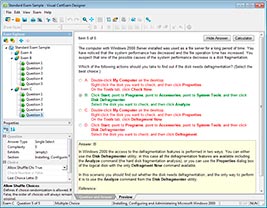
HOW TO OPEN VCEX FILES
Use ProfExam Simulator to open VCEX files
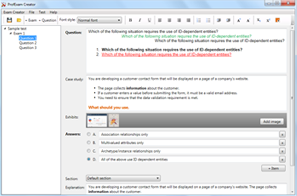
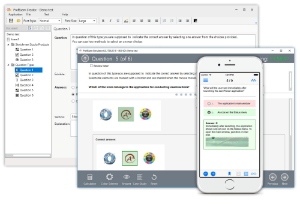
ProfExam at a 20% markdown
You have the opportunity to purchase ProfExam at a 20% reduced price
Get Now!