Download Professional Scrum Product Owner II.PSPO-II.DumpsBase.2026-07-05.30q.tqb
| Vendor: | Scrum |
| Exam Code: | PSPO-II |
| Exam Name: | Professional Scrum Product Owner II |
| Date: | Jul 05, 2026 |
| File Size: | 184 KB |
How to open TQB files?
Files with TQB (Taurus Question Bank) extension can be opened by Taurus Exam Studio.
Purchase
Coupon: TAURUSSIM_20OFF
Discount: 20%
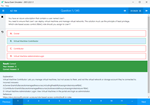
Demo Questions
Question 1
Who is accountable for creating a plan for the Sprint and adhering to the Definition of Done? (choose the best answer)
- The Scrum Team.
- The Product Owner.
- The Scrum Master.
- The Developers.
- All of the above.
Correct answer: D
Question 2
Which of the following statements about the Product Backlog are true? (choose the best two answers)
- The Product Backlog is ordered by the Product Owner.
- The Product Backlog should be visible to the Scrum Team and stakeholders.
- All Product Backlog items must be expressed as user stories.
- All Product Backlog items must be identified before the first Sprint begins.
- Only the Product Owner can place items on the Product Backlog.
- The Product Backlog represents the input of all stakeholders and eliminates any need for the Developers to speak to stakeholders.
Correct answer: A, B
Explanation:
The Product Backlog is an ordered list of what is needed to improve the product, and it is the single source of work undertaken by the Scrum Team. The Product Owner is responsible for ordering the Product Backlog items by value, risk, priority, and dependencies. The Product Backlog should be transparent and accessible to the Scrum Team and the stakeholders, so that everyone can understand the scope and progress of the product development. Therefore, options A and B are true statements about the Product Backlog.Option C is not true because the Product Backlog items can be expressed in various formats, such as user stories, use cases, scenarios, or any other way that clearly conveys the intent and value of the item. User stories are a common and useful technique, but not a mandatory one.Option D is not true because the Product Backlog is not a fixed and complete specification of the product, but rather an emergent and dynamic artifact that evolves over time. The Product Backlog items are refined and clarified by the Product Owner and the Developers throughout the product development process, and new items can be added or removed as needed. The Product Backlog does not need to be fully defined before the first Sprint begins, but only enough to support the first Sprint Planning.Option E is not true because the Product Owner is not the only source of ideas and requirements for the product. The Product Owner collaborates with the Developers and the stakeholders to discover, validate, and prioritize the Product Backlog items. The Product Owner may delegate the authority to add items to the Product Backlog to others, but remains accountable for the ordering and the value of the Product Backlog.Option F is not true because the Product Backlog does not replace the communication and collaboration between the Developers and the stakeholders. The Product Backlog represents the input of all stakeholders, but it is not a substitute for direct feedback and interaction. The Developers need to engage with the stakeholders to understand their needs, expectations, and feedback, and to deliver a valuable product increment that meets the Sprint Goal and the Definition of Done.Reference:Professional Scrum Product Owner II AssessmentUnderstanding and Applying the Scrum FrameworkManaging Products with Agility[What is a Product Backlog?][Product Backlog Explained] The Product Backlog is an ordered list of what is needed to improve the product, and it is the single source of work undertaken by the Scrum Team. The Product Owner is responsible for ordering the Product Backlog items by value, risk, priority, and dependencies. The Product Backlog should be transparent and accessible to the Scrum Team and the stakeholders, so that everyone can understand the scope and progress of the product development. Therefore, options A and B are true statements about the Product Backlog.
Option C is not true because the Product Backlog items can be expressed in various formats, such as user stories, use cases, scenarios, or any other way that clearly conveys the intent and value of the item. User stories are a common and useful technique, but not a mandatory one.
Option D is not true because the Product Backlog is not a fixed and complete specification of the product, but rather an emergent and dynamic artifact that evolves over time. The Product Backlog items are refined and clarified by the Product Owner and the Developers throughout the product development process, and new items can be added or removed as needed. The Product Backlog does not need to be fully defined before the first Sprint begins, but only enough to support the first Sprint Planning.
Option E is not true because the Product Owner is not the only source of ideas and requirements for the product. The Product Owner collaborates with the Developers and the stakeholders to discover, validate, and prioritize the Product Backlog items. The Product Owner may delegate the authority to add items to the Product Backlog to others, but remains accountable for the ordering and the value of the Product Backlog.
Option F is not true because the Product Backlog does not replace the communication and collaboration between the Developers and the stakeholders. The Product Backlog represents the input of all stakeholders, but it is not a substitute for direct feedback and interaction. The Developers need to engage with the stakeholders to understand their needs, expectations, and feedback, and to deliver a valuable product increment that meets the Sprint Goal and the Definition of Done.
Reference:
Professional Scrum Product Owner II Assessment
Understanding and Applying the Scrum Framework
Managing Products with Agility
[What is a Product Backlog?]
[Product Backlog Explained]
Question 3
Which of the following would likely be the least effective way to enhance the agility of your future product development? (choose the least effective approach)
- Consider whether there is a significantly large enough market for your product.
- Form a holistic view of how the customer sees your product.
- Clearly understand the producer, buyer/consumer relationship.
- Lean on your organizational efficiency and existing architecture to build your product aligned to the current organization.
Correct answer: D
Explanation:
As a Product Owner, you need to embrace agility and empiricism in your product development. This means that you should be able to inspect and adapt your product based on feedback from the market, customers, users, and stakeholders. You should also be able to experiment and learn from your failures and successes. To do this, you need to have a flexible and adaptable product architecture that can support frequent changes and new features. You also need to collaborate with your Scrum Team and other teams in the organization to deliver value incrementally and iteratively. Therefore, leaning on your organizational efficiency and existing architecture to build your product aligned to the current organization is the least effective way to enhance your agility. This approach can limit your innovation, creativity, and responsiveness to the changing needs and expectations of your customers and users. It can also create silos, dependencies, and conflicts within and across teams, and reduce the quality and value of your product.Professional Scrum Product Owner™ II CertificationEvolving the Agile OrganizationManaging Products with Agility As a Product Owner, you need to embrace agility and empiricism in your product development. This means that you should be able to inspect and adapt your product based on feedback from the market, customers, users, and stakeholders. You should also be able to experiment and learn from your failures and successes. To do this, you need to have a flexible and adaptable product architecture that can support frequent changes and new features. You also need to collaborate with your Scrum Team and other teams in the organization to deliver value incrementally and iteratively. Therefore, leaning on your organizational efficiency and existing architecture to build your product aligned to the current organization is the least effective way to enhance your agility. This approach can limit your innovation, creativity, and responsiveness to the changing needs and expectations of your customers and users. It can also create silos, dependencies, and conflicts within and across teams, and reduce the quality and value of your product.
Professional Scrum Product Owner™ II Certification
Evolving the Agile Organization
Managing Products with Agility
Question 4
What is a benefit of frequent product releases? (choose the best answer)
- They enable teams to inspect and adapt more frequently.
- They help teams better understand and meet customer needs.
- They help teams to learn how to correct and eliminate errors.
- Smaller, more frequent releases are less risky.
- All of the above.
- None of the above.
Correct answer: E
Explanation:
Frequent product releases are beneficial for several reasons. They enable teams to inspect and adapt more frequently, which means they can get faster feedback, validate their assumptions, and improve their product incrementally. They help teams better understand and meet customer needs, which means they can deliver more value, increase customer satisfaction, and build trust and loyalty. They help teams to learn how to correct and eliminate errors, which means they can reduce waste, improve quality, and prevent technical debt. Smaller, more frequent releases are less risky, which means they can reduce uncertainty, avoid big-bang failures, and enable faster recovery123.Reference:1: Managing Products with Agility2: Understanding and Applying the Scrum Framework3: Evolving the Agile Organization Frequent product releases are beneficial for several reasons. They enable teams to inspect and adapt more frequently, which means they can get faster feedback, validate their assumptions, and improve their product incrementally. They help teams better understand and meet customer needs, which means they can deliver more value, increase customer satisfaction, and build trust and loyalty. They help teams to learn how to correct and eliminate errors, which means they can reduce waste, improve quality, and prevent technical debt. Smaller, more frequent releases are less risky, which means they can reduce uncertainty, avoid big-bang failures, and enable faster recovery123.
Reference:
1: Managing Products with Agility
2: Understanding and Applying the Scrum Framework
3: Evolving the Agile Organization
Question 5
A separate Product Backlog is needed for every: (choose the best answer)
- Product.
- Scrum Team.
- Portfolio.
- Program.
- All of the above.
Correct answer: A
Explanation:
According to the Professional Scrum Product Owner™ II certification guide1, a Product Backlog is an ordered list of what is needed to improve the product. It is the single source of work undertaken by the Scrum Team. The Product Backlog is owned by the Product Owner, who is accountable for maximizing the value of the product resulting from the work of the Scrum Team. Therefore, a separate Product Backlog is needed for every product, not for every Scrum Team, portfolio, program, or all of the above. Multiple Scrum Teams can work on the same product and share the same Product Backlog2. A portfolio or a program may consist of multiple products, each with its own Product Backlog3.Reference:1: Professional Scrum Product Owner™ II Certification | Scrum.org2: What is a Product Backlog? | Scrum.org 3: Product Backlog Explained [+ Examples] | Atlassian According to the Professional Scrum Product Owner™ II certification guide1, a Product Backlog is an ordered list of what is needed to improve the product. It is the single source of work undertaken by the Scrum Team. The Product Backlog is owned by the Product Owner, who is accountable for maximizing the value of the product resulting from the work of the Scrum Team. Therefore, a separate Product Backlog is needed for every product, not for every Scrum Team, portfolio, program, or all of the above. Multiple Scrum Teams can work on the same product and share the same Product Backlog2. A portfolio or a program may consist of multiple products, each with its own Product Backlog3.
Reference:
1: Professional Scrum Product Owner™ II Certification | Scrum.org
2: What is a Product Backlog? | Scrum.org 3: Product Backlog Explained [+ Examples] | Atlassian
Question 6
A Product Owner is needed for every: (choose the best answer)
- Product.
- Portfolio.
- Program.
- All of the above.
Correct answer: A
Explanation:
The Product Owner is the sole person accountable for managing the Product Backlog and ensuring the value of the work the Scrum Team performs. The Product Owner is one person, not a committee. The Product Owner may represent the desires of a committee in the Product Backlog, but those wanting to change a Product Backlog item’s priority must address the Product Owner1. The Product Owner is responsible for the product and its outcome2.A product is a vehicle to deliver value. It has a clear boundary, known stakeholders, well-defined users or customers. A product could be a physical product, a software product, a service, a project, or something else3. A product has a product vision, which is the overarching goal of the product, the reason for creating it, and the impact it should have on its customers and users4.A portfolio is a collection of products or projects that are aligned with a strategic goal or an organizational unit5. A program is a group of related projects or products that are managed in a coordinated way to obtain benefits and control not available from managing them individually. A portfolio or a program may have a portfolio or program manager, who is responsible for overseeing the alignment, prioritization, and governance of the portfolio or program. However, these roles are not equivalent to the Product Owner role, as they do not have the same accountabilities and authorities as the Product Owner.Therefore, the correct answer is that a Product Owner is needed for every product, not for every portfolio or program.Reference:1: Scrum Guide2: Understanding and Applying the Scrum Framework3: Managing Products with Agility4: [Product Vision]5: [Portfolio]: [Program]: [Portfolio Management]: [Program Management] The Product Owner is the sole person accountable for managing the Product Backlog and ensuring the value of the work the Scrum Team performs. The Product Owner is one person, not a committee. The Product Owner may represent the desires of a committee in the Product Backlog, but those wanting to change a Product Backlog item’s priority must address the Product Owner1. The Product Owner is responsible for the product and its outcome2.
A product is a vehicle to deliver value. It has a clear boundary, known stakeholders, well-defined users or customers. A product could be a physical product, a software product, a service, a project, or something else3. A product has a product vision, which is the overarching goal of the product, the reason for creating it, and the impact it should have on its customers and users4.
A portfolio is a collection of products or projects that are aligned with a strategic goal or an organizational unit5. A program is a group of related projects or products that are managed in a coordinated way to obtain benefits and control not available from managing them individually. A portfolio or a program may have a portfolio or program manager, who is responsible for overseeing the alignment, prioritization, and governance of the portfolio or program. However, these roles are not equivalent to the Product Owner role, as they do not have the same accountabilities and authorities as the Product Owner.
Therefore, the correct answer is that a Product Owner is needed for every product, not for every portfolio or program.
Reference:
1: Scrum Guide
2: Understanding and Applying the Scrum Framework
3: Managing Products with Agility
4: [Product Vision]
5: [Portfolio]
: [Program]
: [Portfolio Management]
: [Program Management]
Question 7
What is the role of the Product Owner in crafting the Sprint Goal? (choose the best answer)
- The Product Owner defines the scope for a Sprint and therefore also the Sprint Goal.
- The Product Owner must work with stakeholders to set each Sprint's Goal.
- The Product Owner collaborates as a member of the Scrum Team to define a SprintGoal.
- The Product Owner has no role in it. This is the Developers responsibility.
- The Product Owner should come to the Sprint Planning with a clearly defined SprintGoal.
Correct answer: C
Explanation:
The Sprint Goal is a summary statement of the Sprint objective, which ideally has a cohesive theme. The Sprint Goal also gives the Scrum Team guidance and flexibility on how to achieve the objective. The Sprint Goal is crafted by the entire Scrum Team during the Sprint Planning, based on the Product Owner’s proposal of the most valuable Product Backlog items and the Development Team’s forecast of the work that can be done in the Sprint. The Product Owner collaborates with the team to write the Sprint Goal and defines it on the basis of the value being sought. The Product Owner does not define the scope or the solution for the Sprint, but rather the outcome and the benefit. The Product Owner also does not work with stakeholders to set the Sprint Goal, but rather represents their interests and needs. The Product Owner has a role in crafting the Sprint Goal, but not the sole responsibility for it.Reference: Professional Scrum Product Owner II AssessmentUnderstanding and Applying the Scrum FrameworkManaging Products with AgilityThe Role of the Product Owner during the SprintSprint Goal C An Essential Ingredient in Scrum Recipe The Sprint Goal is a summary statement of the Sprint objective, which ideally has a cohesive theme. The Sprint Goal also gives the Scrum Team guidance and flexibility on how to achieve the objective. The Sprint Goal is crafted by the entire Scrum Team during the Sprint Planning, based on the Product Owner’s proposal of the most valuable Product Backlog items and the Development Team’s forecast of the work that can be done in the Sprint. The Product Owner collaborates with the team to write the Sprint Goal and defines it on the basis of the value being sought. The Product Owner does not define the scope or the solution for the Sprint, but rather the outcome and the benefit. The Product Owner also does not work with stakeholders to set the Sprint Goal, but rather represents their interests and needs. The Product Owner has a role in crafting the Sprint Goal, but not the sole responsibility for it.
Reference: Professional Scrum Product Owner II Assessment
Understanding and Applying the Scrum Framework
Managing Products with Agility
The Role of the Product Owner during the Sprint
Sprint Goal C An Essential Ingredient in Scrum Recipe
Question 8
The smallest product Increment that is valuable enough to release is one that: (choose the best answer)
- Delivers a single new or improved outcome.
- Adds a new feature.
- Fixes at least one defect.
- Delivers all "must do" Product Backlog items.
Correct answer: A
Explanation:
The smallest product Increment that is valuable enough to release is one that delivers a single new or improved outcome for the customers or users of the product. This is because the outcome is the ultimate measure of value, not the output or the features1. An outcome is a change in behavior, attitude, or situation that results from using the product2. An outcome can be achieved by delivering a single feature, fixing a defect, or improving an existing functionality, as long as it meets the Definition of Done and the Sprint Goal3. Therefore, the best answer is A.The other options are not correct because:B. Adds a new feature. This is not a sufficient condition, as a new feature may not deliver a valuable outcome if it is not aligned with the product vision, the customer needs, or the market conditions4.C. Fixes at least one defect. This is not a necessary condition, as a defect may not affect the value of the product if it is minor, rare, or irrelevant to the customer5.D. Delivers all “must do” Product Backlog items. This is not a realistic condition, as the Product Backlog is a dynamic and emergent artifact that changes based on feedback, learning, and discovery. There is no fixed set of “must do” items that can guarantee the delivery of value.Reference: 1: Outcome vs. Output, 2: What is an Outcome?, 3: The Definition of Done, 4: Feature vs. Outcome, 5: Defect vs. Value, : The Product Backlog The smallest product Increment that is valuable enough to release is one that delivers a single new or improved outcome for the customers or users of the product. This is because the outcome is the ultimate measure of value, not the output or the features1. An outcome is a change in behavior, attitude, or situation that results from using the product2. An outcome can be achieved by delivering a single feature, fixing a defect, or improving an existing functionality, as long as it meets the Definition of Done and the Sprint Goal3. Therefore, the best answer is A.
The other options are not correct because:
B. Adds a new feature. This is not a sufficient condition, as a new feature may not deliver a valuable outcome if it is not aligned with the product vision, the customer needs, or the market conditions4.
C. Fixes at least one defect. This is not a necessary condition, as a defect may not affect the value of the product if it is minor, rare, or irrelevant to the customer5.
D. Delivers all “must do” Product Backlog items. This is not a realistic condition, as the Product Backlog is a dynamic and emergent artifact that changes based on feedback, learning, and discovery. There is no fixed set of “must do” items that can guarantee the delivery of value.
Reference: 1: Outcome vs. Output, 2: What is an Outcome?, 3: The Definition of Done, 4: Feature vs. Outcome, 5: Defect vs. Value, : The Product Backlog
Question 9
You are the Product Owner at a small company with a single product. You have authority over pricing, promotion, and how much is invested in new features or capabilities.
Your product has:
✑ High Current Value - as indicated by high customer satisfaction.
✑ High Unrealized Value - as indicated by low market share.
Using those two data points, what is the first action you should take to increase the business performance of the product? (choose the best answer)
- Increase the number of product features to attract a greater number of customers.
- Release an identical product to market, but give it a new product name.
- Drop the price for the product to attract a greater number of customers.
- Improve the marketing of the product to attract a greater number of customers.
Correct answer: D
Explanation:
= Based on the Evidence-Based Management (EBM) framework, your product has a high Current Value (CV), which means that it delivers value to the existing customers and meets their needs and expectations. However, it also has a high Unrealized Value (UV), which means that there is a large gap between the potential and actual use of the product in the market. This indicates that your product has a low awareness, reach, or appeal among the potential customers who could benefit from it.To increase the business performance of the product, you need to reduce the UV and increase the Ability to Innovate (A2I), which is the ability to deliver future value. One way to do this is to improve the marketing of the product, which can help you to communicate the value proposition, differentiate the product from the competitors, and attract a greater number of customers. This can also provide you with more feedback and data to inform your product strategy and backlog prioritization.The other options are not the best actions to take, because they either do not address the root cause of the high UV, or they may compromise the CV or A2I of the product. Increasing the number of product features may not necessarily increase the value or the demand for the product, and it may also increase the complexity and the cost of development. Releasing an identical product with a new name may confuse the customers and dilute the brand identity, and it may also create legal or ethical issues. Dropping the price for the product may not be a sustainable or profitable strategy, and it may also affect the perceived quality or value of the product.Reference: = Professional Scrum Product Owner™ II Certification, Managing Products with Agility, Evidence-Based Management = Based on the Evidence-Based Management (EBM) framework, your product has a high Current Value (CV), which means that it delivers value to the existing customers and meets their needs and expectations. However, it also has a high Unrealized Value (UV), which means that there is a large gap between the potential and actual use of the product in the market. This indicates that your product has a low awareness, reach, or appeal among the potential customers who could benefit from it.
To increase the business performance of the product, you need to reduce the UV and increase the Ability to Innovate (A2I), which is the ability to deliver future value. One way to do this is to improve the marketing of the product, which can help you to communicate the value proposition, differentiate the product from the competitors, and attract a greater number of customers. This can also provide you with more feedback and data to inform your product strategy and backlog prioritization.
The other options are not the best actions to take, because they either do not address the root cause of the high UV, or they may compromise the CV or A2I of the product. Increasing the number of product features may not necessarily increase the value or the demand for the product, and it may also increase the complexity and the cost of development. Releasing an identical product with a new name may confuse the customers and dilute the brand identity, and it may also create legal or ethical issues. Dropping the price for the product may not be a sustainable or profitable strategy, and it may also affect the perceived quality or value of the product.
Reference: = Professional Scrum Product Owner™ II Certification, Managing Products with Agility, Evidence-Based Management
Question 10
You are the Product Owner for a product with diverse stakeholders with differing opinions that sometimes conflict.
Your Director of Marketing strongly believes that you should add a major new feature to reach a new market. Your CEO believes that the new feature is too expensive and thinks you should focus on other features to make existing customers happier. The CEO says that as Product Owner it is ultimately your decision.
You think both perspectives have merit, but you cannot do both.
How should you proceed? (choose the best answer)
- Devise an experiment that will help the company to better understand the newmarket and its potential.
- Trust the Director of Marketing's opinion and add the features; when revenues increase, you will be vindicated.
- Better understand the positions of other stakeholders to gather more information, then make a decision.
- Trust the CEO's opinion and focus on current customers, since you cannot afford unhappy customers.
Correct answer: A
Explanation:
= As a Product Owner, you are accountable for maximizing the value of the product and the work of the Developers. To do this, you need to have a clear vision of the product and its target users, as well as a validated understanding of the market opportunities and risks. You also need to collaborate with stakeholders and customers to align their expectations and feedback with the product goals and strategy.In this scenario, you face a dilemma between pursuing a new market segment or satisfying the existing customers. Both options have potential value, but also uncertainty and trade-offs. The best way to proceed is to devise an experiment that will help you to test your assumptions and learn more about the new market and its potential. This could be a small-scale release, a prototype, a survey, or any other method that can provide you with empirical evidence and feedback. By doing this, you can reduce the risk of investing in a feature that may not deliver the expected value, and also gain insights that can help you to refine your product vision and backlog.This approach is consistent with the principles of agile product management, which emphasize delivering value early and often, validating hypotheses with data, and adapting to changing customer needs and market conditions. It also demonstrates your ability to apply the Scrum values of openness, courage, and respect, as you are willing to explore new possibilities, challenge your own opinions, and involve your stakeholders and customers in the decision-making process. Reference: = Scrum Guide, Managing Products with Agility, Evidence-Based Management = As a Product Owner, you are accountable for maximizing the value of the product and the work of the Developers. To do this, you need to have a clear vision of the product and its target users, as well as a validated understanding of the market opportunities and risks. You also need to collaborate with stakeholders and customers to align their expectations and feedback with the product goals and strategy.
In this scenario, you face a dilemma between pursuing a new market segment or satisfying the existing customers. Both options have potential value, but also uncertainty and trade-offs. The best way to proceed is to devise an experiment that will help you to test your assumptions and learn more about the new market and its potential. This could be a small-scale release, a prototype, a survey, or any other method that can provide you with empirical evidence and feedback. By doing this, you can reduce the risk of investing in a feature that may not deliver the expected value, and also gain insights that can help you to refine your product vision and backlog.
This approach is consistent with the principles of agile product management, which emphasize delivering value early and often, validating hypotheses with data, and adapting to changing customer needs and market conditions. It also demonstrates your ability to apply the Scrum values of openness, courage, and respect, as you are willing to explore new possibilities, challenge your own opinions, and involve your stakeholders and customers in the decision-making process. Reference: = Scrum Guide, Managing Products with Agility, Evidence-Based Management
HOW TO OPEN VCE FILES
Use VCE Exam Simulator to open VCE files
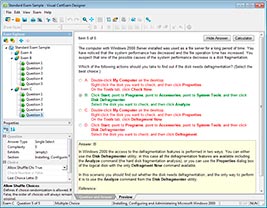
HOW TO OPEN VCEX FILES
Use ProfExam Simulator to open VCEX files
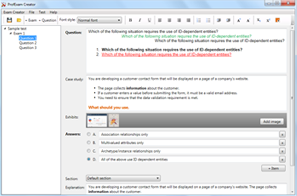
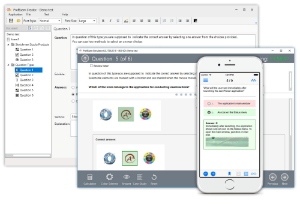
ProfExam at a 20% markdown
You have the opportunity to purchase ProfExam at a 20% reduced price
Get Now!